
Last updated October 17, 2026
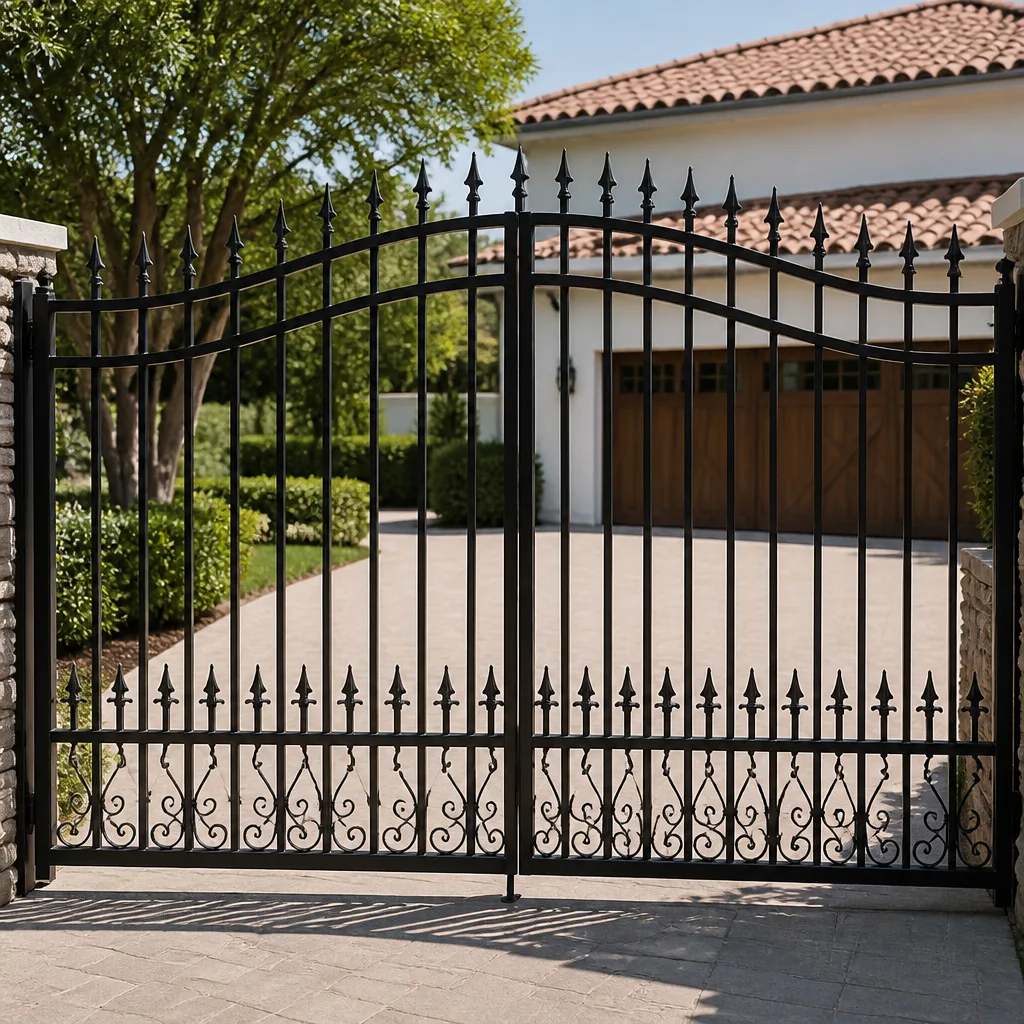 Wrought iron
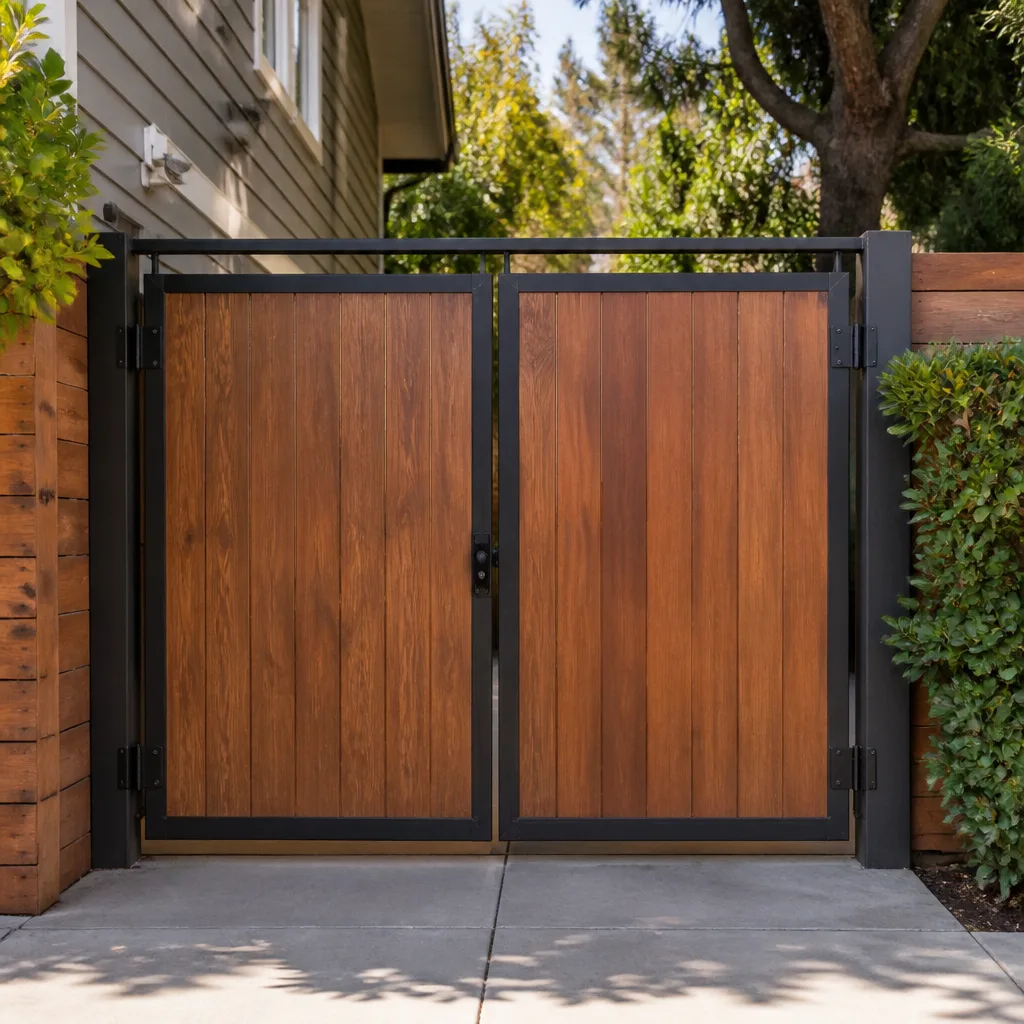 Wood & steel frame
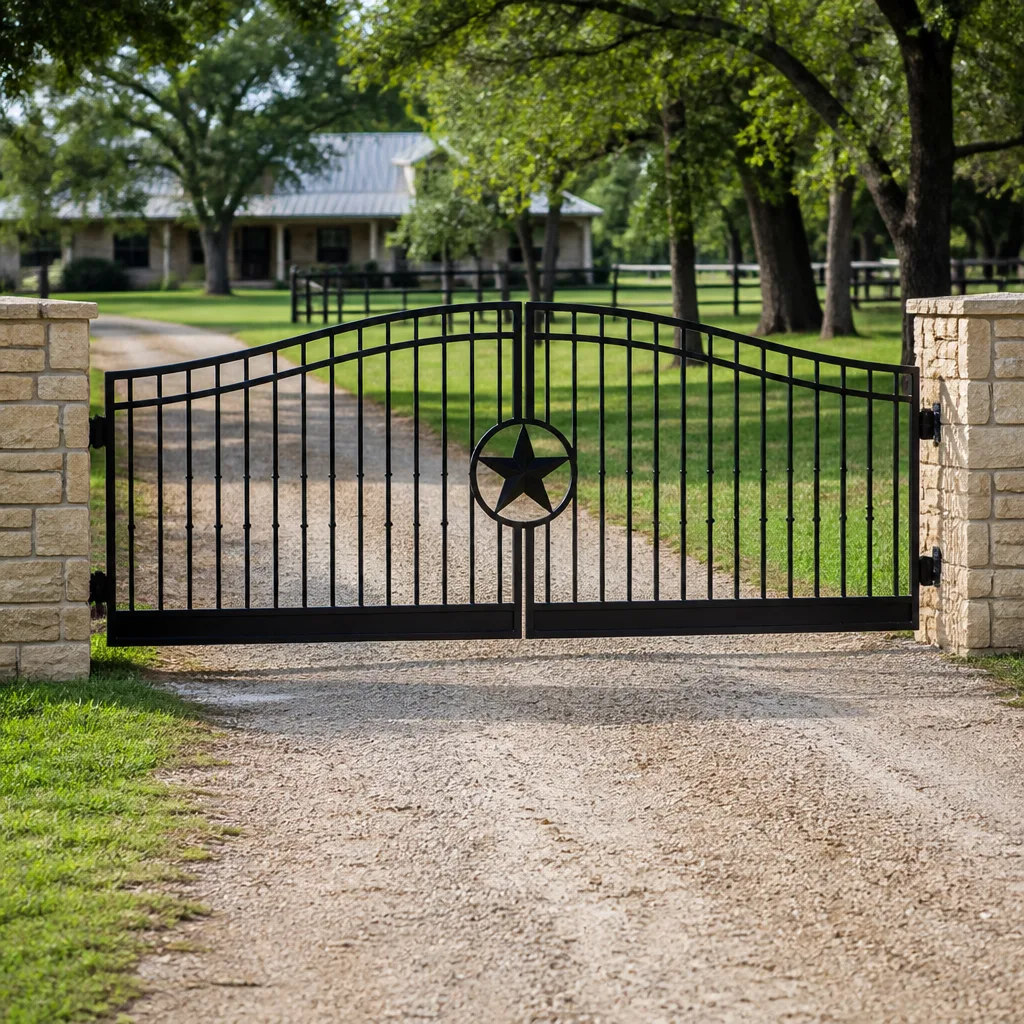 Farm & ranch
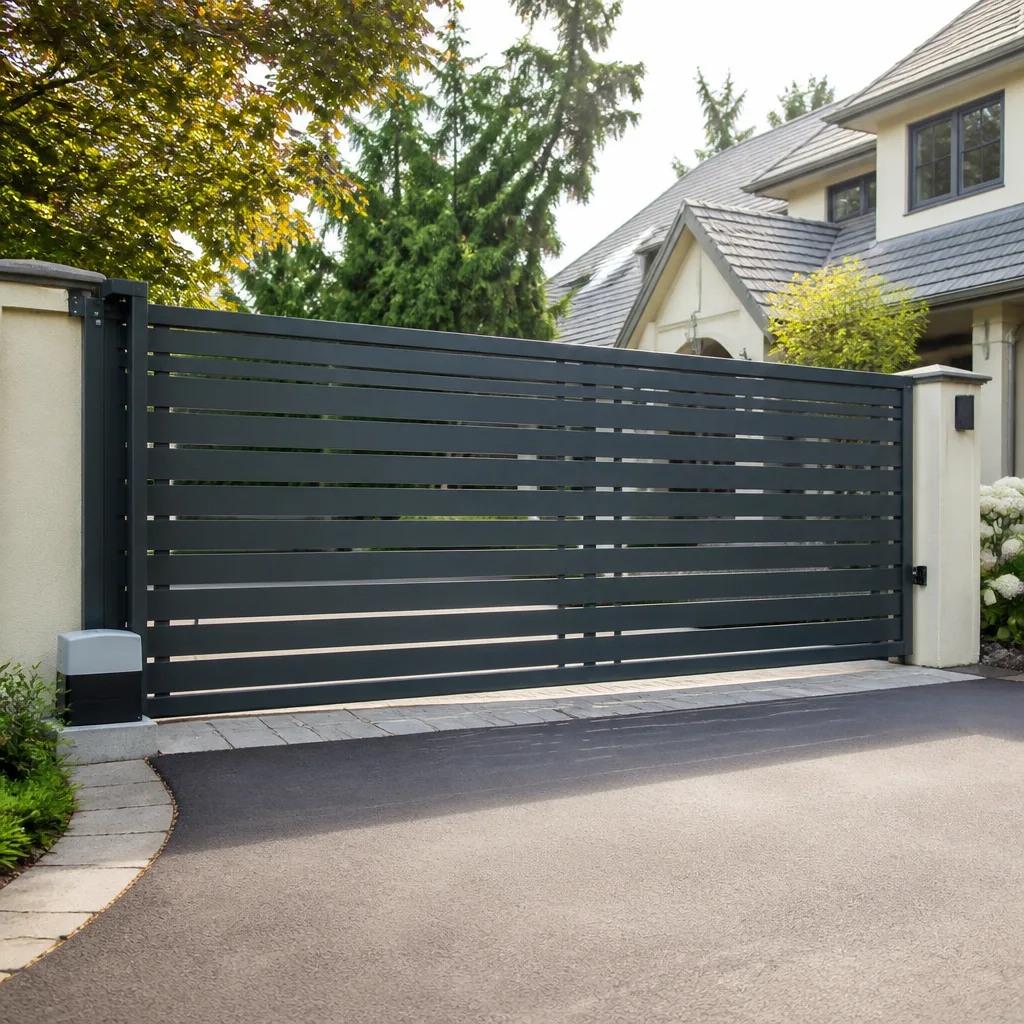 Sliding driveway gates
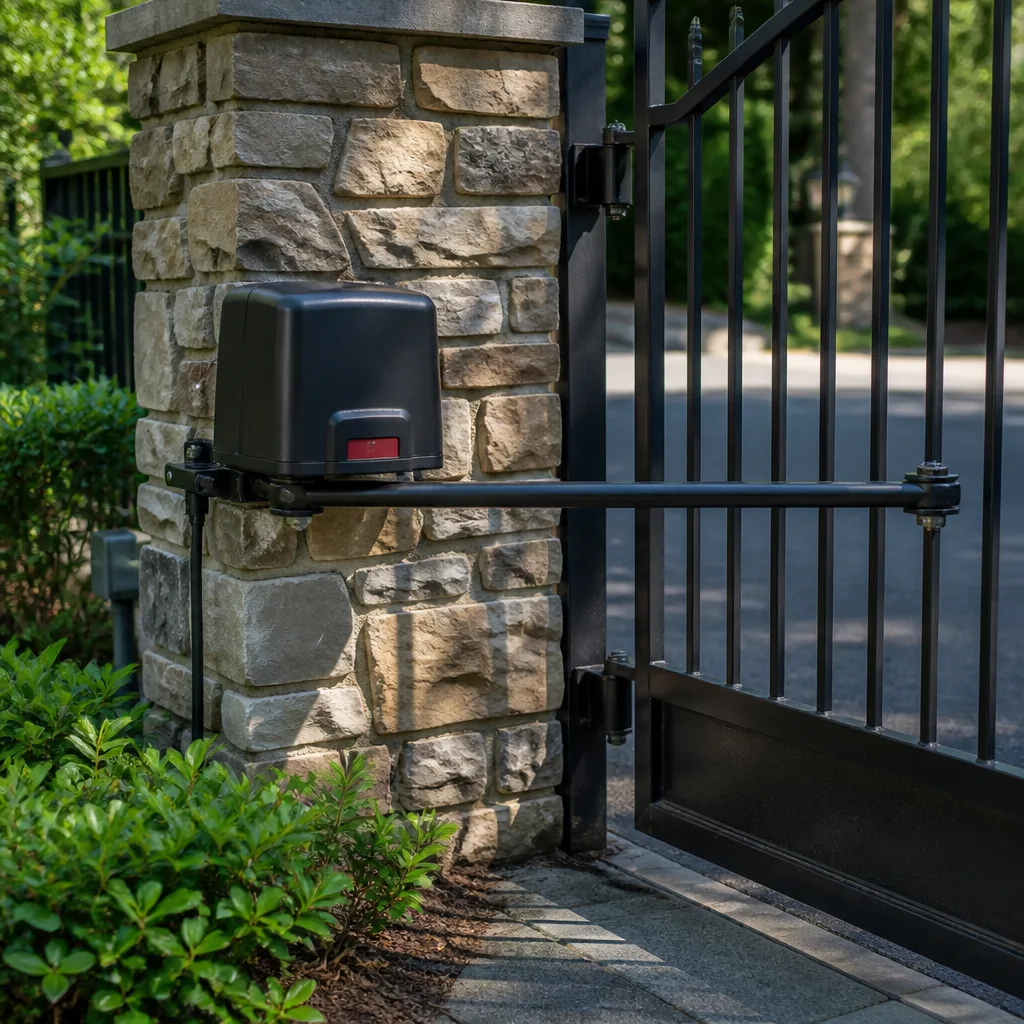 LiftMaster operators
Free on-site gate assessment - hinges, posts, and your LiftMaster or Nice gate operator checked before anything is quoted
The assessment is free and the quote is the invoice.
Get your free estimateGate Repair Permits, Codes & Inspections in CA: What You Need to Know
A Riverside homeowner adds an automatic opener to an existing manual gate. From the street, nothing looks different. But they have just installed electrical equipment on a structure adjacent to a property line, and that combination changes their legal position in ways a simple latch replacement never would. Permit requirements for gates in California are not a single yes-or-no question. They are a decision tree, and most homeowners get a confident-sounding but incorrect answer from the first contractor they ask. This guide walks the actual branches: what needs a permit in Riverside, what does not, who pulls permits, what an HOA adds on top, and what happens at resale if a modification was never documented. For Gate Repair Warning Signs: A Riverside Homeowner’s Reference Guide, see our companion resource.
Styles & brands we work with
Quick Answer
Like-for-like gate repairs in California, such as replacing a hinge, latch, or picket on an existing gate, generally do not require a permit, though our Gate Repair services can help you determine exactly where your project falls. Adding an automatic opener, running new electrical, changing a gate’s swing direction over a public sidewalk, or rebuilding a gate on a new post typically does. In Riverside, the City of Riverside Building & Safety Division applies California Building Code Chapter 1 for structures under six feet tall, the California Electrical Code for any operator wiring, and local zoning rules for setbacks and right-of-way projections. If you are unsure whether your repair crosses the line, call (341) 895-4331 and we will tell you what we have seen pass inspection on similar Riverside properties.
Table of Contents
- What Counts as a Like-for-Like Gate Repair in Riverside
- When Gate Automation Triggers an Electrical Permit
- HOA Approval vs. City Permits: Two Separate Tracks
- Unpermitted Gate Work at Resale: California Civil Code §1102
- The Six Most Common Gate Repair Scenarios: A Permit Checklist
- How Title 24 Touches Automatic Gate Operators
- Common Mistakes to Avoid
- When to Call a Professional
- Frequently Asked Questions
- The Bottom Line
What Counts as a Like-for-Like Gate Repair in Riverside
Under California Building Code, a repair that replaces a broken component with a substantially identical one does not require a permit. For a gate, that means a bent hinge swapped for the same size hinge, a dead latch replaced with a new dead latch, a rotted picket replaced with a matching picket, or a sagging gate rehung on its existing posts. The key word is existing. If the post stays in the ground and the gate footprint does not change, the city treats it as maintenance, not construction.
In Riverside, the Building & Safety Division uses the same like-for-like standard as the rest of California. The practical question is whether the repair changes the structure’s dimensions, materials in a load-bearing path, or electrical load. Replacing a wooden gate leaf with a steel one is not automatically like-for-like if the new leaf is significantly heavier, because the post and footing now carry a load they were never designed for. That is a structural alteration, and the city may want an engineer’s letter and a permit. Changing a gate from a single swing to a double swing changes the hinge loads and usually changes the post locations, so it falls outside like-for-like as well.
One gray area we see often in Riverside neighborhoods like Hawarden Hills and Canyon Crest: a homeowner replaces a wood pedestrian gate with a metal one of the same width. Visually similar, but the post footings were sized for cedar, not steel. The safe path is to call the Building & Safety Division and describe the change. They will tell you whether it is maintenance or an alteration. If they say alteration, you need a building permit. If they say maintenance, keep that conversation in your records. It may matter years later at resale.
When Gate Automation Triggers an Electrical Permit
Adding an automatic opener to a manual gate changes the permit picture completely. In California, any permanent electrical wiring, any new circuit, and any hardwired motor installation falls under the California Electrical Code. That means a permit from the city, and in Riverside, the electrical permit must be pulled by a C-10 licensed electrical contractor, not by a general contractor or a handyman. The city’s inspectors check for GFCI protection, proper conduit, burial depth for underground runs, and the correct disconnecting means.
There is a narrow exception. A plug-in convenience opener that runs on a factory cord to an existing receptacle, the kind some homeowners use on a garage side door, generally does not require an electrical permit. However, most automatic gate operators on a driveway are hardwired, and most Riverside homes with a gated driveway do not have an existing weather-rated receptacle within cord reach of the gate post. The moment a trench is dug and a wire run is installed, you are in permit territory.
We have replaced enough LiftMaster and FAAC operators on Riverside properties to know exactly where the inspector looks. The wire from the house panel to the gate must be UF cable or conduit-rated, buried at the depth specified in NEC Table 300.5, and connected to a dedicated circuit with GFCI protection. The operator itself must be listed for outdoor use and grounded. The photo eye sensors, commonly called safety entrapment protection, must be installed and tested in front of the inspector. We have seen permits held up because the sensor height was off by two inches. The C-10 electrician we work with on these jobs handles the permit, the city inspection, and the final sign-off. The homeowner gets a paper trail. That trail matters if the house is ever sold.
HOA Approval vs. City Permits: Two Separate Tracks
In Riverside, homeowners in communities like Mission Grove, Orangecrest, or Victoria Grove often answer to a homeowners association. The HOA’s CC&Rs typically require architectural review before any exterior modification, including a new gate, a changed gate style, a taller gate, or a gate moved to a new location. HOA approval is not the same as a city permit. It is a separate review, run by a separate body, with separate timelines.
The common real-world failure happens like this: a homeowner calls the City of Riverside, gets a building permit for a new automated driveway gate, installs it, and passes the city inspection. Six months later, the HOA sends a notice because the gate style does not match the community’s approved palette, or the height exceeds the CC&R maximum. The city says the gate is safe. The HOA says it is out of compliance. The homeowner is caught between two authorities because they never filed with both before starting.
The order that works is HOA first, city second. Get written architectural approval from the HOA committee. That approval usually specifies materials, colors, height limits, and sometimes the operator brand. Then file the city permit with the HOA letter attached. Riverside plan checkers like the documentation, and the HOA has no standing to question a gate they already approved. We have helped homeowners in Riverside navigate both tracks enough times to know the HOA deadline and the city timeline rarely align, and that scheduling the city inspection after the HOA’s final walk-through prevents having to redo work. See also How to Hire a Gate Repair Contractor in Riverside: A Step-by-Step Guide for vetting your installer.
Unpermitted Gate Work at Resale: California Civil Code §1102
California Civil Code §1102 requires a seller to disclose, in writing, any material fact about the property that could affect its value or desirability. That includes unpermitted work. When a home inspection flags an automatic gate that was added without a city permit, the seller must disclose it on the Real Estate Transfer Disclosure Statement. Failing to disclose opens the seller to liability after close of escrow, potentially for the cost of bringing the gate into compliance plus legal fees.
This is where the paper trail pays for itself. A homeowner who can produce the city permit, the electrical inspection record, and the HOA approval letter list a specific line item in the seller’s disclosure package. The unpermitted gate question disappears from the negotiation. A homeowner who has none of that often faces one of three outcomes: the buyer demands a retroactive permit before closing, the buyer demands a price reduction to cover the unknown cost, or the buyer walks. None of those outcomes is cheap.
Riverside buyers have grown more sophisticated in the last decade. Home inspectors serving Riverside now routinely check the gate operator’s disconnect, the sensor equipment, and the panel labeling. They may pull the city’s online permit history by address. If the address shows no permit for a gate that is clearly automated and hardwired, the inspector writes it up. That single line in an inspection report has killed more Riverside escrows than any sagging hinge. We tell every homeowner the same thing: if you are not sure whether the gate work on your house was ever permitted, call us at (341) 895-4331. We can pull together what is needed to either verify compliance or scope the corrective work before the house goes on the market.
The Six Most Common Gate Repair Scenarios: A Permit Checklist
Here is the plain-language decision tree for the six gate situations we see most often in Riverside. Use the first column, find your situation, read across.
- Replacing a broken hinge, latch, or lock on an existing gate. Permit needed: No. Who pulls it: No one. Typical Riverside turnaround: Same day, no city involvement. This is maintenance.
- Replacing a bent or rotted gate leaf with one of the same size and material. Permit needed: No, if post and footing are unchanged. Who pulls it: No one. Typical Riverside turnaround: One day. If the new leaf is materially heavier, see item 4.
- Rebuilding a gate that has pulled its post, requiring a new post and new footing. Permit needed: Yes, building permit. Who pulls it: The contractor, or the homeowner as owner-builder. Typical Riverside turnaround: One to two weeks for plan review, one inspection. In Riverside, post footings for gates taller than six feet often need an engineer’s detail.
- Replacing a wood gate with a steel gate, or changing the gate’s weight class. Permit needed: Usually yes, because the structural load on the post changes. Who pulls it: The contractor. Typical Riverside turnaround: Two to three weeks including plan check. An engineer’s letter may be required.
- Adding an automatic opener to an existing manual gate, hardwired to the panel. Permit needed: Yes, electrical permit. Who pulls it: A C-10 licensed electrical contractor. Typical Riverside turnaround: One to two weeks for the permit, one inspection. GFCIs and sensor heights are the two most common inspection failures.
- Changing the gate’s swing so it opens over a public sidewalk or right-of-way. Permit needed: Yes, and possibly a zoning review. Who pulls it: The contractor. Typical Riverside turnaround: Three to four weeks. A gate that swings over a public sidewalk is not just a building code question, it is a right-of-way encroachment question, and Riverside zoning staff will want to see the swing radius on a site plan.
One more situation worth flagging: replacing an existing automatic operator with a new operator that uses the same wiring, same circuit, and same mounting location. In our experience with Viking, BFT, and Linear operator swaps on Riverside properties, this is generally treated as like-for-like equipment replacement and does not require a new electrical permit, provided the circuit is untouched. If the wire run is damaged, undersized for the new operator, or needs re-pulling, the permit trigger is pulled. When in doubt, call (341) 895-4331 and we will walk the specific scenario.
How Title 24 Touches Automatic Gate Operators
California’s Title 24 energy code governs more than HVAC and windows. It also sets standards for the standby power consumption of appliances and permanently installed equipment, including some automatic gate operators. A hardwired gate operator that draws continuous standby power above the code’s threshold may need to be listed as compliant. In practical terms, the model matters. Modern LiftMaster operators with efficient standby boards typically sail through Riverside inspections. Older surplus equipment, or an operator meant for a commercial install dropped onto a residential driveway, may not.
The more relevant Title 24 intersection for most Riverside homeowners is lighting. If the gate job includes adding a new exterior light at the gate, or replacing a fixture, the new fixture must comply with Title 24 high-efficacy standards. That means a specific lumens-per-watt rating, and for many Riverside properties, a photocell or motion sensor requirement. The electrical permit for the gate operator will often include the lighting scope, and the inspector will check the fixture label.
None of this is something a homeowner should need to memorize. It is something a careful gate contractor should handle quietly in the background. When we quote an automatic electric gate repair in Riverside, we specify the operator model, the standby draw, and the lighting plan in the written price. The homeowner sees the full number before anything is ordered. The city sees a compliant plan. There is no second visit to fix a Title 24 miss.
Common Mistakes to Avoid
- Believing every gate repair needs a permit. Replacing a hinge, latch, or picket on an existing gate is maintenance. No permit, no inspection. Calling the city for a hinge replacement wastes everyone’s time and delays a one-hour fix.
- Believing no gate repair ever needs a permit. The moment you dig a post hole, run a wire, or change the swing radius near a property line, you have crossed into permit territory. The first contractor who says “you don’t need a permit” without asking whether the gate swings over a sidewalk is guessing.
- Treating HOA approval as a substitute for a city permit. They are separate authorities. An HOA letter does not satisfy Building & Safety, and a city permit does not satisfy the CC&Rs. Riverside HOAs in Orangecrest and Mission Grove enforce both, in different ways.
- Pulling an electrical permit under the wrong license class. Riverside requires C-10 for electrical work. A general contractor who says they will “handle the permit” for gate operator wiring may be planning to pull it as owner-builder or under a license class that does not cover the scope. The city will reject it, usually after the trench is open.
- Ignoring the disconnect requirement. Automatic gate operators need a lockable disconnect within sight of the operator, sized for the motor’s horsepower. Missing or undersized disconnects are the single most common Riverside inspection correction we see.
- Waiting until the house is under contract to research the gate permit. By then, the home inspector has written it up and the buyer’s agent has requested disclosure. Unpermitted gate work disclosed mid-escrow becomes a negotiation problem. Researched early, it is just paperwork.
- Skipping the sensor test after final inspection. Riverside inspectors verify the entrapment sensors. Passing city inspection does not mean the sensors stay aligned forever. Test the reverse function on your operator monthly, especially if you have young children or pets in the yard.
When to Call a Professional
Call a licensed professional if the work touches a post footing, is any type of automatic opener, alters a chimney or wall for a header support, requires trenching, or swings over public right-of-way. The line between maintenance and permit work in California is real, and the cost of guessing wrong compounds at resale and at inspection. If you live in Riverside and want a straight answer on which side of the line your gate sits, Latch and Post Gate Repair Riverside offers free estimates for gate repair and installation. We are part of the Cedarwell family and have been serving Riverside since 2009, focused specifically on latch, post, and operator work. Call (341) 895-4331 for a free estimate: a written price is provided before any work begins, every single visit, with no pressure to accept.
Frequently Asked Questions
You do not need a permit for like-for-like repairs such as replacing a hinge, latch, lock, or picket on an existing gate, as long as the post and footing are unchanged. You do need a permit if the repair involves a new post, a significantly heavier gate leaf, automatic operator wiring, or a changed swing radius. Call (341) 895-4331 for an exact read on your specific repair: estimates are free.
Building permit fees in Riverside are calculated from the valuation of the work, and most gate-related permits land between $150 and $600 depending on scope, with electrical permits at the lower end of that range and structural permits at the higher end. The city publishes a fee schedule, and plan check adds time if the work needs engineering review. An exact quote depends on your project, which is why we recommend calling (341) 895-4331.
Same-day service is available for mechanical repairs like hinges, latches, locks, and sensor realignment on existing operators. If the job involves new wiring, a new post, or a permit, the work is measured and scheduled: we provide a free measure and a written price before any work starts. Call (341) 895-4331 and we will tell you which category your gate falls into.
A full gate installation in Riverside includes removal of the existing gate if present, new posts with proper footings, hanging the gate leaf, hinges and latch hardware, and, if automated, the operator, wiring, sensor protection, and the permit and inspection. Our written price includes shoe covers and drop cloths to protect the floors inside your home, and a cleanup photo before the technician leaves, at no additional charge.
Yes. We handle the full scope of automatic gate installation, including trenching for the power run, wiring to the panel, the operator, entrapment sensors, and safety edges, with the C-10 electrical contractor pulling the permit and the Riverside city inspector signing off. Everything is included in the written price you approve before work begins. Call (341) 895-4331 for a free estimate.
Yes, in most cases. A hardwired automatic gate opener is an electrical installation under the California Electrical Code, and Riverside requires a permit pulled by a C-10 licensed contractor, with a final inspection. A plug-in convenience opener on an existing receptacle is the narrow exception. If your driveway gate needs a new wire run, you are almost certainly looking at a permit.
The Bottom Line
California gate permits are not a mystery once you follow the decision tree: like-for-like repairs skip the permit, structural changes need a building permit, automation needs an electrical permit, and HOA approval runs in parallel with the city. Riverside homeowners who keep the paper trail, pull the right permits with the right license class, and disclose everything at resale walk away from every gate project without a headache. Those who guess wrong pay for it at inspection, at resale, or both. If your gate needs work in Riverside and you want a clearer answer than this guide can give, Latch and Post Gate Repair in Riverside offers free estimates. Call (341) 895-4331 and we will tell you exactly what applies to your property.
Written by Cody Beckman, Owner at Latch and Post Gate Repair Riverside, serving Riverside since 2009.
See the difference
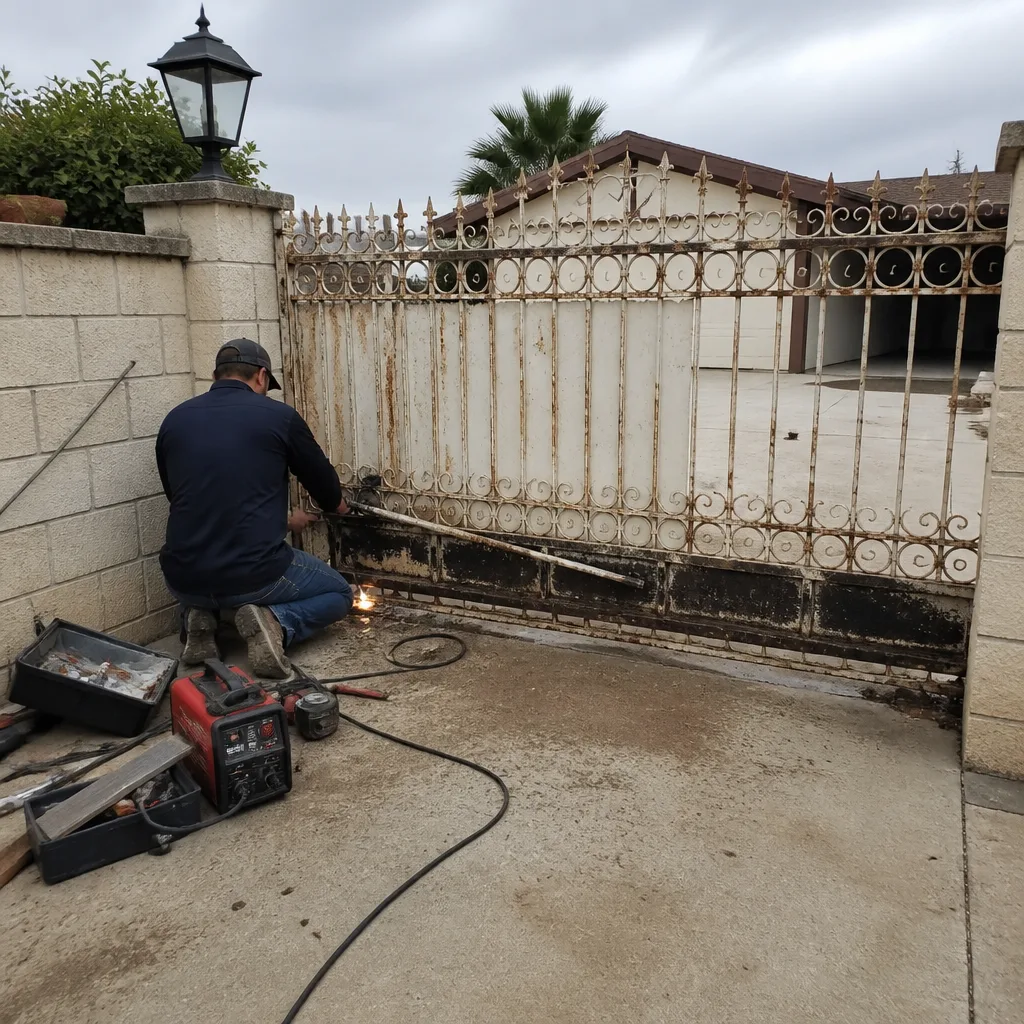 Before
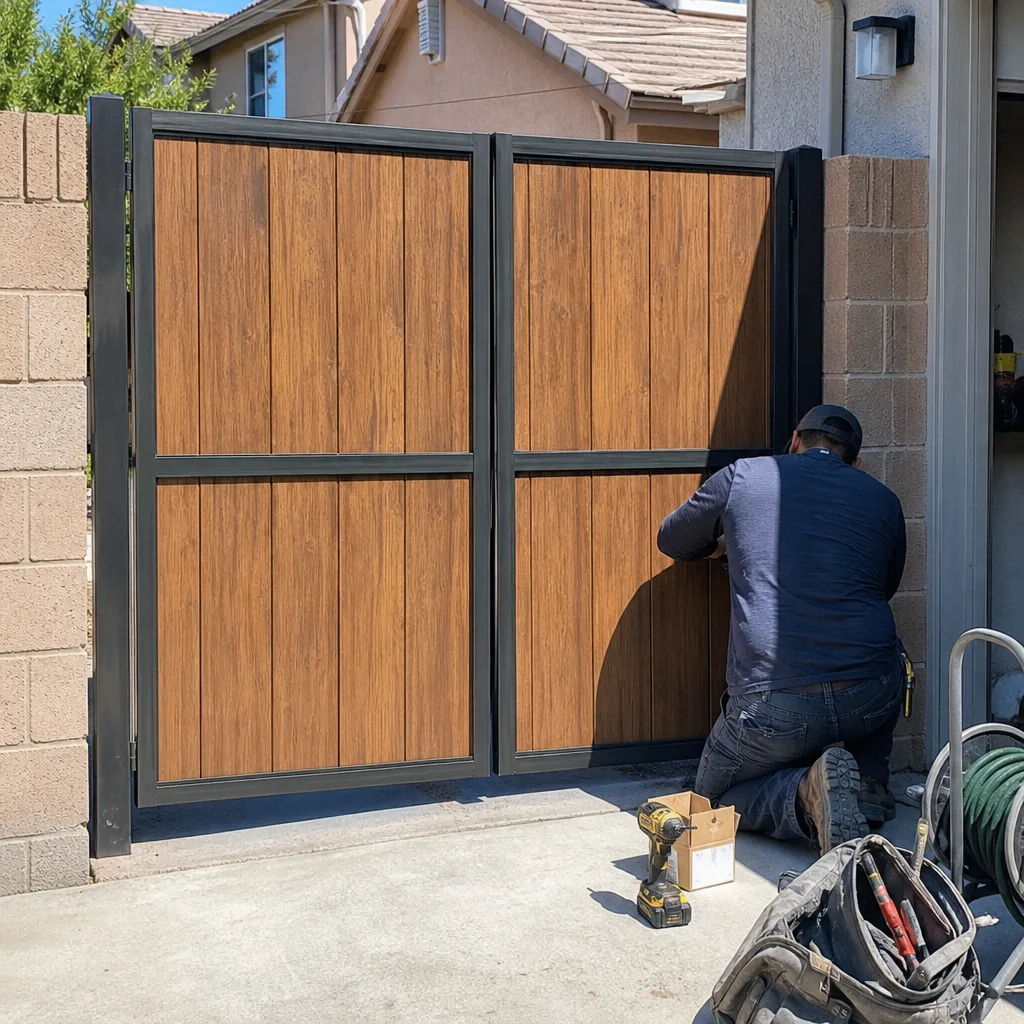 After
After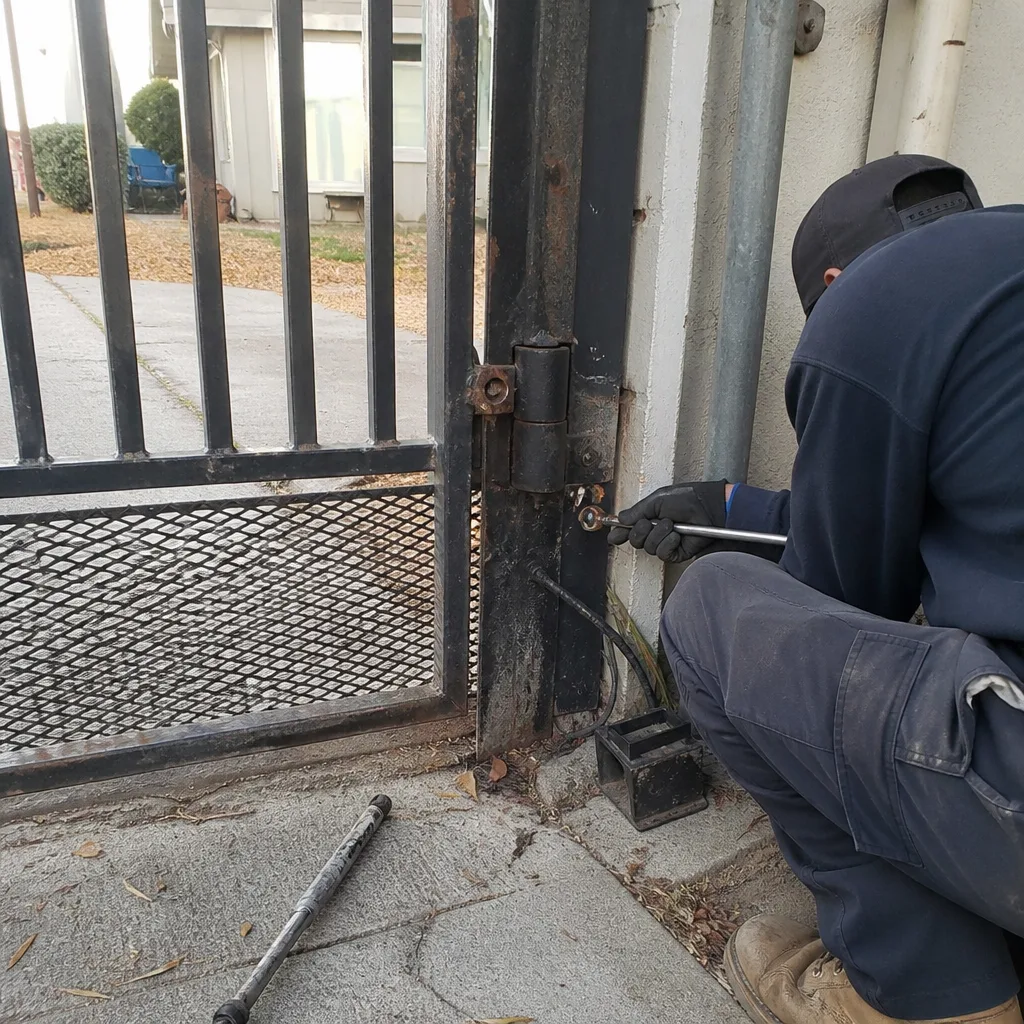 Before
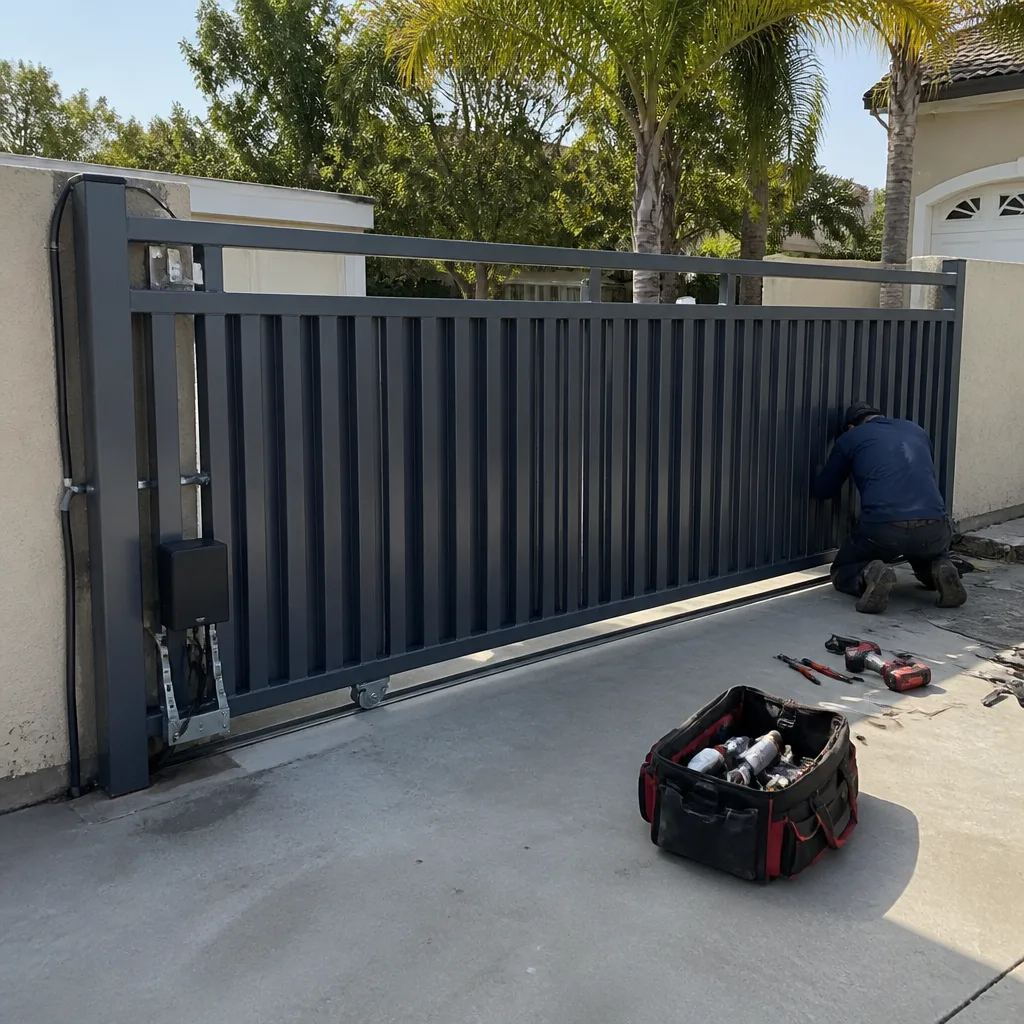 After
After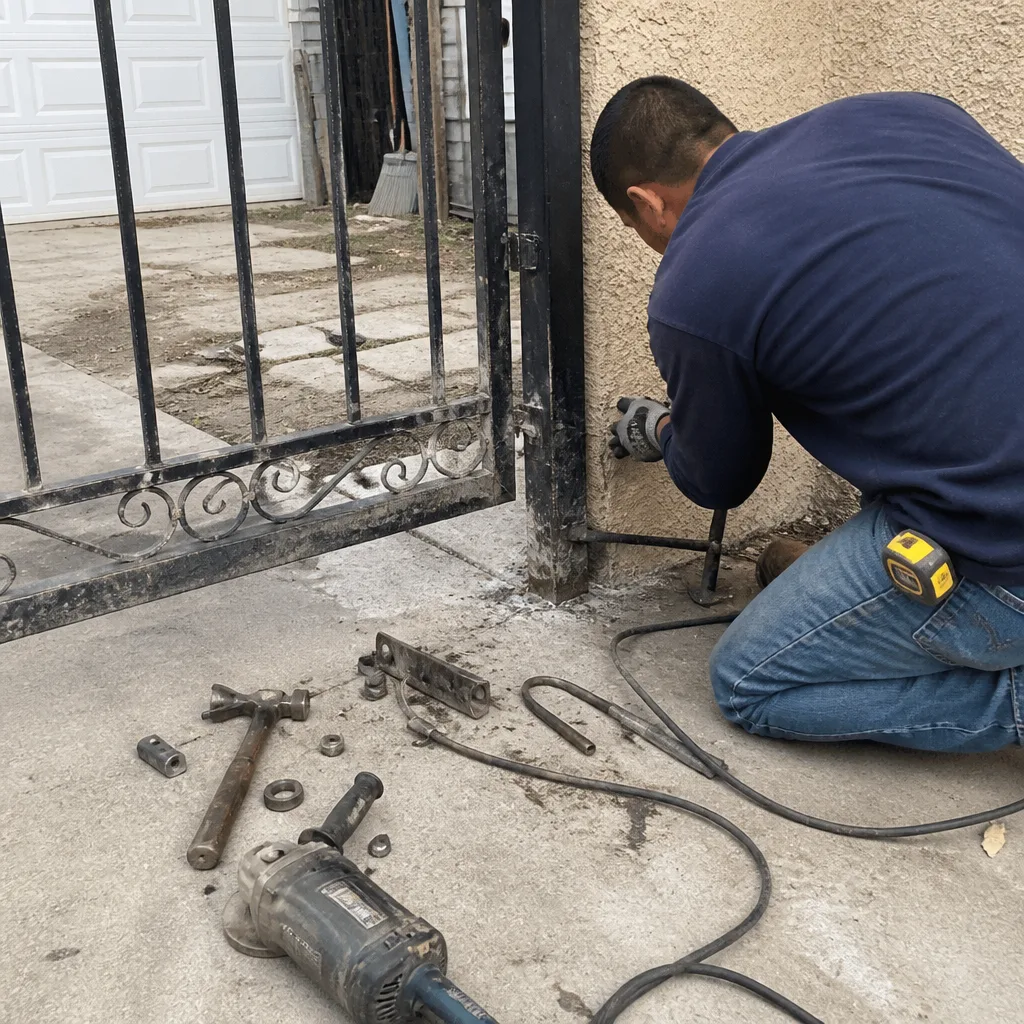 Before
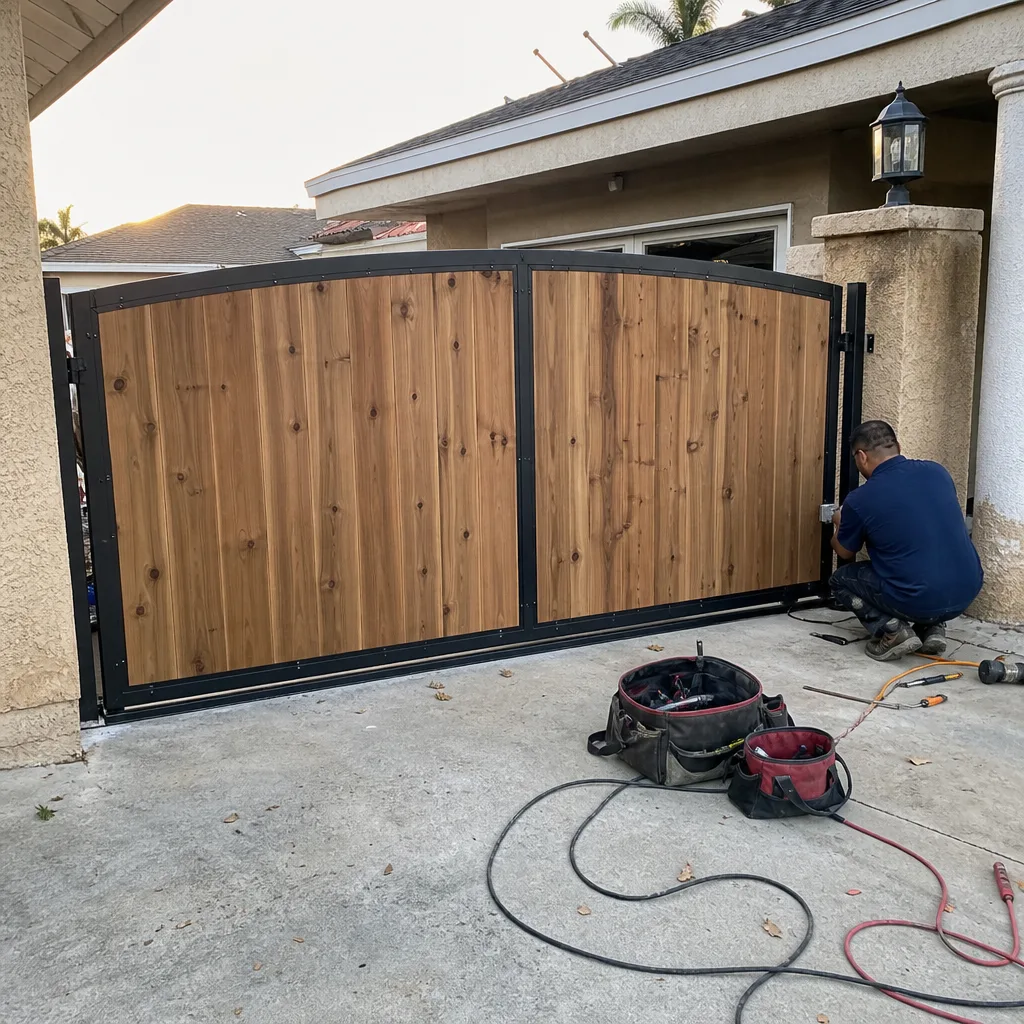 After
After