
Last updated October 17, 2026
 Wrought iron
 Wood & steel frame
 Farm & ranch
 Sliding driveway gates
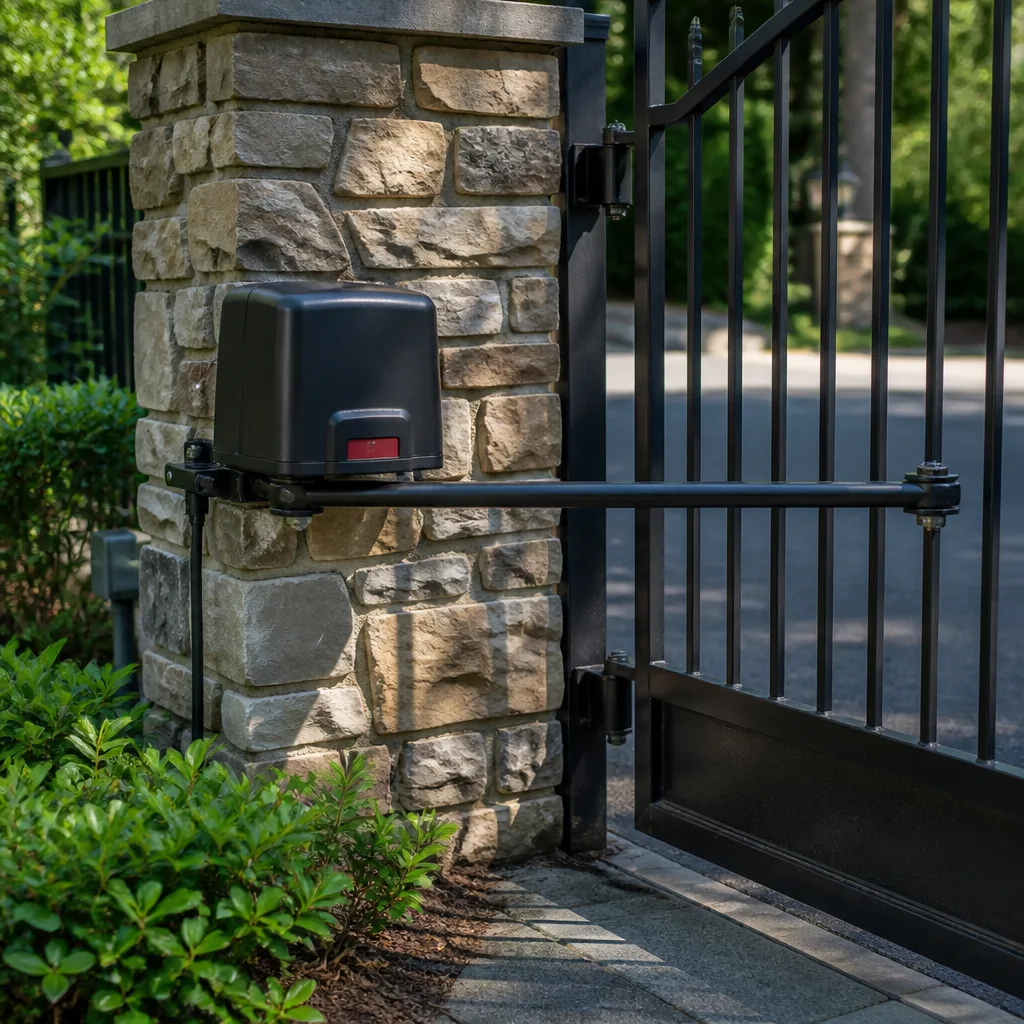 LiftMaster operators
Free on-site gate assessment - hinges, posts, and your LiftMaster or Nice gate operator checked before anything is quoted
The assessment is free and the quote is the invoice.
Get your free estimateSeasonal Gate Repair Care for Riverside: Year-Round Homeowner’s Guide
Most Riverside homeowners adjust their gate when it stops working. That’s backwards. The best time to align a latch strike plate is March, when the metal has contracted to its winter minimum. Adjust it in July at peak expansion and you’ll be adjusting it again in December when it won’t close. This guide explains Riverside’s actual seasonal rhythm: two high-stress windows that break gates, and two quiet windows that are the only practical times to prevent the breakage. For a deeper dive, see The Complete Guide to Gate Repair in Riverside. You’ll learn what to do each season, what takes ten minutes versus what needs a technician, and how the Santa Ana winds and irrigation timers quietly work against your gate year-round.
Quick Answer
Seasonal gate care in Riverside means scheduling preventive maintenance twice a year: once in March when metal is contracted and aligned, and once in November right after Santa Ana winds reveal hinge and latch wear. The summer months (June through September) and fall wind season (October through November) are when gates actually fail, but they’re the worst times to attempt alignment work. Most Riverside gate emergencies are prevented by two short maintenance sessions a year, plus a 15-minute quarterly check of the operator chain, hinges, and post level.
Styles & brands we work with
Table of Contents
- Why Riverside’s Climate Breaks Gates Differently
- The Two High-Stress Windows: Heat Expansion and Santa Ana Wind Load
- The March Maintenance Window: What to Do and Why It Works
- The November Maintenance Window: Post-Wind Inspection and Correction
- Desert Dust and Your Electric Gate Operator
- Irrigation Time Changes and the Slow Post Lean
- The Riverside Gate Care Calendar
- Common Mistakes to Avoid
- When to Call a Professional
- Frequently Asked Questions
Why Riverside’s Climate Breaks Gates Differently
Riverside sits in a thermal bowl. The city routinely sees summer highs above 95°F, with stretches over 100°F from July through early September. Winter nights dip into the 40s. That’s a 50 to 60 degree annual swing, and steel responds to it measurably. A standard 12-foot steel gate can expand by roughly 1/8 to 1/4 inch between a cold January morning and a hot August afternoon. That doesn’t sound like much until you realize the clearance between a latch bar and a strike plate is often only 1/16 to 1/8 inch to begin with.
Coastal cities have fog and salt corrosion. Riverside has dry heat, intense UV, and airborne dust from the Santa Ana River basin. The heat cooks grease out of hinges faster than coastal air ever will. The dust doesn’t wash off with rain because Riverside gets about 11 inches of rain annually, and almost none of it falls between May and October. The dust settles, mixes with whatever lubricant remains, and forms a grinding paste inside hinge barrels and operator tracks.
What does this mean for a homeowner? It means the gate that worked perfectly in February may bind in August without anyone touching it. It means a gate adjustment done in July will be wrong by January. And it means the gate repair work in Riverside that we see most often is seasonal, predictable, and largely preventable.
The Two High-Stress Windows: Heat Expansion and Santa Ana Wind Load
Riverside’s seasonal stress on gates clusters into two distinct windows. Understanding them changes how you think about maintenance entirely.
June Through September: Thermal Expansion Season
From mid-June through late September, daytime highs routinely exceed 95°F. A black or dark bronze gate surface can reach 140°F in direct sun. Steel expands. Aluminum expands roughly twice as much as steel for the same temperature change, which matters if your gate mixes materials, say a steel frame with aluminum infill panels. The frame and the panels expand at different rates. Welds and fasteners take the strain.
What we see in Riverside during these months:
- Latch bars that no longer seat fully into strike plates because the gate grew lengthwise and the gap shifted.
- Sliding gates that drag or bind as the track side expands more than the non-track side.
- Hinge pins that squeal because heat thinned the lubricant and dust replaced it.
- Electric operators that trip their obstruction sensors because the gate now meets more resistance at the same motor amperage.
Here’s the counterintuitive part: June through September is the worst time to make adjustment corrections. The metal is at its maximum expanded state. Any alignment you do now will be wrong when the gate contracts in December. The right move in summer is to lubricate, clean, and reduce the load on the gate, but not to reposition the latch, hinges, or post. Save alignment for March.
October Through November: Santa Ana Wind Load Season
Santa Ana winds typically arrive in October and November, occasionally starting in late September. In Riverside, gusts can exceed 60 mph in the foothill neighborhoods: Alessandro Heights, Canyon Crest, and the areas along Box Springs Mountain. These winds don’t just push gates; they cycle pressure against them repeatedly. A swing gate that faces west or south takes repetitive lateral loading. Each gust leverages the gate panel against the hinge posts.
The damage pattern is consistent. Wind flexes the gate. The hinges, which are the only moving connection between the gate and the post, absorb every cycle. Over a single windy week, a swing gate can experience thousands of load cycles. Hinge screws begin to elongate their holes in the post. The gate sags, often by only a quarter inch at first. That quarter inch means the latch bar now scrapes the strike plate edge instead of seating cleanly. The homeowner notices it as a gate that’s suddenly hard to close, or that needs a hard shove to latch. They assume the latch broke. What actually happened is the hinge-to-post connection loosened under wind load.
Sliding gates face a different wind problem: debris. Santa Ana winds push leaves, palm fronds, and fine dust into the track channel and the operator gear rack. A V-track sliding gate with debris in the wheels rides higher on one side, which twists the gate panel slightly as it travels. The operator motor works against uneven resistance, and the limit switches, the sensors that tell the motor where to stop, get confused. The gate stops short, or reverses, or hums without moving.
The March Maintenance Window: What to Do and Why It Works
March is Riverside’s best maintenance month. Here’s the logic: by March, nighttime temperatures have been consistently below 60°F for three months. The metal in your gate has contracted to its winter minimum. At this minimum-expansion state, the gate is as short as it will be all year. The gaps and clearances are at their largest. That’s exactly when you can make alignment corrections that will hold for the next nine months.
Adjust the same latch in July when the gate is fully expanded, and you’re dialing in clearances at the point of maximum interference. When the gate contracts in December, the gap becomes too large. The latch bar won’t reach the strike plate. You’ll have a gate that worked okay in summer but won’t close in winter, and you’ll think something broke. Nothing broke. The geometry just changed because of the temperature.
Here’s a step-by-step March routine, roughly 90 minutes for a swing gate:
- Inspect hinge screws and bolts (15 minutes). Look for rust streaks below each hinge, which indicate moisture working into the fastener hole. Wiggle the gate at its far end. Any movement at the hinge means the screws are loose or the holes are wallowed out. Tighten carefully, but don’t strip the wood or metal.
- Check latch alignment (10 minutes). Close the gate slowly and watch where the latch bar meets the strike plate. It should hit the center, not the upper or lower edge. If it scrapes, March is the month to adjust the strike plate position.
- Lubricate hinge pins and latch mechanisms (15 minutes). Use a silicone or white lithium spray. Avoid heavy grease, which traps Riverside dust. Wipe away excess.
- Test the drop rod or gate stop (10 minutes). The metal stop post that catches the gate when it closes takes a beating. Confirm the rubber bumper is still intact and that the gate doesn’t overshoot.
- For sliding gates: clean the track (20 minutes). Remove all debris from the V-track or U-track. Check wheel bearings for play. Spray the chain or belt with a dry lubricant if your operator uses one.
- For electric gates: check safety sensor alignment (20 minutes). Photo eye sensors get knocked slightly askew over winter. Misaligned sensors cause the gate to refuse to close or to reverse unexpectedly. Realign them until the indicator lights show a solid signal.
Most Riverside homeowners can do steps 1 through 4 themselves. Steps 5 and 6 are manageable too, but if the track is heavily worn or the operator makes an unusual noise, that’s a cue to schedule a professional look rather than push through. Not sure whether to DIY or call a pro? Read DIY vs Professional Gate Repair: The Riverside Homeowner’s Decision Guide.
The November Maintenance Window: Post-Wind Inspection and Correction
By mid-November, Riverside has usually experienced its first Santa Ana events. The winds have had time to work on every gate in the city. November is the time to assess the damage and correct it before the next round, which can arrive any time through December and occasionally January.
The November routine is shorter than March but more critical, because the failures it catches are progressive. A slightly loosened hinge in November becomes a sagging gate by March, and a broken weld by summer.
- Re-check hinge tightness (10 minutes). This is the top failure point after wind season. Use a socket wrench on the hinge bolts. If a bolt turns easily more than a quarter turn, it was loose. Tighten it fully.
- Inspect weld points on steel gates (15 minutes). Look at every welded joint on the frame. Santa Ana gusts flex the frame, and cracks start at the weld toes, the line where the weld bead meets the parent steel. A hairline crack is a future break. Repairing a crack now is a small welding job. Replacing a gate section later is not.
- Clean and inspect the electric operator (20 minutes for sliding gates). Remove the operator cover if you’re comfortable doing so. Blow out accumulated dust. Check the drive chain tension if your operator uses a chain. Chains stretch over time, and a loose chain slaps against the rail.
- Test the gate in both directions (5 minutes). Open it fully, close it fully. Listen for grinding, clicking, or hesitation. Watch the gate’s vertical alignment. If the top edge of the gate isn’t parallel to the ground, the hinges have shifted.
- Check the post for lean (5 minutes). Use a 4-foot level against the face of the hinge post. More than about 1/8 inch of lean over 4 feet indicates soil movement or loose post footing. We’ll address this in the irrigation section below.
Desert Dust and Your Electric Gate Operator
Riverside’s dust is different from coastal grime. Coastal operators accumulate a film of salt and moisture that causes corrosion. Riverside operators accumulate a dry, fine silt that behaves like an abrasive. It works into the drive chain links, the limit switch contacts, and the motor gearbox seals. The problem isn’t that dust makes the operator dirty; it’s that dust dramatically increases internal friction.
A chain-drive operator on a sliding gate runs through hundreds of cycles a month. Each cycle grinds the chain against whatever dust has settled into the links. Over a Riverside summer, the chain can wear measurably. The drive sprocket wears too. When the chain lengthens or the sprocket teeth flatten, the gate starts to jerk slightly during acceleration and deceleration. Homeowners often don’t notice the jerk because it’s subtle. The motor notices. Motor current draw goes up. Heating increases. Eventually the thermal overload trips, or the gearbox seal fails, and now the gate won’t move at all.
The preventive interval that works for Riverside is this: clean and lubricate the chain every 90 days during the dry season (April through November), and cycle the gate fully at least once every two weeks even if you don’t use it. A gate that sits unused all winter builds up internal stiffness and dust compaction. Cycling it gives the limit switches a chance to reset and the lubricant a chance to redistribute.
If you have a gate operator from LiftMaster, FAAC, BFT, or Linear, the internal maintenance is best left to a factory-trained technician. These operators have internal adjustment points and torque settings that aren’t meant for homeowner adjustment. The 90-day chain and track cleaning, though, is something any Riverside homeowner can handle with a rag, a brush, and a can of dry chain lube. It’s the single most effective thing you can do for operator life.
Irrigation Time Changes and the Slow Post Lean
Here’s a connection most Riverside homeowners never make: when the city adjusts its irrigation recommendations for the season, your gate posts feel it. Riverside’s water agencies typically encourage reducing outdoor irrigation between November and March, then increasing it again from April onward. If your gate post sits within five or six feet of a lawn or planter bed, the soil around the post footer is going through an annual cycle of drying and swelling.
Clay-rich soils in Riverside expand when wet and shrink when dry. During summer irrigation season, the soil around a post footer can hold more moisture, which softens the lateral bearing capacity. The post has slightly less support. If the gate is heavy or takes Santa Ana wind load during this same period, the post can begin a slow lean. It’s often imperceptible month to month, a fraction of a degree at a time. Over two or three years, that fraction becomes a visible lean. The homeowner notices the gate dragging or the latch misaligned and attributes it to wind damage. But wind was the force; soft soil from irrigation was the opportunity.
The prevention is straightforward:
- Keep irrigation spray heads pointed away from gate posts. A 3-foot dry radius around each post is enough.
- If the post is already leaning slightly, don’t ignore it. A leaning post only gets worse because soil has no self-correcting ability.
- Check post plumb every November and every March with a level. Write down the measurement so you can compare year over year.
- If the post has moved more than a quarter inch in a year, that’s a structural issue, not a cosmetic one. The fix usually means resetting the footer, which is definitely not a DIY job.
We’ve seen irrigation-related post lean in newer Riverside developments where homes sit close together and gate posts sit just a few feet from sprinkler lines. The pattern is so consistent we watch for it on every gate installation in Riverside, and we position new posts with drainage and sprinkler placement in mind from the first day.
The Riverside Gate Care Calendar
Here’s the full year on one page. Tasks marked DIY take an average homeowner 10 to 30 minutes. Tasks marked Specialist should be handled by a Gate Repair professional, and any specialist repair or installation work is covered by the 365-Day Done Right Promise when done by Latch and Post Gate Repair Riverside.
- January (Quiet window) – Cycle the gate fully once every two weeks even if unused. Inspect chain tension. Wipe visible dust from operator housing. DIY, 15 minutes per session.
- February (Quiet window) – Check post plumb with a level. Check hinge bolts for looseness. Confirm the gate closes fully without dragging. DIY, 20 minutes.
- March (Primary maintenance window) – Full maintenance routine from the March section: hinges, latch alignment, lubrication, track cleaning, sensor alignment. DIY 90 minutes; Specialist for any alignment drift over 1/4 inch.
- April (Transition) – Check irrigation heads near gate posts after system restart. Adjust spray direction if posts are getting wet. DIY, 10 minutes.
- May (Warm-up) – Lightly lubricate hinge pins before summer heat arrives. Check that the gate latches cleanly. DIY, 10 minutes.
- June (High-stress begins) – Watch for latch binding on hot afternoons. Do NOT attempt alignment adjustments. If the gate binds, lubricate and wait for cooler weather. DIY 10 minutes; Specialist if the gate won’t open at all.
- July (Peak heat) – Clean operator dust once mid-month. Check for signs of motor strain: slow travel, humming, thermal trips. DIY 15 minutes; Specialist if the operator trips repeatedly.
- August (Peak heat) – Repeat chain lubrication. Inspect wheels and bearings on sliding gates. DIY 15 minutes; Specialist for any bearing wear.
- September (Heat tapering) – Test safety sensors. Confirm the gate reverses properly on contact. DIY 15 minutes; Specialist if sensors won’t align.
- October (Santa Ana begins) – Remove all debris from sliding gate tracks after each heavy wind event. Check hinge screws weekly if winds are sustained. DIY 20 minutes per event.
- November (Secondary maintenance window) – Full post-wind routine: hinge bolt torque, weld inspection, operator inspection, post lean check. DIY 45 minutes; Specialist for any cracks, loose hinges, or post movement.
- December (Quiet window) – Final cycle test before winter. Check that the gate remains easy to operate on cold mornings. DIY, 10 minutes.
Two notes on this calendar. First, the Specialist flags are where the 365-Day Done Right Promise applies: if Latch and Post makes an adjustment or repair and it isn’t right, we come back and make it right, without argument or fine print. Second, all of the DIY tasks assume a gate in generally good condition. A gate that’s already sagging, rusted, or making unusual noises needs eyes on it sooner rather than later.
Common Mistakes to Avoid
- Adjusting the latch in July. This is the single most common error we see. The gate is fully expanded in summer heat. Any alignment done now creates a winter misalignment. Adjust in March or accept that you’ll be re-adjusting in December.
- Using heavy grease on hinges. Heavy grease traps Riverside dust and turns into abrasive paste within weeks. Use a dry or silicone-based lubricant instead.
- Ignoring a gate that’s getting progressively harder to close. A gate that needs more force each week is telling you something: hinge wear, post movement, or frame flex. The force you add to close it is also adding stress to the operator and the hinges. It gets worse faster than homeowners expect.
- Waiting until the gate is completely stuck to call. A gate that won’t move at all is far harder to repair than a gate that’s binding slightly. Early calls are almost always cheaper and faster.
- Assuming the operator is broken when the limit switches are just dirty. Riverside dust builds up on limit switch contacts over summer. The symptoms, stopping short, reversing, humming, look like motor failure. A cleaning fixes it far more often than a motor replacement.
- Forgetting that irrigation affects posts. The post you assumed was blown over by wind may have been slowly pushed by wet soil for three summers. Keep water away from post footers.
- Scheduling a full gate replacement when a hinge repair would do. Sagging gates are often repairable by replacing worn hinge barrels and tightening or re-securing hinge posts. Get a professional assessment before committing to a full install.
When to Call a Professional
A few scenarios genuinely need a trained technician. If your gate post has visibly moved or leans more than a quarter inch over a short span, the footing needs professional attention. If your gate’s weld joints show cracks, especially at the frame corners, that’s a structural repair that requires the right welding setup and should not be attempted without training. If your electric operator trips repeatedly, hums without moving, or has a chain that keeps loosening, the internals need a factory-trained eye, whether it’s a LiftMaster, FAAC, BFT, or Linear unit. And if you have an electric gate repair in Riverside need that involves wiring, control boards, or safety sensors, that’s not a weekend project.
Latch and Post Gate Repair Riverside offers free estimates in Riverside. Call (341) 895-4331 and a live person answers, day or night. Every job starts with a written price before work begins, and every visit includes shoe covers and drop cloths inside the home, plus a photo of the clean-up before the technician leaves.
Frequently Asked Questions
Twice a year: once in March for alignment and lubrication, once in November for post-wind inspection and hinge tightening. Most Riverside gates tolerate the city’s heat and Santa Ana cycles far better with those two sessions than with any other schedule. Between those windows, a quarterly 15-minute check of hinges, track, and operator dust is enough. Call (341) 895-4331 to schedule a maintenance visit, and you’ll get a written price before any work begins.
Thermal expansion. Steel and aluminum expand when temperatures climb, and a Riverside gate can grow by 1/8 to 1/4 inch between a January morning and an August afternoon. That expansion reduces latch clearance and can make the gate bind. The fix is not to adjust the latch in summer; it’s to lubricate and wait for the March maintenance window, when the metal is contracted and alignment adjustments will hold.
Yes. Sustained gusts over 40 mph, common in Riverside foothill areas during October and November, flex swing gates against their hinges. Over thousands of load cycles, hinge screws loosen in their holes, and the gate begins to sag. The damage is progressive and often shows up as a latch that’s suddenly hard to close. Check hinge tightness after every significant wind event.
Minor gate repairs like latch adjustment or hinge tightening typically run between $80 and $200. Hinge replacement runs $150 to $350 depending on gate weight and size. Operator diagnostics average $100 to $150, with repairs varying widely from there. Every job at Latch and Post gets a written price before work starts, so you’ll know the exact number before anyone touches your gate. Call (341) 895-4331 for a free estimate.
Mostly. Latch alignment, hinge tightening, lubrication, track cleaning, and post-level checks are manageable for a careful homeowner with basic tools. What isn’t DIY: any weld repair, any post-footer resetting, any operator disassembly involving wiring or control boards, and any safety sensor work on a powered gate. For those, call a factory-trained technician.
Every repair and installation done by Latch and Post Gate Repair Riverside is covered. If the work isn’t right, we make it right, no argument and no fine print. That includes seasonal maintenance adjustments, latch replacements, hinge work, and Latch and Post Gate Repair Riverside home service calls of any kind.
The Bottom Line
Riverside gates don’t fail randomly; they fail on a seasonal schedule. Summer heat expands the metal and binds the latch. Santa Ana winds loosen hinges and flex frames. The dust grinds down operators. The irrigation softens post footings. The good news is that every one of these is predictable, and predictability means prevention works. Two maintenance windows, March and November, handle 90% of what goes wrong. A quarterly ten-minute check handles most of the rest. And when something does break, which will happen eventually, the difference between a good repair and a frustrating one is a written price, a clean work area, and a promise that the job will be done right. For more guides & resources on keeping your gate in top shape, explore our blog. That’s the standard at Latch and Post Gate Repair Riverside. Call (341) 895-4331 for a free estimate anytime.
Written by Cody Beckman, Owner at Latch and Post Gate Repair Riverside, serving Riverside since 2009.
See the difference
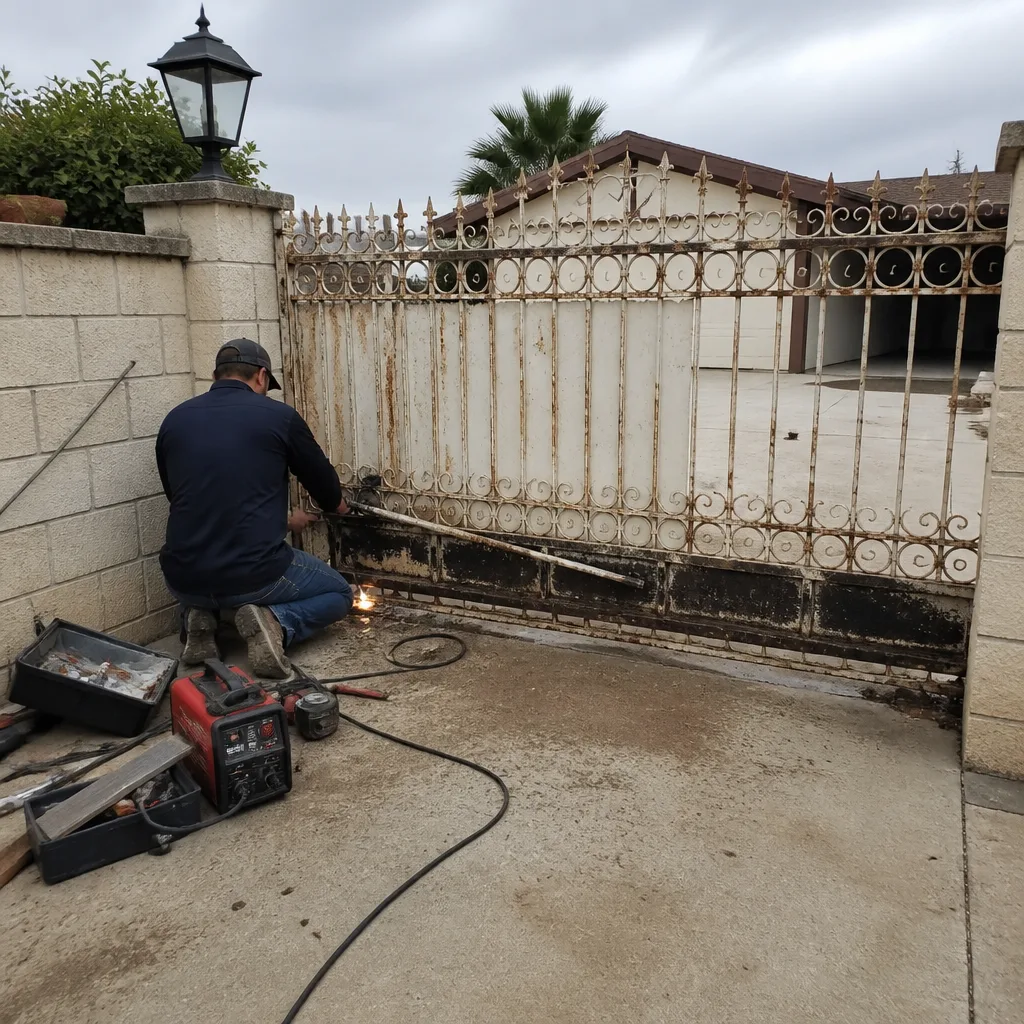 Before
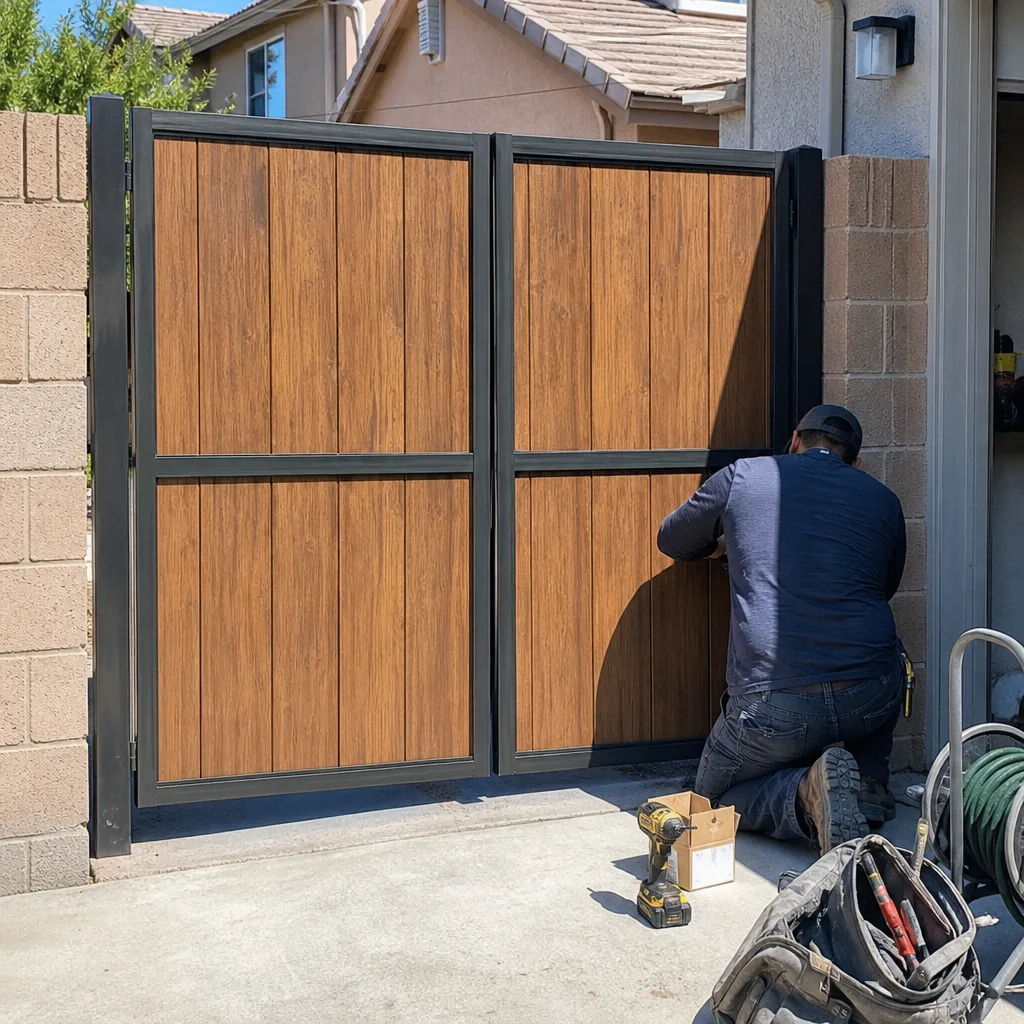 After
After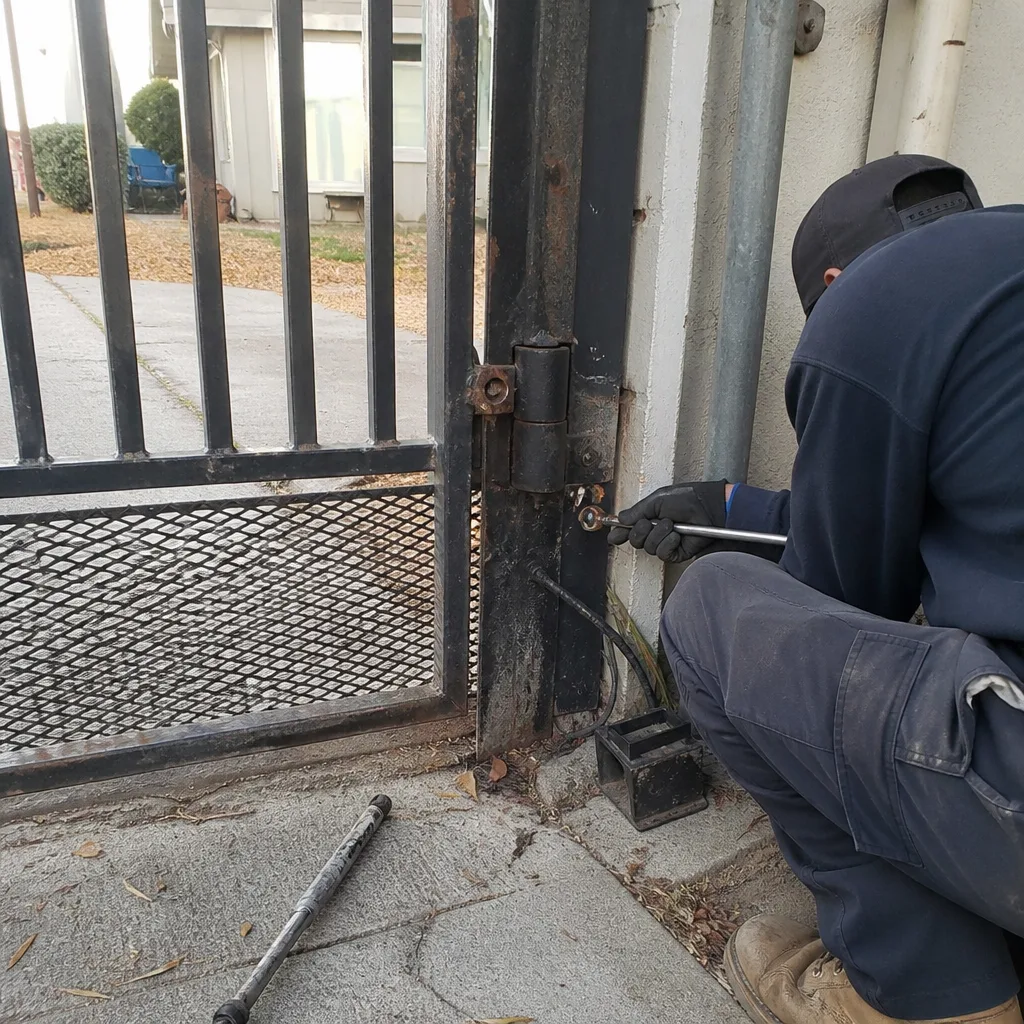 Before
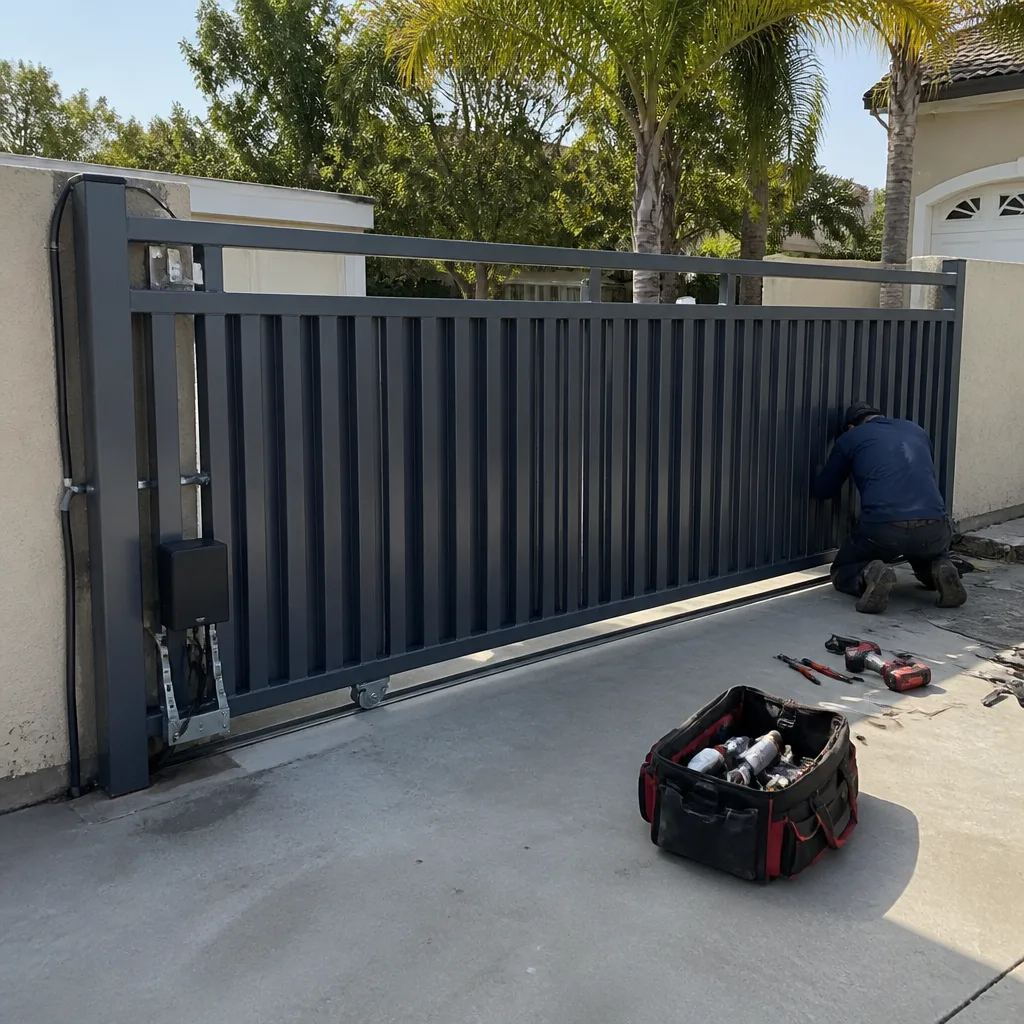 After
After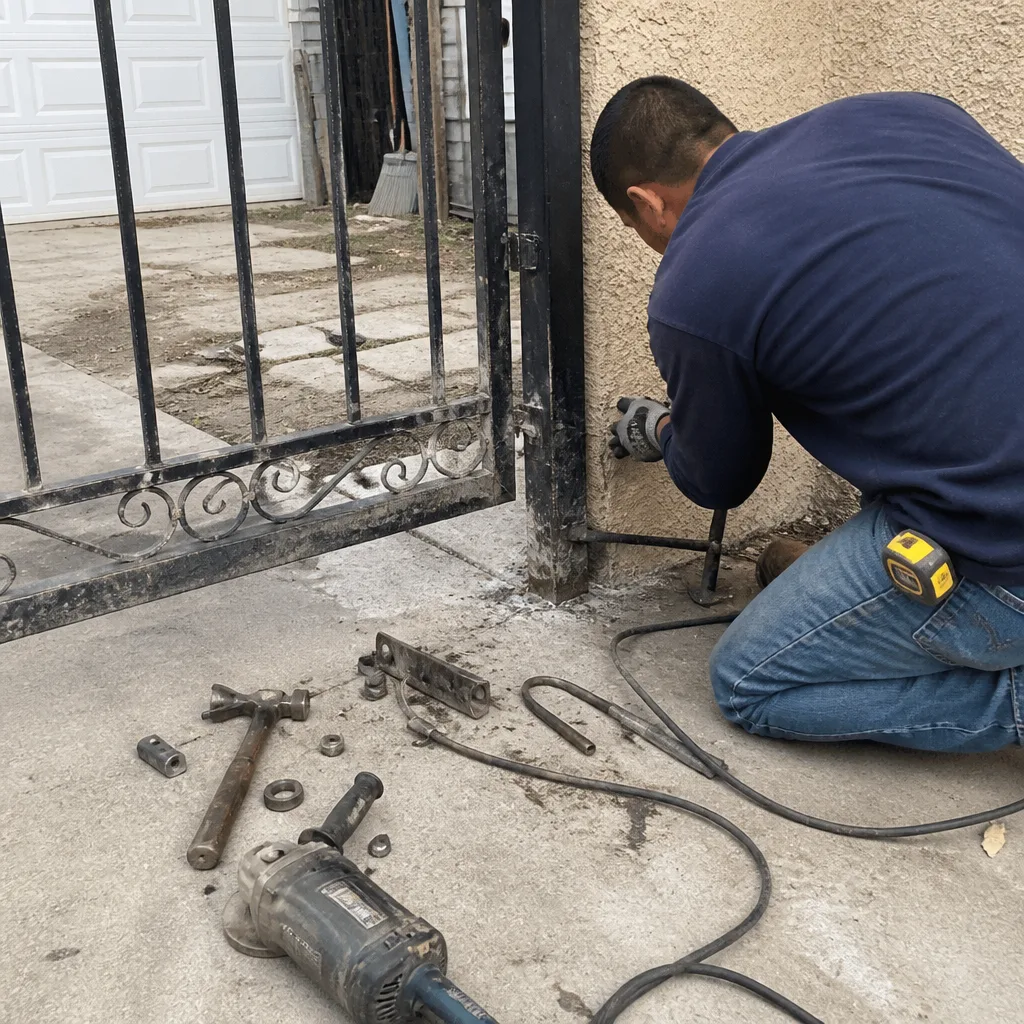 Before
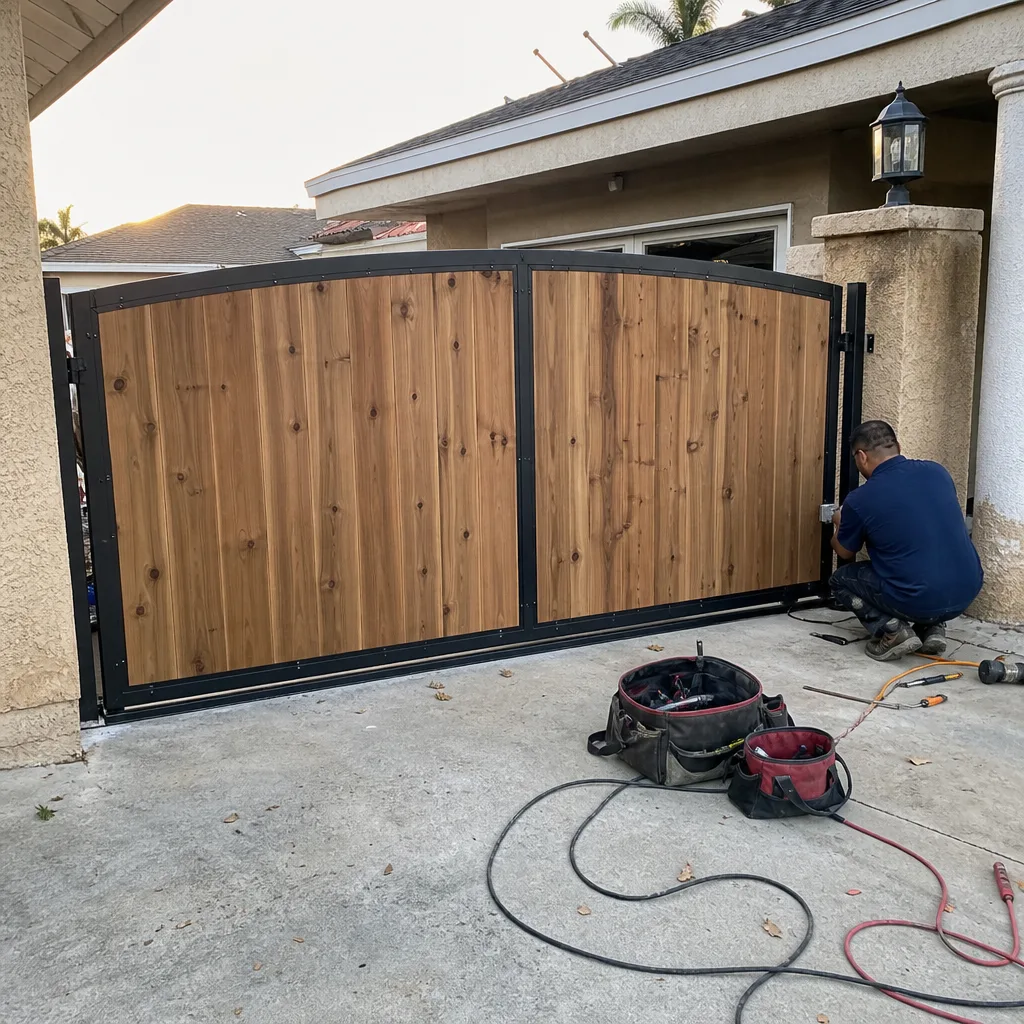 After
After