
Last updated October 17, 2026
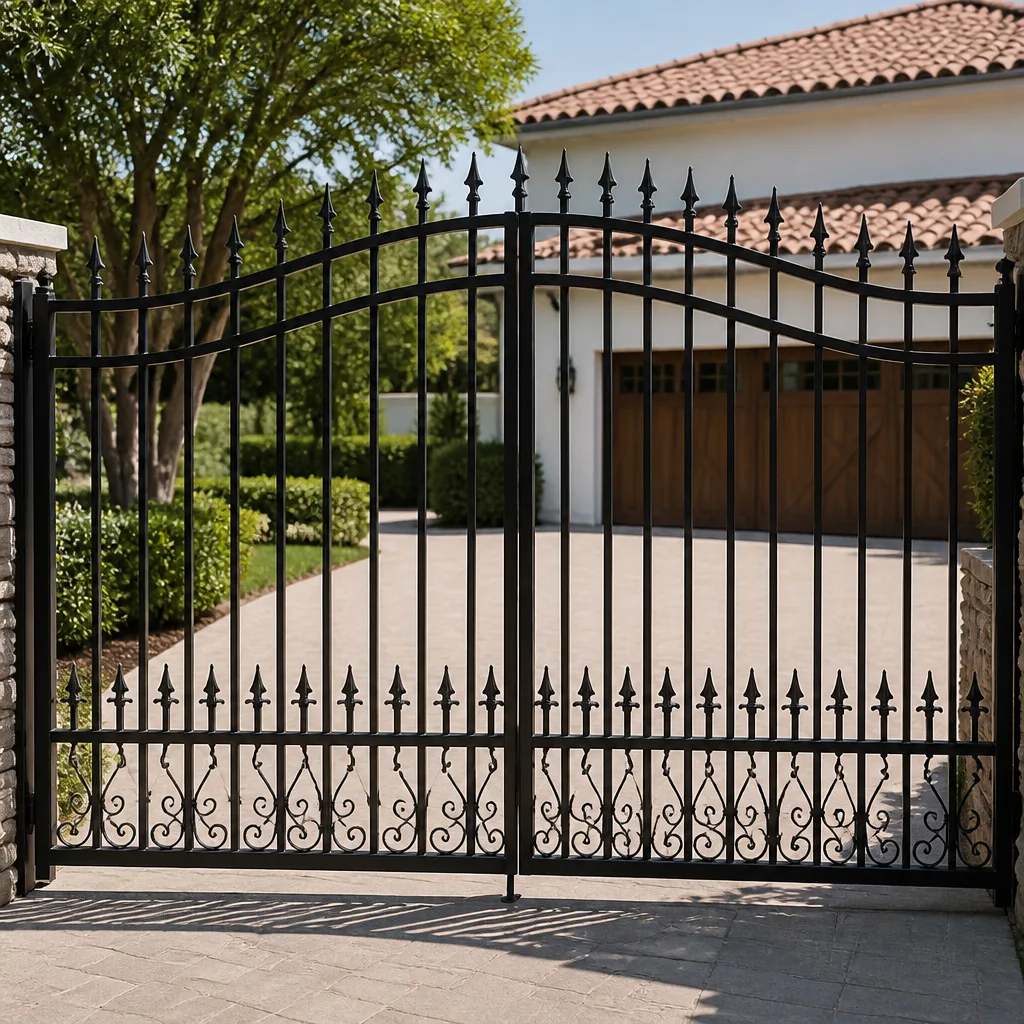 Wrought iron
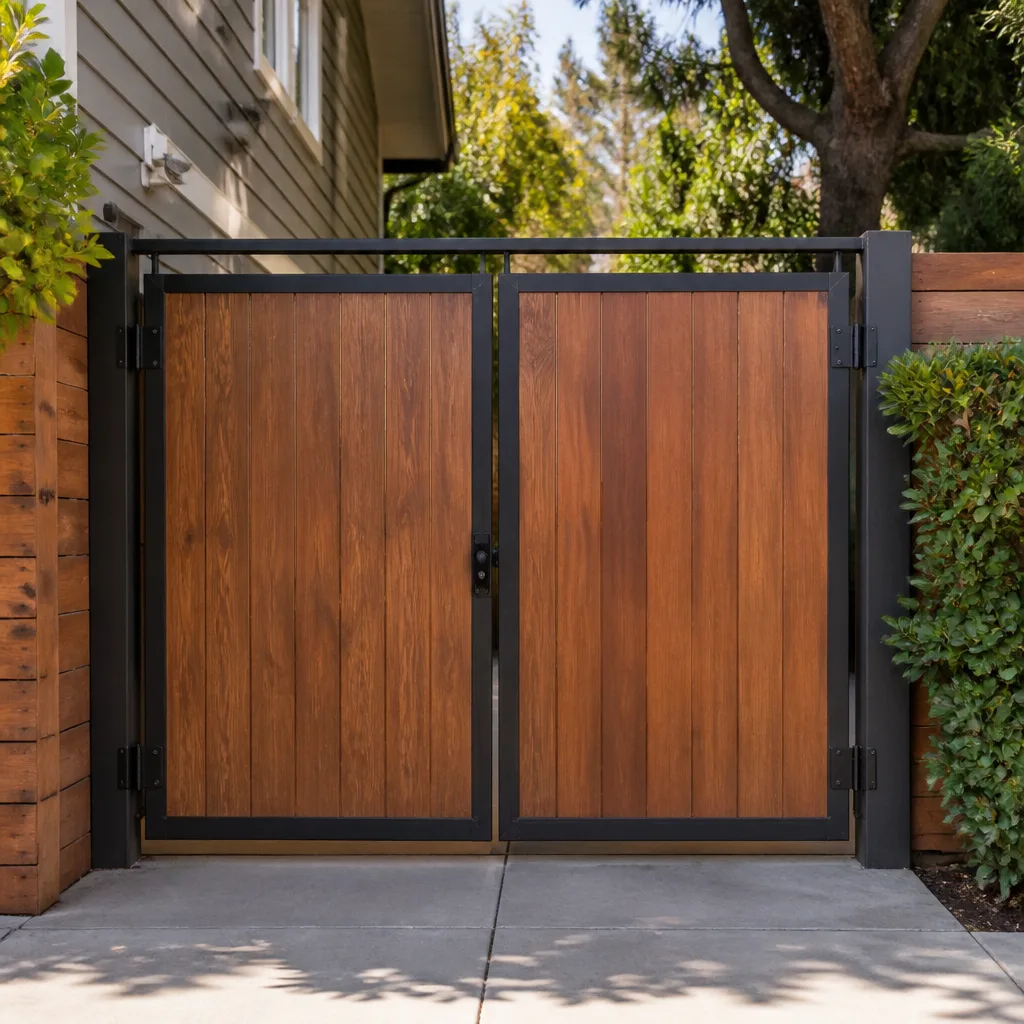 Wood & steel frame
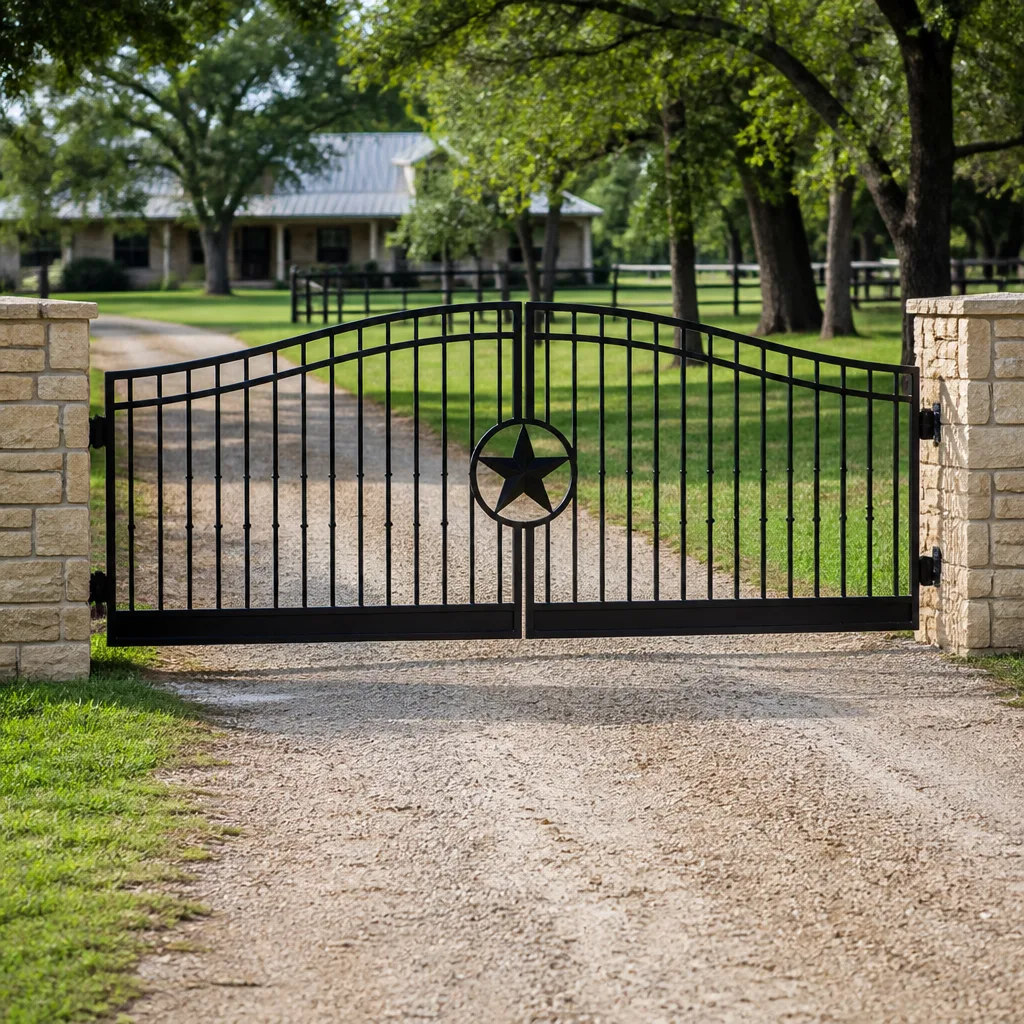 Farm & ranch
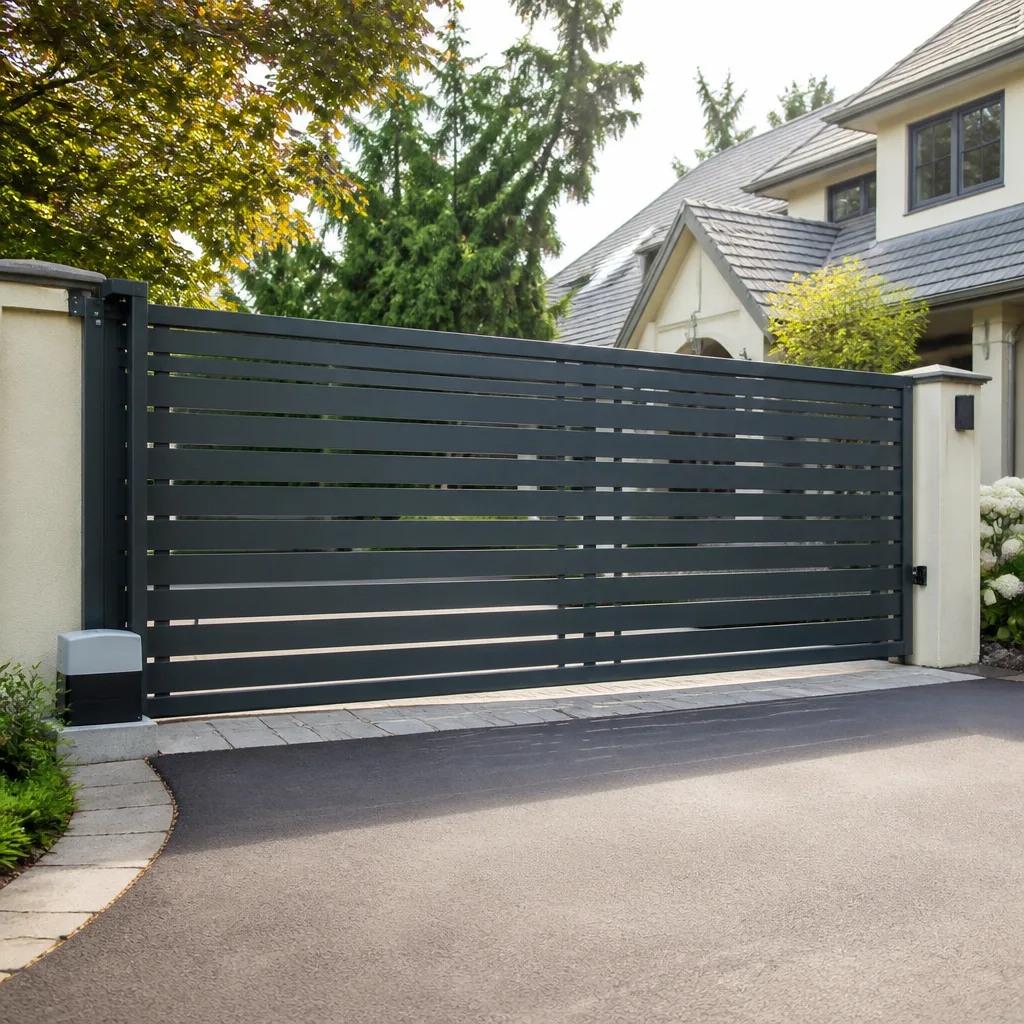 Sliding driveway gates
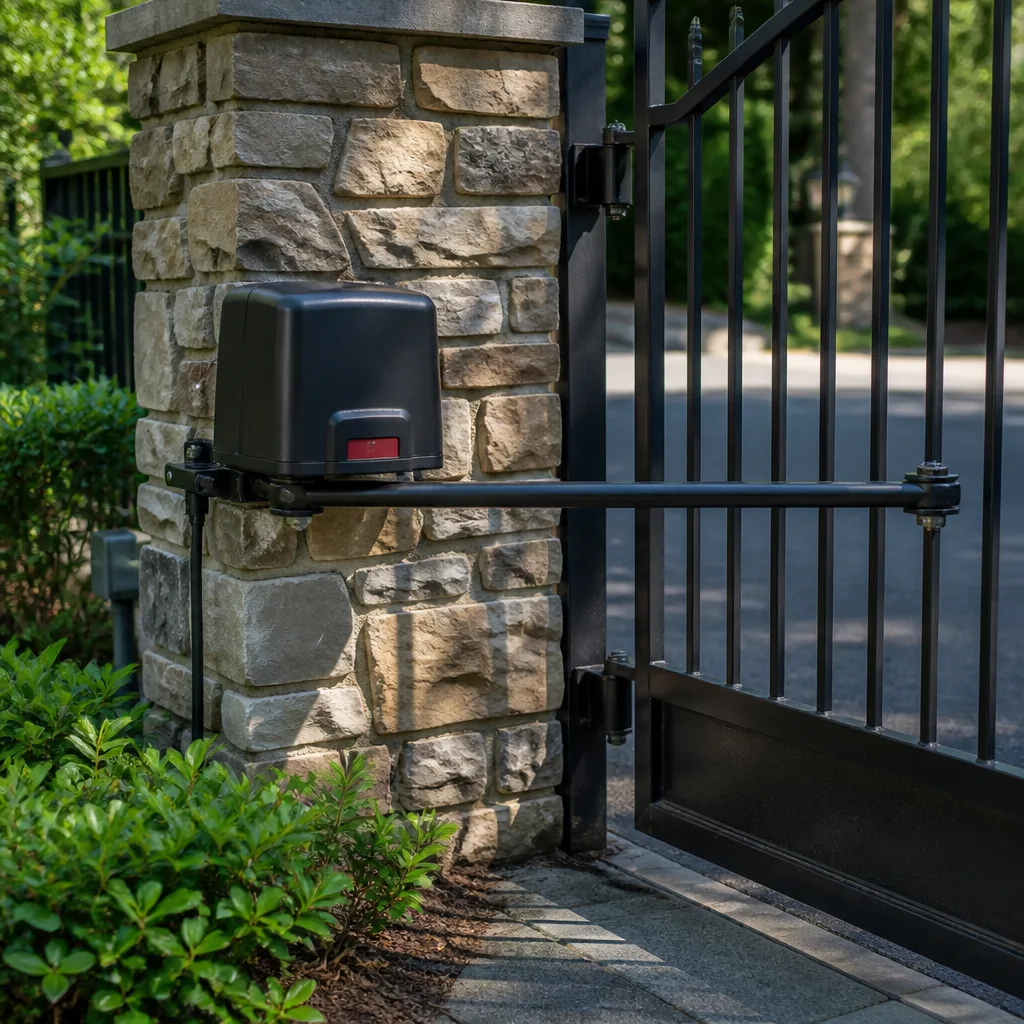 LiftMaster operators
Free on-site gate assessment - hinges, posts, and your LiftMaster or Nice gate operator checked before anything is quoted
The assessment is free and the quote is the invoice.
Get your free estimateDIY vs Professional Gate Repair: The Riverside Homeowner’s Decision Guide
Most YouTube tutorials make gate repair sound like a universal skill. Replace a latch, tighten a hinge, adjust a limit switch. But in Riverside, where summer temperatures climb past 105°F and the Santa Ana winds strip moisture from every exposed surface, the same repair that works in a San Diego garage can fail in three weeks here. This guide draws the line at the task level. We’ll show you exactly which Riverside gate repairs are safe to attempt with $30 in parts, which ones carry risks that national guides never mention, and which ones should start with a phone call. You’ll also learn what a botched DIY job actually costs to undo when a professional inherits it.
Quick Answer
For most Riverside homeowners, the DIY vs. professional decision comes down to one question: does this task involve the gate’s movement system or its electronics? For a detailed look at what each repair costs, see our breakdown. Replacing a latch, tightening hinges, and lubricating rollers are DIY-safe for a careful homeowner with basic tools. Adjusting limit switches, replacing torsion springs, rewiring motors, or fixing posts that lean in sandy Riverside soil are professional jobs, full stop. Expect to spend $15 – $40 on DIY parts, or $120 – $450 on a professional repair that’s backed by a written warranty. If the project touches the operator, the post, or the power supply, get a written quote before any work starts.
Styles & brands we work with
Table of Contents
- The Task-by-Task Decision Matrix
- Three Riverside-Specific DIY Risks National Guides Miss
- The True Cost of a Botched DIY Gate Repair in Riverside
- The Middle Path: What to Prepare Before the Technician Arrives
- The Warranty Gray Area When DIY and Professional Work Mix
- Common Mistakes to Avoid
- When to Call a Professional
- Frequently Asked Questions
The Task-by-Task Decision Matrix
Gate repair is not one skill. It’s about a dozen distinct tasks, and they fall into three categories: tasks almost any careful homeowner can handle, tasks that depend on the brand and model, and tasks that should always go to a trained technician. The table below gives you the complete picture.
| Task | DIY Verdict | Typical Parts Cost | Typical Pro Cost in Riverside |
|---|---|---|---|
| Latch replacement | DIY-safe | $15 – $40 | $95 – $160 |
| Hinge tightening | DIY-safe | $0 (tools already owned) | $75 – $120 |
| Hinge replacement | DIY-possible with caveats | $25 – $70 per hinge | $110 – $220 |
| Roller / track lubrication | DIY-safe | $8 – $15 | $75 – $100 |
| Post adjustment | Professional | N/A | $180 – $400 |
| Operator remote programming | Depends on brand | $0 – $30 (remote) | $85 – $150 |
| Limit switch adjustment | Professional, always | N/A | $95 – $180 |
| Circuit board / wiring repair | Professional, always | N/A | $120 – $350 |
Latch Replacement: The One Job Every Homeowner Can Own
Gate latches are mechanical, not electrical, and most Riverside gates use one of three common styles: a gravity latch, a spring-loaded latch, or a magnetic latch. A homeowner who can operate a screwdriver and read a tape measure can replace any of these in under an hour. Replacement latches at Riverside hardware stores run $15 to $40, and the install is straightforward: remove the old latch, align the new one to the existing strike plate, and secure it. Where DIY goes wrong is usually alignment, not mechanical skill. If the gate doesn’t catch smoothly after the swap, the issue is almost always a worn strike plate or a sagging gate, not the new latch. At that point, the real repair is the hinge, not the latch.
One note: wooden gates in Riverside neighborhoods like Canyon Crest and Wood Streets expand and contract through the summer. A latch that catches in July may bind in January. If you replace a latch, leave a small adjustment allowance, and check it in the opposite season before drilling your final mounting holes.
Hinge Tightening and Replacement: Where the Caveats Start
Tightening bolts is as DIY as it gets. If the gate sags, start there. Hinge replacement is a different story, because it involves supporting the gate’s full weight while the hardware comes off. A 6-foot wooden gate can weigh 80 to 120 pounds. A wrought-iron gate can exceed 200. If you don’t have a second person and a solid brace, the gate will shift mid-project, mounting holes will strip, and you’ll need a professional to re-drill and re-hang it anyway. We see this in Riverside more than anywhere else: a homeowner pulls a hinge on a hot August afternoon, the gate drops, and the post cracks because it was already weakened by years of thermal expansion.
If you’re replacing hinges, use galvanized or powder-coated hardware rated for your gate’s weight. In Riverside’s alkaline soil and desert air, cheap zinc-plated hinges corrode within two seasons. And check the post before you start: if you can wobble it with two fingers, hinge replacement won’t fix the problem.
Post Adjustment: Never a One-Person Job
A leaning post is the most common gate problem in Riverside, and the least DIY-friendly. Posts lean because the soil beneath them shifts, and Riverside’s sandy alluvial soil is particularly prone to it. Every rain event, every irrigation cycle, every drought swelling cycle changes the soil’s grip on the post’s concrete collar. Fixing a leaning post means digging out the old footing, re-bracing the post plumb, and pouring new concrete with proper drainage. It’s not a repair you accomplish with a come-along and a two-by-four. If it’s a post that carries an electric gate operator, the electronics have to come off first, and that’s a professional job by definition.
In our experience across Riverside, a post that leans is a structural problem, not a cosmetic one, and ignoring it is how small gate repairs become full gate replacement projects. The sooner you address a leaning post, the less expensive the fix.
Operator Programming: Brand-Dependent, and Sometimes DIY-Friendly
If you’re pairing a remote, setting a keypad code, or changing the auto-close timer, most homeowner-grade operators make this accessible. Ghost Controls and Mighty Mule both ship with homeowner-friendly manuals, and their programming sequences are documented online. Linear residential swing gate operators follow a similar pattern. DoorKing and Viking operators are another matter. These are commercial-grade units installed on residential properties here in Riverside, and their programming menus assume a level of familiarity with gate terminology that most homeowners don’t have. Programming errors on a DoorKing or Viking unit can trigger fault codes that require a technician to clear. That’s a $95 to $140 service call you didn’t need to spend. The rule: residential-brand operators with printed manuals are generally safe for remote programming. Commercial-grade operators are not.
Three Riverside-Specific DIY Risks National Guides Miss
Every national DIY gate guide assumes a generic climate, a generic soil type, and a generic HOA. Riverside is none of those things. Here are the three local variables that turn a straightforward repair into a rework job.
1. Thermal Expansion and Gap Adjustments
Riverside regularly hits 105°F in July and August, and nighttime temperatures can drop 30 degrees from the daytime peak. Steel and iron gates expand measurably in that heat. A gate adjusted to a perfect 1/2-inch gap in July will hang too loose or bind in December. A DIYer who sets their gate’s travel limits in summer without accounting for thermal expansion will be readjusting in late autumn, or worse, burning out a motor that’s been fighting a too-tight gap for months. Professional installers in Riverside adjust gaps for the annual temperature range, not the current weather. That’s not a skill. It’s local knowledge that only comes from working in this climate.
2. Sandy Soil and Temporary Bracing
Riverside sits on old alluvial deposits from the Santa Ana River. Large parts of the city, especially the La Sierra and Arlington areas, have sandy, fast-draining soil. When a DIYer digs out a post footer and braces it temporarily, the brace that would hold fine in clay soil works loose overnight in sand. The post shifts a half-inch, the concrete pour doesn’t matter, and the whole job has to be redone. We’ve seen homeowners buy $80 in concrete and rebar only to spend $200 having a professional redo the footing properly with an oversized collar and gravel drainage. In Riverside’s soil, the drainage layer under the footing matters as much as the concrete itself.
3. HOA Documentation Requirements
Many Riverside neighborhoods, particularly newer master-planned communities in Orangecrest and Mission Grove, have HOAs that regulate gate appearance, hardware type, and even repair documentation. A DIY latch replacement or a painted gate that doesn’t match the approved palette can trigger a violation notice. Some HOAs require proof of professional repair for gate operator work, especially where community security is involved. Before you start any visible gate project, call your HOA or pull your CC&Rs. A $30 latch swap that generates a $75 re-inspection fee or a remediation notice isn’t a savings anymore. Professional gate companies operating in Riverside understand these documentation requirements and can provide the paperwork your HOA asks for.
The True Cost of a Botched DIY Gate Repair in Riverside
Here’s a number nobody puts in the tutorials: when a professional inherits a partially completed DIY gate repair, the job costs $80 to $120 more than the original repair would have cost. That’s the Riverside rework premium, and it exists because the technician has to undo the homeowner’s work before starting their own. Stripped mounting holes get re-drilled. Improperly spliced wires get traced and identified. A misaligned opener bracket gets removed and re-mounted. All of that is billable time.
Consider a common example. A Riverside homeowner replaces their own gate opener’s drive belt, misroutes it around one pulley, and the opener hums but won’t move. The professional who arrives doesn’t just fix the belt routing. They inspect the sprockets for damage, test the motor’s current draw to ensure it wasn’t overheated, re-set the travel limits, and re-tension the belt. That’s a $180 repair for what should have been a $90 belt replacement if it had been done right the first time. Or in a worse case, the DIY mistake destroys the motor entirely, and a $90 repair becomes a $500 electric gate replacement.
The financial math on DIY gate work in Riverside is simple: when it works, you save $100 to $300. When it doesn’t, you spend $80 to $120 more than you would have spent by calling a professional from the start, and you lose the warranty coverage that came with professional labor. That’s the risk-reward tradeoff, and it’s worth being honest about before you pick up a wrench.
The Middle Path: What to Prepare Before the Technician Arrives
Somewhere between full DIY and calling a professional cold sits a middle path that most Riverside homeowners never consider. You can do the diagnostic prep yourself, which cuts 15 to 20 minutes of billable diagnostic time, while leaving the actual repair to a trained technician with the right tools and the warranty to back it up. Here’s the sequence that actually saves money.
- Document the symptom on video. Before you touch anything, record your gate doing whatever it’s doing wrong. A 20-second clip of the gate stopping mid-travel is worth more than a 5-minute verbal description. It shows the technician the failure mode, the gate’s position, and even audible clues like grinding or clicking. Share the video when you call.
- Find the brand and model number. The operator’s data plate is usually on the side of the motor housing or on the control board cover. LiftMaster, FAAC, BFT, Linear, Viking, Ghost Controls, DoorKing, Elite, and Mighty Mule all put it there. In our experience, knowing the exact model number before the technician arrives saves one full visit, because the technician can load the correct parts and programming parameters before dispatching.
- Clear the work area. Move anything stored within four feet of the gate on both sides. Potted plants, bikes, trash bins, garden hoses. The technician needs clearance to work, and not having it means paying a professional’s hourly rate while they move your belongings. You can move a trash can for free.
- Check your breaker panel. If your gate is electric and completely dead, find the breaker labeled for the gate and check whether it’s tripped. A surprising number of Riverside “electrical failures” are tripped breakers from the same Santa Ana wind events that knock out transformers. If the breaker is hot or repeatedly trips, that’s a genuine electrical problem, and you should flag it when you call.
- Test the manual release. Most automatic gate operators have a manual release handle or key that disengages the operator and lets the gate swing freely. If the gate won’t move even with the release engaged, the problem is mechanical, not electrical. That’s valuable information for the technician, and it’s something you can safely test yourself in under two minutes.
This middle path represents the smartest money in Riverside gate repair. You invest 30 minutes of your own time, you skip the $100 minimum trip-charge diagnostic, and you still get the professional repair with the warranty. The Latch and Post Gate Repair Riverside home team takes phone calls 24/7, and the dispatcher will walk you through exactly what to check before we roll a truck.
See the difference
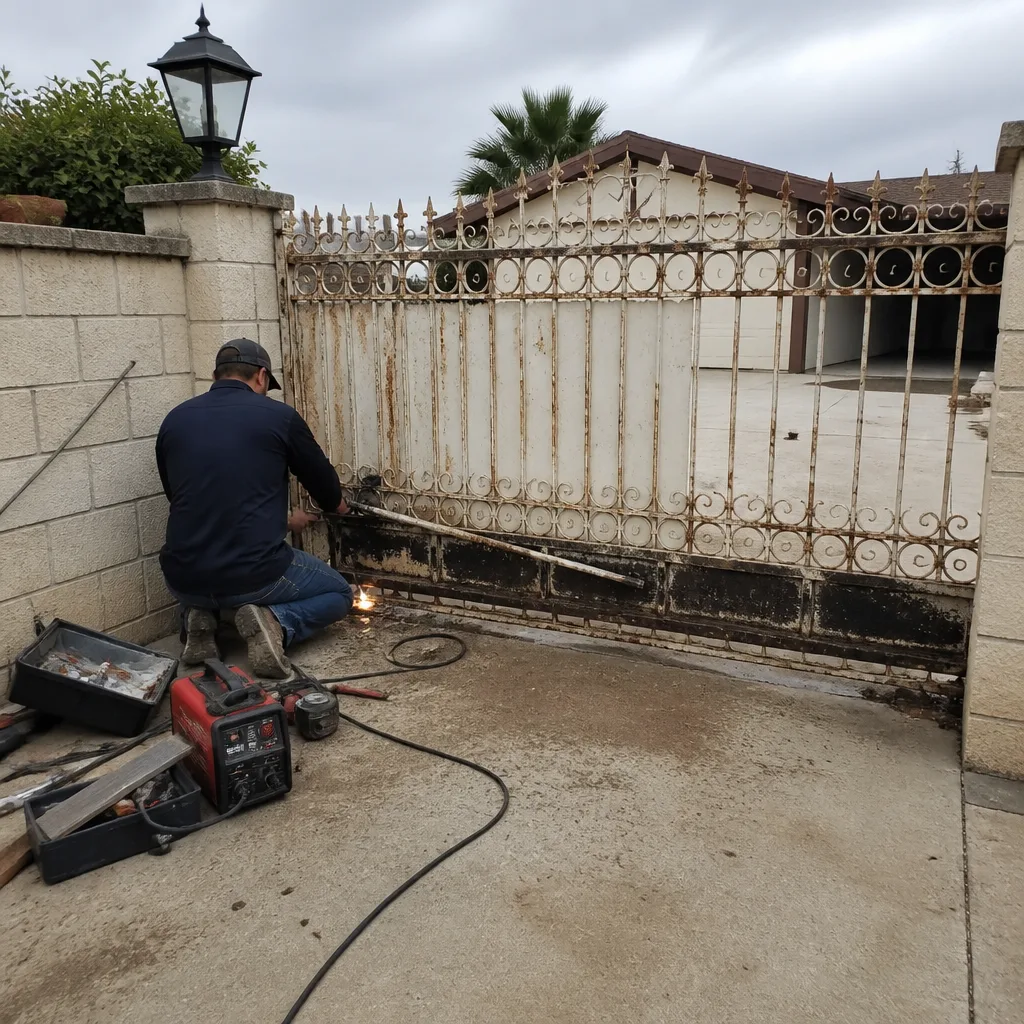 Before
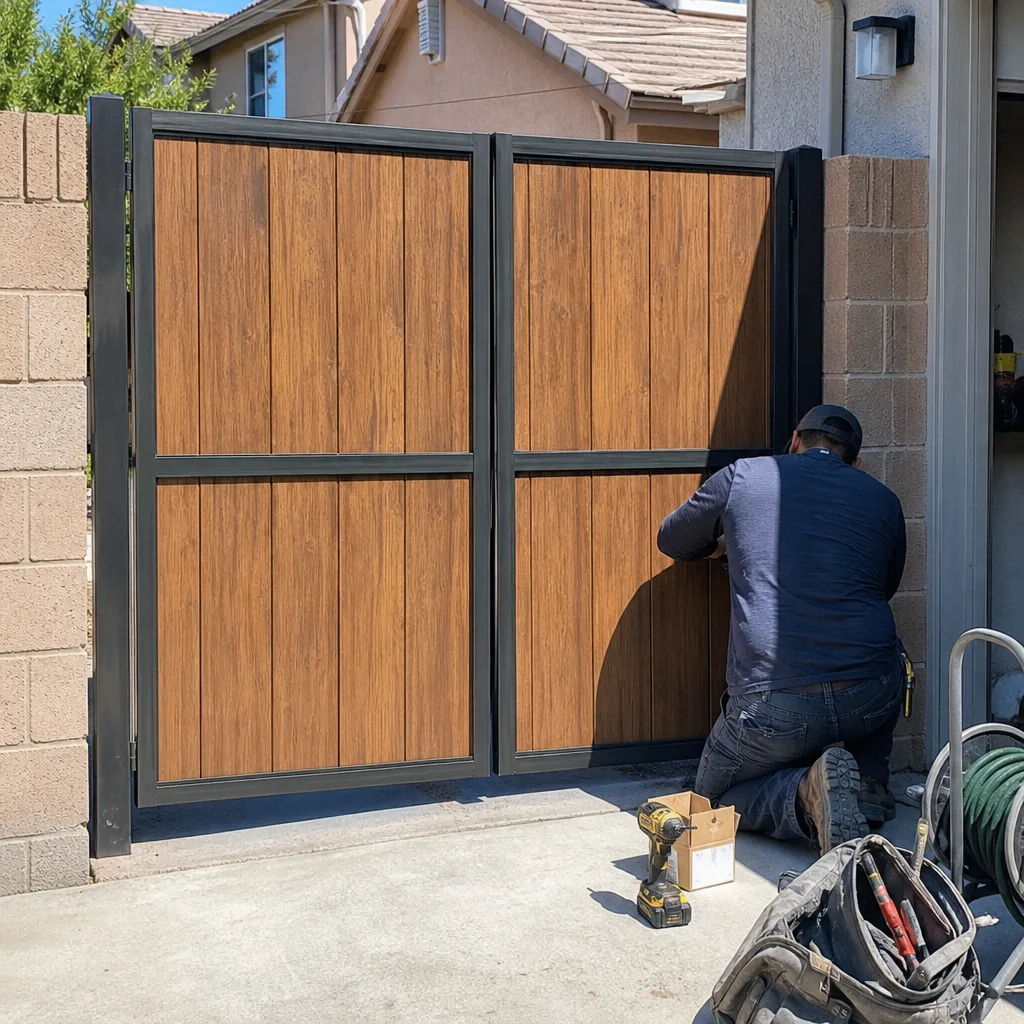 After
After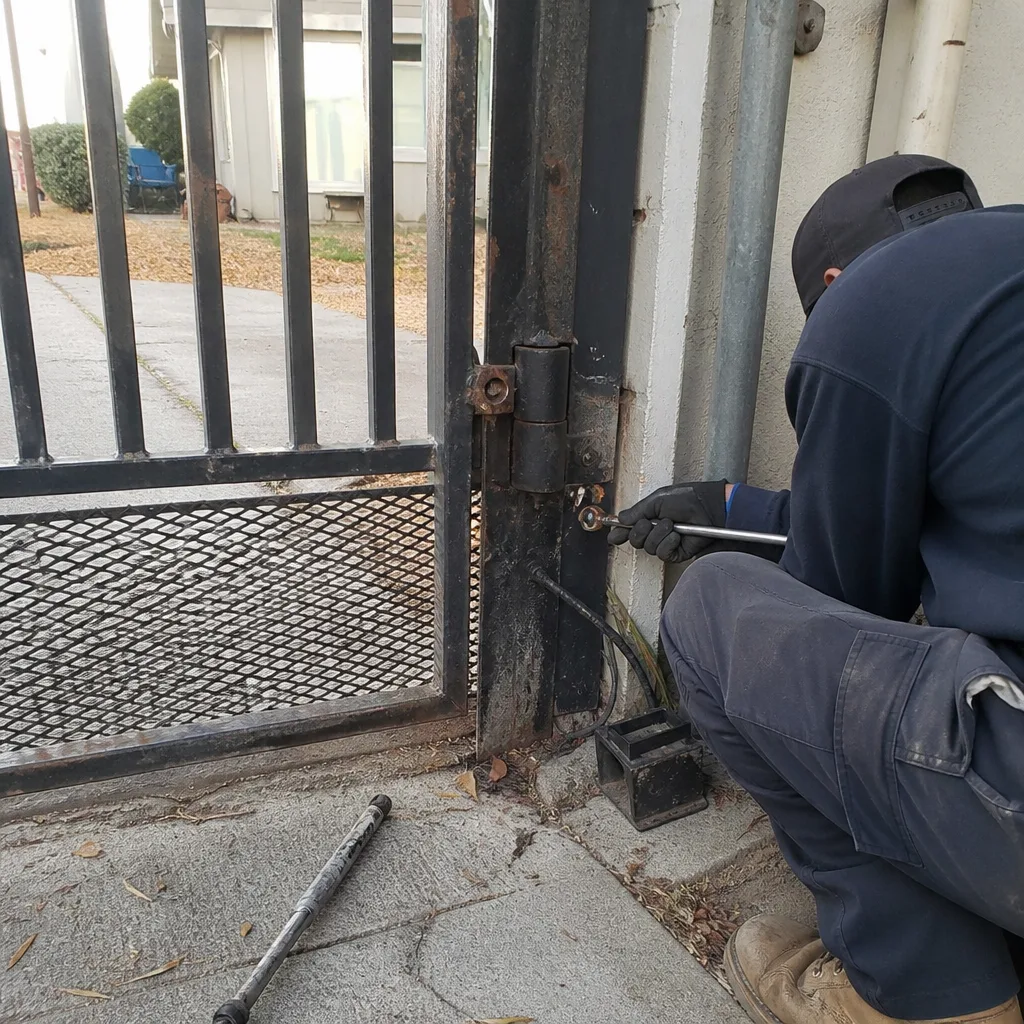 Before
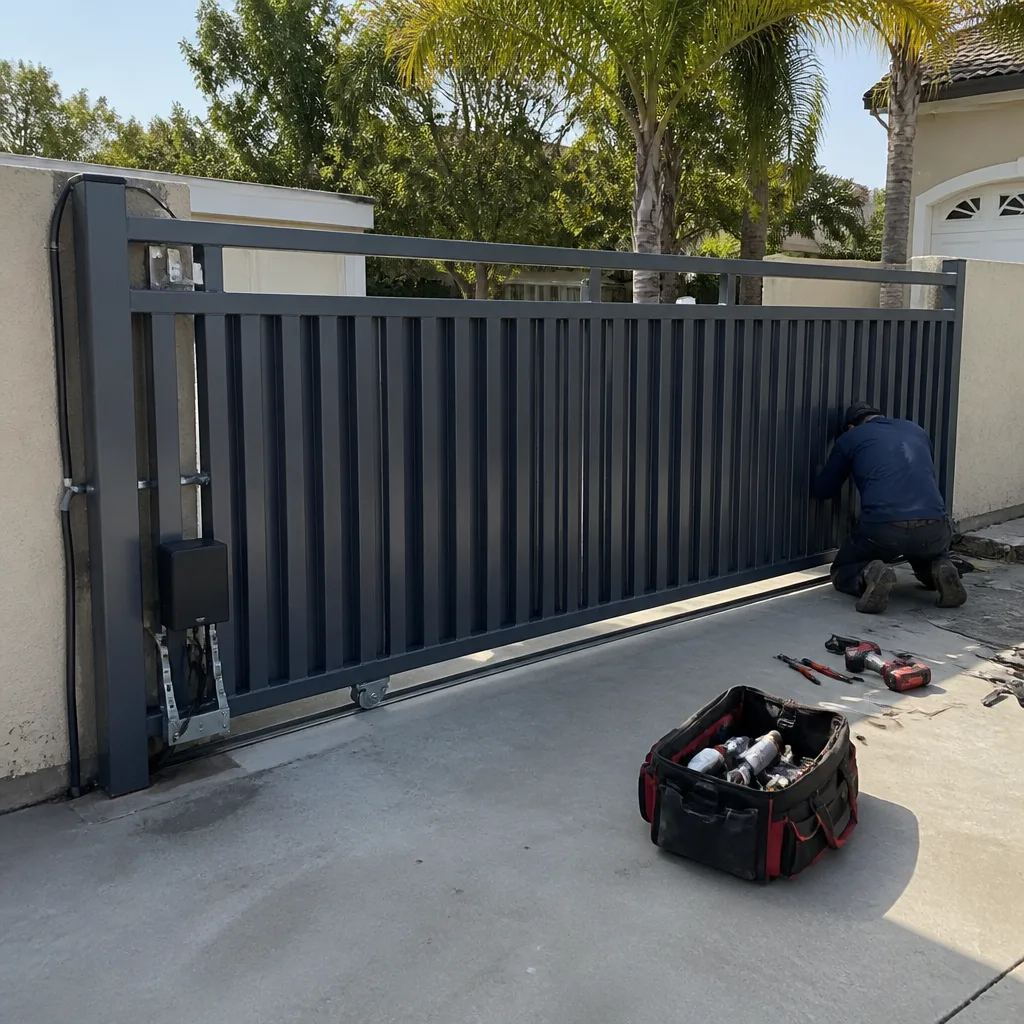 After
After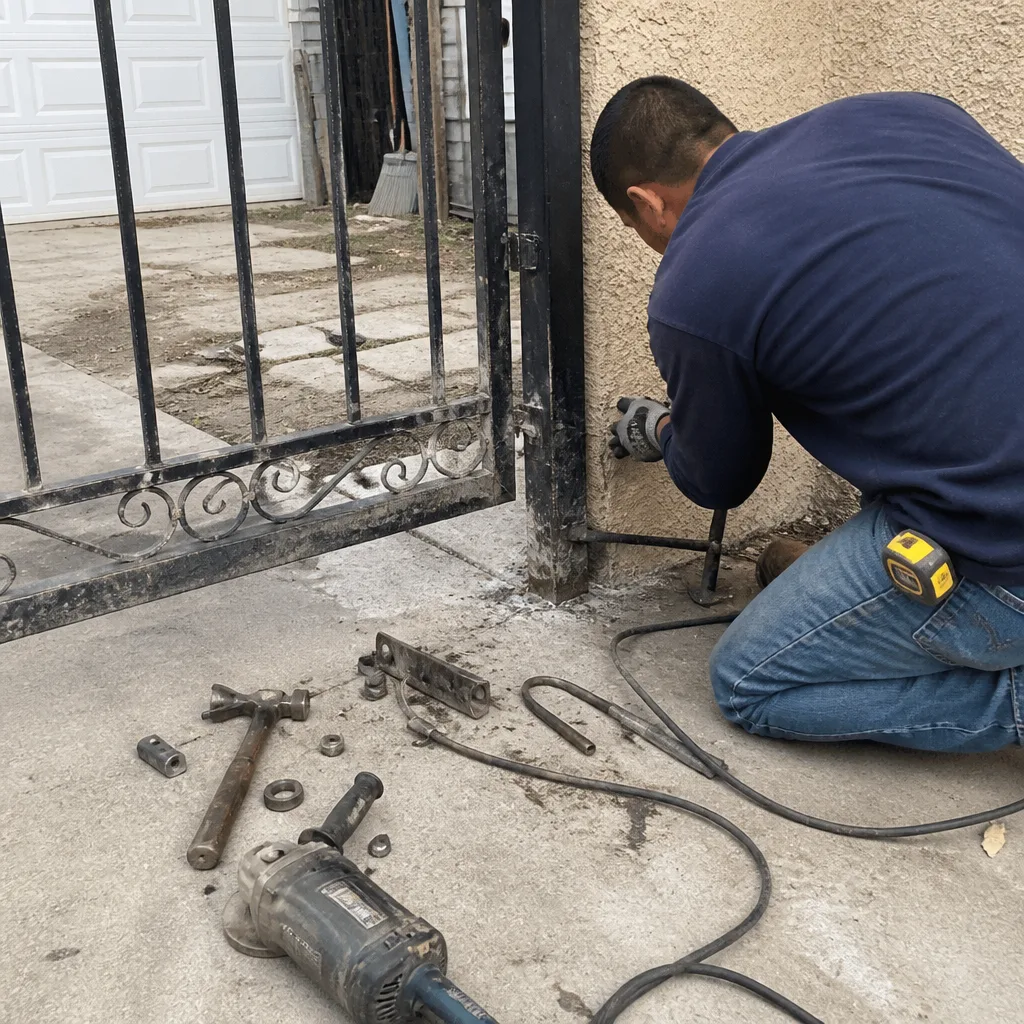 Before
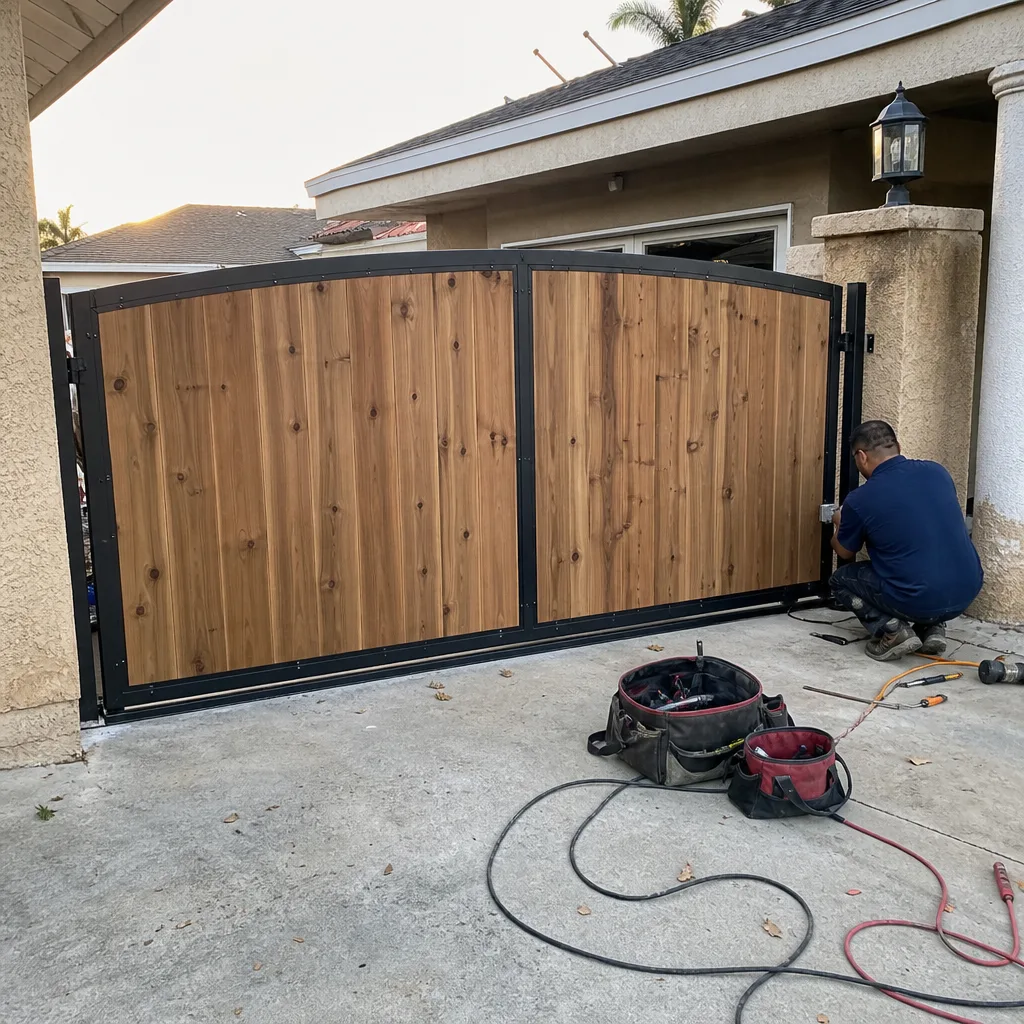 After
AfterThe Warranty Gray Area When DIY and Professional Work Mix
Here’s a question that rarely gets asked until it’s too late: what happens to your warranty when part of the repair is DIY and part is professional? The answer, in most cases, is that you’ve created a gray area. If a professional repair fails and the company determines that a homeowner’s previous DIY work contributed to the failure, the warranty on the professional repair can be denied. Not because the company is being difficult, but because the failure wasn’t caused by their work.
Here’s what that looks like in practice. A Riverside homeowner replaces their own gate hinges in March, does a mediocre job with the alignment, and then in June calls a professional to replace the opener motor. The new motor is under warranty. In August, the motor burns out because the misaligned hinges caused the gate to drag against the strike post with abnormal resistance. The warranty on the motor is now in question. The homeowner’s hinge work created the condition that killed the professional’s motor. This is not theoretical. It’s the most common warranty dispute scenario in residential gate repair.
The 365-Day Done Right Promise that Latch and Post Gate Repair Riverside offers covers the work we perform. If our repair isn’t right, we make it right, no argument. But that promise has a boundary: it covers our work, not work performed by others that happens to touch the same gate. Mixing DIY and professional work on one gate creates exactly the kind of ambiguity that voids warranties and strains customer relationships. The practical advice: if you’re going to DIY something, do it completely and accept the risk. If you’re going to hire a professional, let them handle the entire repair. Middle states, where a DIYer fixes half the problem and a pro fixes the other half, are where warranty disputes are born. For homeowners wanting a complete gate installation or a full repair done right the first time, the cleanest path is a single professional team on the job from start to finish.
Common Mistakes to Avoid
- Adjusting limit switches without a wiring diagram. Limit switch adjustment is the single most common DIY error we see on electric gates in Riverside. A limit switch that’s off by a quarter-inch will stop the gate short or drive it past the post, and on commercial units like Viking and DoorKing, it triggers fault codes that require professional clearing. This job starts with a wiring diagram, not a screwdriver.
- Using WD-40 on gate hardware. WD-40 is a solvent, not a lubricant. It strips existing grease and leaves metal dry, which accelerates wear in Riverside’s dusty conditions. Use a lithium or silicone-based lubricant instead. This applies to hinges, rollers, and tracks.
- Tightening a sagging gate’s hinges without addressing the cause. If the gate sags, tightening the hinges will hold for a week or two before the problem returns. The cause is usually a loose or leaning post, worn hinge pins, or an undersized hinge for the gate’s weight. Tightening hardware masks the symptom without solving anything.
- Mismatching hinge sizes when replacing hardware. A 4-inch hinge on a 6-foot gate is under-spec, even if two of them feel snug. Riverside gates get hammered by wind, especially in the autumn Santa Ana season. Hinges should be rated for the gate’s full weight plus a safety factor, and undersized hardware fails in predictable ways.
- Pouring concrete for a post without a drainage layer. In sandy Riverside soil, water drains fast, and that means two things: the concrete needs gravel underneath it to prevent settlement, and the collar needs to be wide enough to resist the lateral force of the gate’s swing. A narrow, deep pour will fail faster than a wide, shallow one.
- Programming a DoorKing or Viking operator from memory. These are commercial-grade boards with menu structures that assume installer familiarity. Programming errors lock the board into fault states that require a technician with the brand’s tools to clear. If you wouldn’t reprogram your car’s ECU from a YouTube video, don’t reprogram your DoorKing that way either.
- Skipping the HOA check. In Riverside’s master-planned neighborhoods, visible gate changes – including hardware type and finish color – are often regulated. A DIY repair that violates CC&Rs can result in a violation notice, a required re-inspection, and in some cases, a mandatory professional redo. The check costs nothing; the violation costs real money.
When to Call a Professional
Call a professional when the repair involves the gate’s operator, its electrical supply, its post structure, or its commercial-grade electronics. That means limit switch problems, motor failures, circuit board issues, any wiring that’s not a simple plug-and-play connection, any post that leans or wobbles, and any gate that binds against the strike post regardless of hinge adjustments. Also call a professional if you’ve already attempted a DIY repair and the gate isn’t working. A technician who inherits a partial job needs to diagnose both the original problem and the new damage, which is slower and more expensive than a fresh repair. Latch and Post Gate Repair Riverside offers free estimates in Riverside; we’re a Cedarwell-family gate specialist, and we’ve been working on Riverside gates since 2009. Call (341) 895-4331 for a written quote before any work begins.
Frequently Asked Questions
Gate repair in Riverside typically costs $95 to $450, depending on the specific task. Latch replacement runs $95 to $160, hinge replacement $110 to $220, post adjustment $180 to $400, limit switch adjustment $95 to $180, and circuit board work $120 to $350. Every professional repair should include a written price before any work starts. Call (341) 895-4331 for an exact quote on your gate, free of charge.
Yes. Latch replacement is the most DIY-friendly gate repair there is, with parts running $15 to $40 at any Riverside hardware store. The installation is mechanical and takes under an hour with basic tools. The key is alignment: if the new latch doesn’t catch cleanly, the problem is usually a worn strike plate or a sagging gate, not the latch itself.
Never attempt limit switch adjustment, post resetting or replacement, circuit board repairs, motor replacement, or any wiring work on a gate operator. Limit switches on Viking and DoorKing units are particularly unforgiving; a misadjusted switch can trigger a fault code that costs $95 to $140 to clear professionally. Post work in Riverside’s sandy soil requires structural knowledge that DIY guides don’t cover.
In most cases, yes. Latch and Post Gate Repair Riverside keeps common parts in our service vehicles, and a live person answers our phones 24/7, so you can always reach us at (341) 895-4331 to check current availability. We’re clear in advance about our service window, and you’ll get a written price before any work starts.
It depends on your specific HOA. Many Riverside HOAs, especially in newer communities, require professional documentation for gate operator work or for any visible changes to gate hardware or finish. Check your CC&Rs before starting any visible gate project. Latch and Post Gate Repair Riverside can provide the repair documentation your HOA requires.
The biggest risk is adjusting your gate for the current temperature instead of the season. A gap set in July’s 105°F heat will be different in January. Thermal expansion means a gate that’s perfectly adjusted in summer will bind or hang loose in winter. Professional gate companies in Riverside set gaps for the annual temperature range, not the day’s weather. That’s one reason DIY adjustments in this climate often don’t hold.
The Bottom Line
The DIY vs. professional gate repair decision isn’t about how handy you are. It’s about the specific task. Latches, hinges that just need tightening, and lubricating rollers are within reach of any careful Riverside homeowner. Limit switches, leaning posts, circuit boards, and commercial-brand programming are not. Riverside adds its own variables to the mix: thermal expansion, sandy soil, and HOA documentation requirements that national guides never mention. The smartest approach is knowing which side of the line your problem falls on. If you’re unsure, a 30-minute phone call with a professional is free. And a botched DIY repair always costs more than the phone call would have.
Written by Cody Beckman, Owner at Latch and Post Gate Repair Riverside, serving Riverside since 2009.