
Last updated October 17, 2026
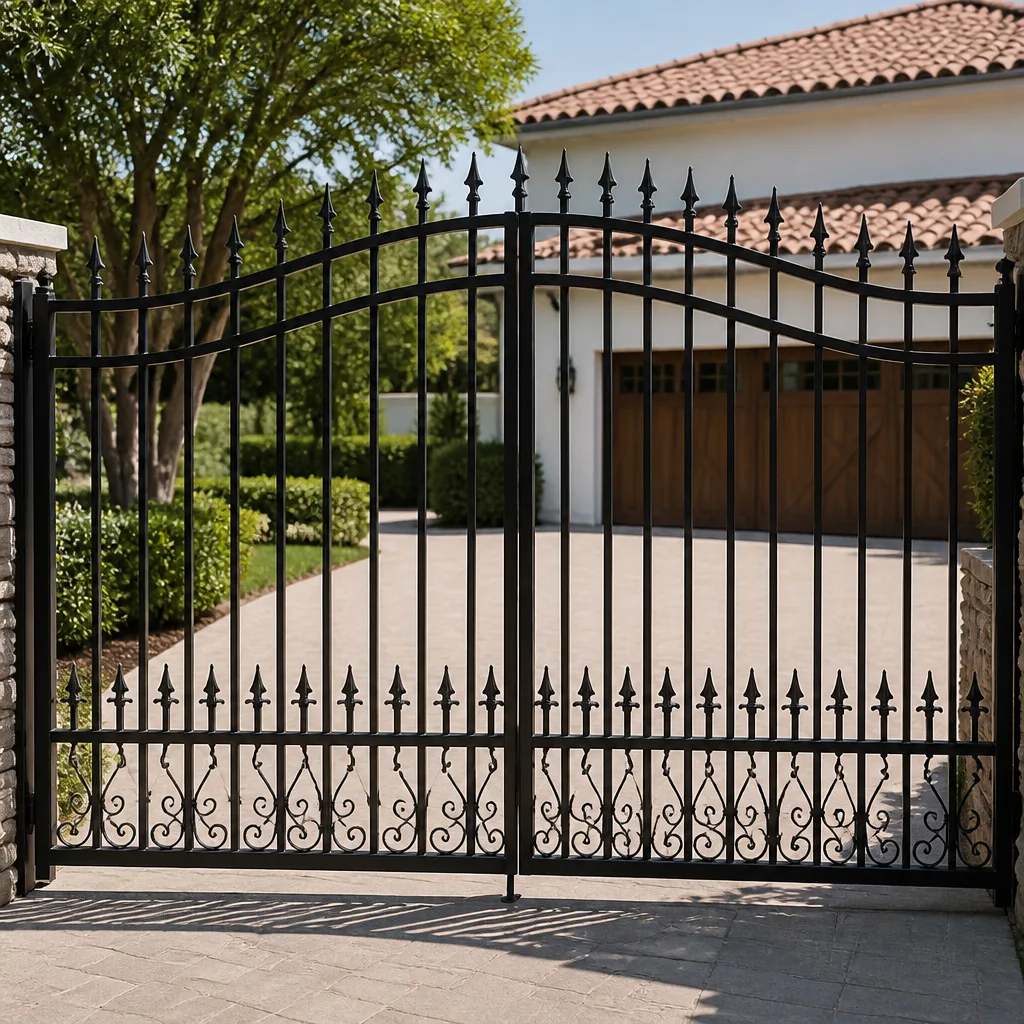 Wrought iron
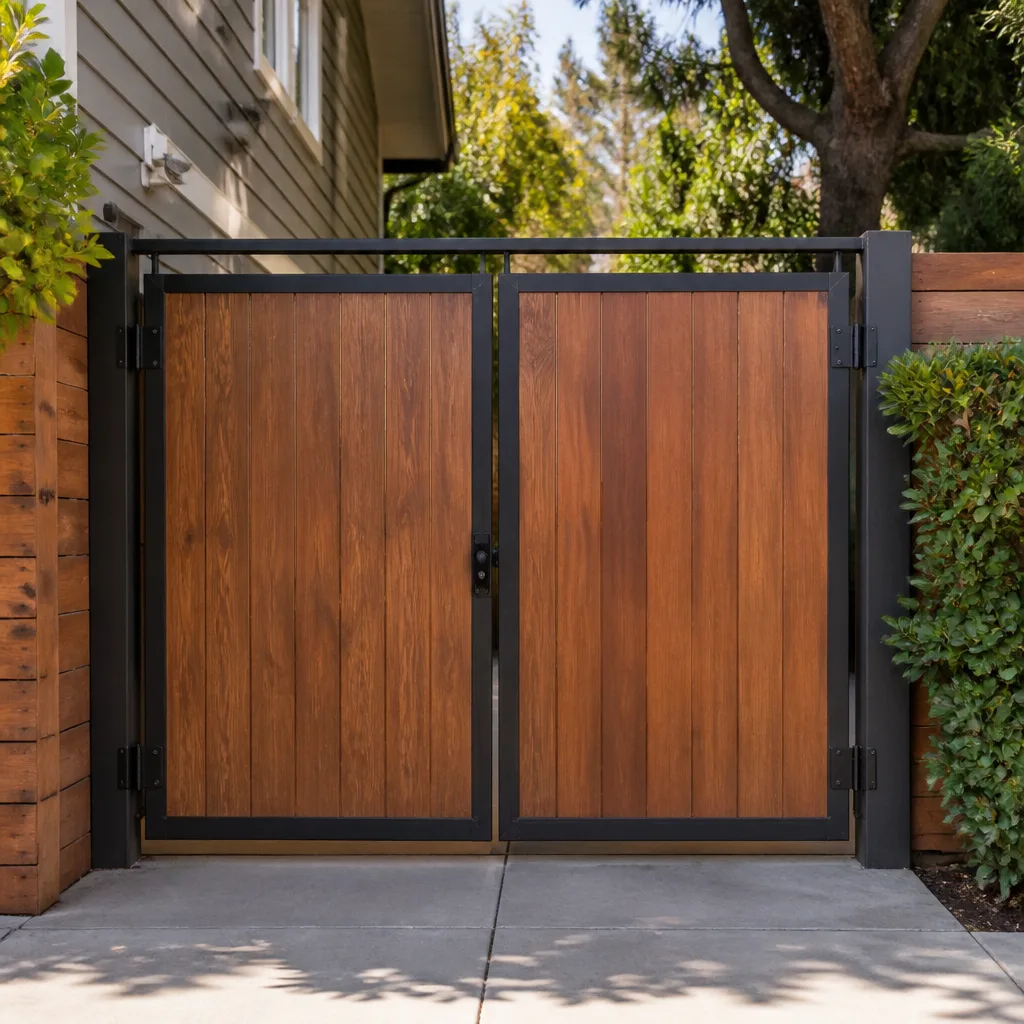 Wood & steel frame
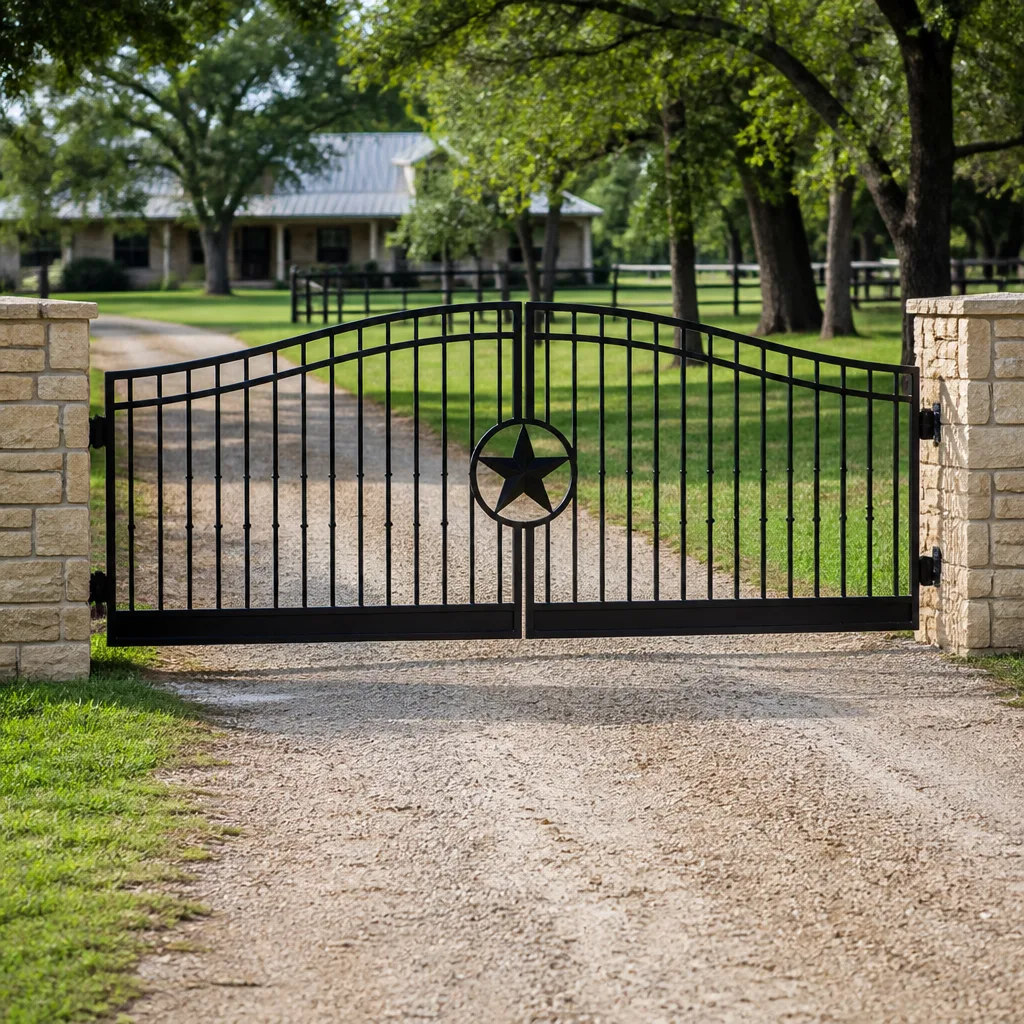 Farm & ranch
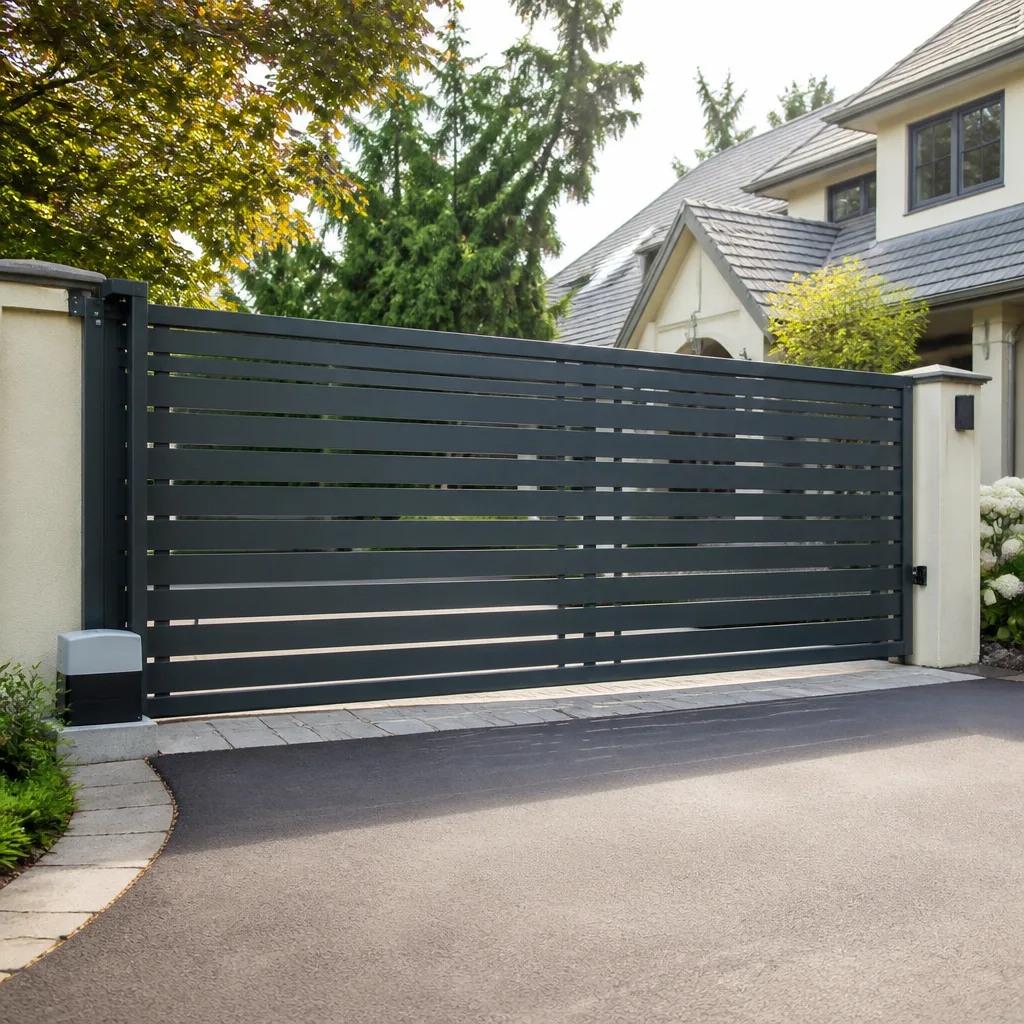 Sliding driveway gates
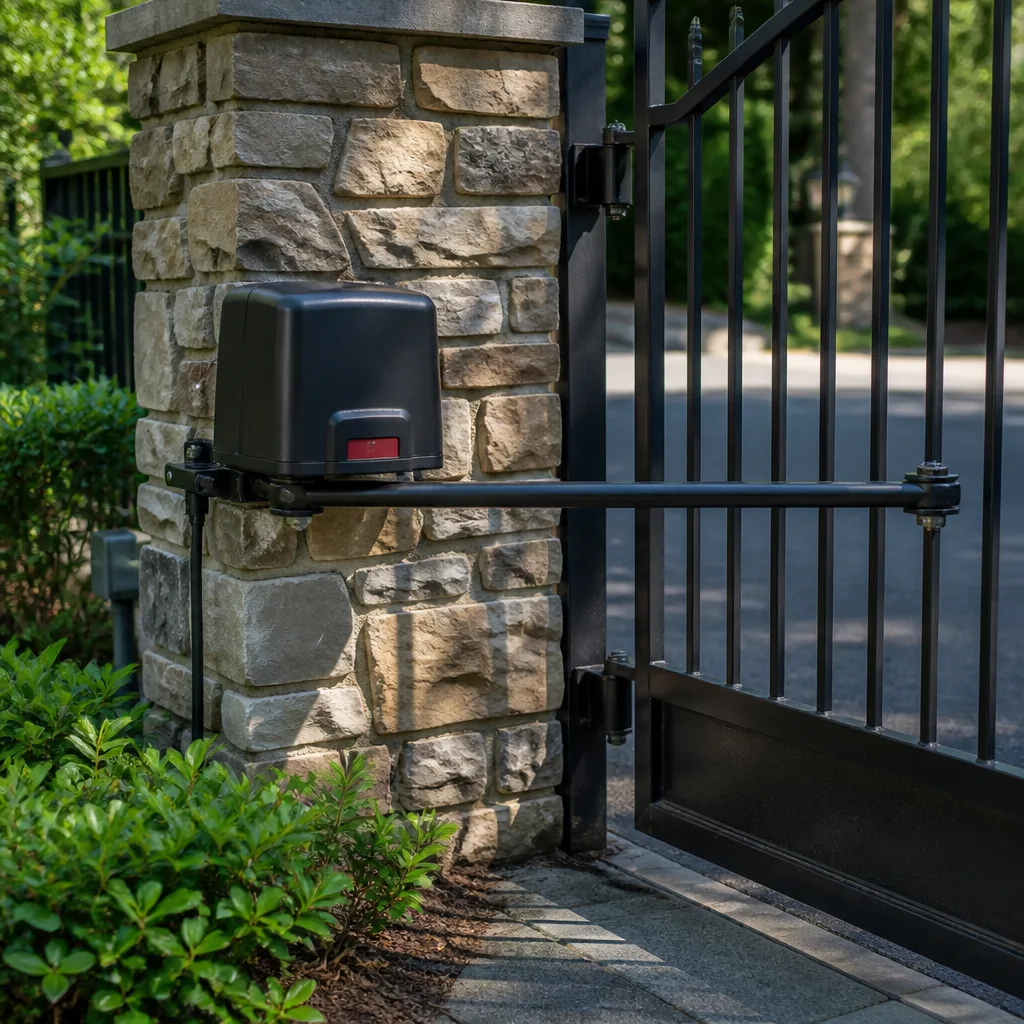 LiftMaster operators
Free on-site gate assessment - hinges, posts, and your LiftMaster or Nice gate operator checked before anything is quoted
The assessment is free and the quote is the invoice.
Get your free estimateGate Repair Warning Signs: A Riverside Homeowner’s Reference Guide
A gate that sags a quarter inch on the latch side isn’t a latch problem. It’s a hinge problem, and every Riverside homeowner who replaces the latch first pays for the same repair twice within six months. This guide works backward from the symptoms you actually notice – the slow swing, the grinding noise, the second-try latch – to name the component that’s actually failing underneath. By the time you finish reading, you’ll know which warning signs in Riverside mean a $60 fix and which mean a $400-plus repair, and you’ll have a clear triage method for deciding what to do next. If you need Gate Repair sooner than later, use this guide to describe your symptoms when you call.
Styles & brands we work with
Quick Answer
Most gate warning signs Riverside homeowners notice are the final symptom before a part fails, not the root problem itself. A sagging gate points to hinge wear, a grinding noise points to a failing bearing or ungreased roller, and a latch that needs a second try points to a misaligned post or stretched cable. Catching the symptom early and matching it to the correct component typically costs $60 to $180; waiting until the part snaps or the gate drops typically costs $400 or more. For Seasonal Gate Repair Care for Riverside: Year-Round Homeowner’s Guide, see our maintenance calendar to avoid these surprises.
Table of Contents
- Symptom-to-Cause Mapping for the Eight Most Common Riverside Gate Complaints
- The Second Try Test: Why Your Gate Is Already in Late-Stage Failure
- How Riverside’s Climate Creates Rust and Oxidation Patterns
- Pet and Child Safety Thresholds: Gap and Auto-Reverse Measurements
- Printable Reference Card: Matching Symptoms to Repair Categories and Costs
- What We See on Viking, Ghost Controls, DoorKing, and Elite Operators
- The Latch and Post Connection: Why the Name Says the Job
- Common Mistakes to Avoid
- When to Call a Professional
- Frequently Asked Questions
- The Bottom Line
Symptom-to-Cause Mapping for the Eight Most Common Riverside Gate Complaints
The gate problems Riverside homeowners report to us fall into eight repeating patterns. Here’s the working-backward map we use on every service call. The symptom is what you see and hear. The cause is what’s actually failing. The right repair fixes the cause; the wrong repair replaces the symptom and leaves the failure in place.
1. Sag on the latch side. The gate droops at the free end, sometimes by as little as a quarter inch. The cause is hinge wear – specifically the top hinge pin elongating its hole from years of levering weight. On wrought iron gates in Riverside’s older districts like the Wood Streets or Magnolia Center, we see this pattern constantly because the gates are 30 to 60 years old and the hinges were never bushed. The fix is hinge replacement or rebushing, not latch adjustment, and it runs $120 to $260 depending on gate weight.
2. Grinding noise during swing. The sound is metallic and irregular, worse in one direction. The cause is a failed bearing in the hinge, or a dry roller riding on a scored track. If the gate is a sliding model on a steel V-track, the grinding usually means the track has worn a groove and the gate is now dragging on the wheel flange rather than rolling on it. Repair is $80 to $180 for bearing or roller replacement. If the track itself is grooved, you’re looking at $300 to $500 for a track section replacement, which is a different job entirely.
3. Slow opening or closing. On swing gates this is often a tired linear actuator or a hydraulic arm low on fluid. On sliding gates it’s usually the capacitor in the motor starting to weaken, or the chain or belt stretched to the point of slipping. Riverside’s summer heat accelerates capacitor failure – we replace more capacitors in July and August than the rest of the year combined. A slow gate that still completes its travel is the cheapest version of this repair, typically $90 to $200 for a capacitor, chain tension, or fluid top-up.
4. Latch miss on first attempt. The gate closes but the latch doesn’t seat; it takes a second push, or the latch catches only sometimes. The cause is post movement or hinge sag shifting the strike plate out of alignment by an eighth of an inch. The latch is usually fine. Adjusting the strike plate and shimming the hinge costs $80 to $140, and you solve the actual problem instead of replacing a $60 latch that will miss again in a month.
5. Bounce-back on auto-close. The gate travels closed, then reverses and opens as if it hit something. This is the auto-reverse safety system reading resistance where none exists. On older LiftMaster and Mighty Mule boards, a weak capacitor or dirty limit switches produce false resistance signals. On newer units with optical sensors, a misaligned beam or spider web across the lens does the same. Cleaning and realigning sensors is $70 to $100. Replacing a board that’s producing false signals is $250 to $450.
6. Rust bloom on the bottom rail or hinge welds. We’ll dig into Riverside’s specific rust patterns in the climate section below, but the short version: a small rust blossom on a weld joint signals water intrusion under the paint, while a uniform surface haze across the pickets doesn’t. One cleans off. The other doesn’t.
7. Post lean. The post the gate hangs from is tilting, and the gap between gate and post is wider at the top than the bottom. The cause is almost always a failing footing – either the original concrete was poured too shallow for Riverside’s expansive clay, or water has been pooling at the base and eroding the soil under the footing. Post reset with new concrete is $350 to $600. If the post is set in a planter near an irrigation line, we almost always find the irrigation leak first.
8. Operator light flashing without opening. On DoorKing and Elite systems especially, a flashing light is a diagnostic code, not a random warning. Count the flashes: two flashes usually means an obstruction signal, three means a limit switch problem, five means a motor thermal overload. Riverside homeowners who know their flash code can tell us over the phone what the operator is saying before we arrive, which changes what parts we bring.
This symptom-to-cause map is the heart of the guide. If you take nothing else from this page, take this: the symptom you see is the last thing to fail, not the first. Gate repair in Riverside starts with naming the actual failing component, not treating the visible one.
The Second Try Test: Why Your Gate Is Already in Late-Stage Failure
A gate that works on the second try is already in a late failure stage. Most Riverside homeowners tell us the gate “mostly works fine” because it opens on the second press of the remote or the second push of the button. What that pattern actually confirms is a component that has lost most of its operating margin and is now failing intermittently.
Here’s what second-try behavior means for each major gate type.
Second press on a swing gate operator. The first press starts the motor, the controller board does not see movement from the limit switch within its expected window, so it cuts power and resets. The second press overcomes the initial resistance – a cold solder joint, a worn capacitor, a limit switch with carbon buildup – and the gate runs. This is the classic pattern of a failing capacitor on Viking and Elite swing operators. The capacitor has degraded to the point where it can’t deliver the starting torque on the first attempt, but can on the second. Replace the capacitor now: $90 to $160. Wait until it fails completely: $200 to $350 plus a service call, and the gate is stuck wherever it stopped.
Second momentum push on a manual gate. The gate needs a second push or a hard shove to complete its swing. This is hinge binding – the pin is galling in the barrel, or the post has moved enough that the hinges are no longer in line. Each hard push shears a little more metal off the pin. The pattern is easiest to read in winter and spring, when Riverside’s morning moisture swells the wood or oxides the ungreased pin, and the gate is hardest in the morning and freest by afternoon.
Second attempt to latch. Covered above, but worth repeating under the test: a latch that needs a second try means something has moved an eighth of an inch. The latch did not fail. The structure did. The second-try pattern is your signal that the structure is moving, and structures rarely move back on their own.
Second close attempt on a sliding gate. The gate starts, stops short, and reverses. You hit the button again and it closes. This is the operator’s obstruction circuit seeing a current spike from a gearbox or chain that is binding. The operator interprets that resistance as a person or car in the way and stops for safety. On Ghost Controls residential slide operators, this pattern is often the chain tensioner backing off and the chain riding up on the sprocket under load. Tightening the chain and resetting the tensioner is $110 to $160. Replacing the sprocket after the chain chews it up is $200 to $350.
The rule is simple: if your gate works sometimes and needs help other times, the part that makes it work is already failing. The second try is the warning sign. We’d rather see Riverside homeowners call at the second-try stage than at the snapped-spring stage, because the second-try repair is cheaper and faster, and the gate is not stuck open overnight. Not sure who to trust? Read our How to Hire a Gate Repair Contractor in Riverside: A Step-by-Step Guide before you book.
How Riverside’s Climate Creates Rust and Oxidation Patterns
Riverside has two conditions that determine how gates rust: low annual rainfall with a few intense wet weeks, and persistent morning fog from November through March that condenses on metal every single night. That fog is the bigger factor for most gates, because it delivers moisture in a fine, penetrating film that sits in weld crevices and hinge barrels for hours before the afternoon sun burns it off.
The rust patterns follow from that. Here’s how to read them.
Surface oxidation haze. A fine, even, reddish-brown haze across the pickets and rails, most visible on the top surfaces and the eastern faces that catch the morning fog. This is cosmetic. The iron is oxidizing at the surface, but the moisture is evaporating before it penetrates the paint or the base metal. We clean this with a wire brush and re-seal for $60 to $120 on a typical Riverside driveway gate. This is the rust that cleans off.
Rust bloom on welds and joints. A raised, crusty, orange-brown bloom at a weld joint, under a hinge plate, or around a fastening bolt. This is water that entered a crack or pinhole in the paint and is now trapped between the coating and the iron, oxidizing from the inside out. This does not clean off. You can wire-brush the bloom away, but it returns in weeks because the water source is still inside the joint. The repair is grinding the joint clean, treating with a rust converter, and re-welding or re-sealing. Depending on how far the rot has gone, that’s $150 to $400 or more per joint – and on a heavily bloomed gate, there may be four or six joints needing it.
Bottom-rail bubbling. Blistered paint on the bottom rail, with rust staining weeping downward. This is water pooling inside the rail itself, usually because the weep holes at the bottom were painted over or never drilled. Riverside’s fog provides the water; the closed rail holds it; and the inside of the tube rusts while the outside looks intact. If caught early, drilling weep holes and treating the inside runs $80 to $150. If the rail has rusted through from the inside, the rail needs section replacement, which starts around $300 and climbs with the size of the gate.
Hinge-point rust streaks. Rust running downward from the hinge barrel and staining the post below it. The hinge pin is rusting inside the barrel, and every swing grinds the rust into paste that leaks out. This looks minor and is often ignored, but the hinge is actively wearing itself out from the inside. Hinge replacement on a standard residential swing gate runs $120 to $260, and it resolves both the rust streak and the sag that usually comes with it.
The cost difference matters because the two look similar from ten feet away. If you’re not sure which rust you have, send us a photo – the worse news is that what looks like the cheap kind is actually the expensive kind, and the sooner you know, the less the repair costs.
Pet and Child Safety Thresholds: Gap and Auto-Reverse Measurements
If you have a dog under 20 pounds, a cat, or a toddler, your gate’s job includes keeping a small moving body on the right side of it. Gates fail that job in two ways: a gap opens that a small body can fit through, or the auto-reverse system stops responding to the level of pressure a small body produces.
The gap threshold: 3 to 4 inches. A gap between the gate’s vertical pickets, or between the gate and the post, becomes a containment failure at 3 to 4 inches. That’s the shoulder-width of a small dog or the body-width of a determined toddler. The standard for ornamental iron fences in Riverside is roughly 4 inches between pickets, which means a gate that has shifted a half inch has not failed – but a gate that has shifted an inch or more on the latch side has. Measure the gap at the widest point. If it exceeds 4 inches, a small dog or cat can fit through, and a child’s arm, head, or leg can get caught in the pinch point as the gate closes.
The auto-reverse threshold: 15 pounds of resistance. Modern gate operators sold in the U.S. are designed to reverse when the leading edge encounters roughly 15 pounds of resistance within a set travel zone. On smaller operators, the threshold may be as low as 10 pounds. When the auto-reverse sensitivity drifts out of calibration – which happens as limit switches wear, belts stretch, and motor brushes burn – the operator stops sensing at the design threshold and starts sensing at 25 or 35 pounds. A 20-pound dog or a 30-pound toddler produces less force than the new threshold, so the gate does not reverse. This is the accident mechanism behind gate entrapment injuries. The test is a spring gauge held against the leading edge while the gate closes: the gate should reverse before the gauge registers more than 15 pounds of force. We run this test on every electric gate service call in Riverside because sensitivity drift is silent, and the first visible sign is often too late.
What this means for your weekly check. The gap measurement is something you can do now with a tape measure. The auto-reverse threshold is not – it requires a spring gauge and knowledge of where the load cell is positioned. What you can do weekly is watch the gate’s behavior in the last 6 inches of travel. If the gate slows and stops gentle at the closed position, the sensing is reasonably healthy. If the gate closes hard against the post, or bounces, or makes a thud that feels aggressive, the sensitivity has drifted and the system is no longer doing its job. That’s a call-for-service moment: the problem is diagnosed with a gauge, adjusted at the board, and verified before we leave, typically $90 to $140 for the calibration.
Our technicians do this check on every visit because it is the one failure mode that hurts someone rather than just inconveniencing them. We’d rather you know the threshold than not, even if you never call us again. Measuring yours takes ten minutes, and we’re happy to walk you through it over the phone.
Printable Reference Card: Matching Symptoms to Repair Categories and Costs
Print this section or screenshot it. The next time you notice something about your gate that feels wrong, match what you see to a line below, and you’ll know roughly what the repair involves and what it should cost in Riverside. For more guides & resources, visit our blog.
Symptom: Gate sags on the latch side; top hinge has visible play.
Repair category: Hinge repair or replacement.
Rough cost range: $120 to $260.
Urgency: Do it within 30 days. The sag accelerates once the hinge starts moving.
Symptom: Grinding noise; gate cracks or pops while swinging.
Repair category: Bearing, roller, or track inspection.
Rough cost range: $80 to $500 depending on track vs. bearing.
Urgency: Same week. Grinding means metal-on-metal wear that compounds fast.
Symptom: Gate moves slowly; takes longer than it used to.
Repair category: Operator diagnostics: capacitor, arm, or chain.
Rough cost range: $90 to $250.
Urgency: Within two weeks, before Riverside’s next heat wave strains the capacitor further.
Symptom: Latch misses; needs a second try.
Repair category: Alignment: hinge shims or strike plate adjustment.
Rough cost range: $80 to $140.
Urgency: Within 30 days, especially if the gate is supposed to be containing a pet.
Symptom: Gate closes, then bounces back open on its own.
Repair category: Safety sensor realignment or board replacement.
Rough cost range: $70 to $450.
Urgency: If the gate won’t stay closed at all, same day. If intermittent, this week.
Symptom: Rust bloom on welds, under hinges, or at bolt heads.
Repair category: Rust removal, treatment, and resealing.
Rough cost range: $150 to $400-plus per affected joint.
Urgency: Before the next fog season. Riverside’s morning fog will have the bloom spreading every night from November to March.
Symptom: Post tilting; gap at top wider than gap at bottom.
Repair category: Post reset and footing replacement.
Rough cost range: $350 to $600.
Urgency: This is the most dangerous failure on the list because a falling gate weighs hundreds of pounds. Treat it as a priority.
Symptom: Operator light flashing but gate won’t move.
Repair category: Diagnostic code reading and component replacement.
Rough cost range: $80 to $350 based on the fault.
Urgency: Count the flashes, then call. Many codes are simple overflow or limit problems that cost little to fix.
These ranges reflect what we charge and what we see other Riverside gate shops charge for comparable work. Your exact number depends on gate size, material, and operator model, and you should always ask for a written price before the work begins. We provide one on every visit, without needing to be asked.
What We See on Viking, Ghost Controls, DoorKing, and Elite Operators
Each operator brand fails in a pattern, and knowing your brand tells us a lot about what to look for before we arrive. These are the three brands we see most often on Riverside driveways and gates, with the failure patterns specific to each.
Viking swing operators. Viking builds heavy residential and light commercial swing arms that mount to the gate post and the gate itself. The weak point we see in Riverside is the capacitor, especially after five or six summers. Riverside’s July and August highs push the capacitor’s operating temperature to the top of its range, and a capacitor that’s already marginal will fail on the hottest day of the year rather than in January. The symptom is the second-press pattern: the gate won’t start on the first attempt, then runs on the second. We also see limit switch contacts corrode on Viking units mounted in shaded Riverside side yards where the morning fog lingers longest. Both issues are fixed without replacing the operator, and the parts are in stock at our shop.
Ghost Controls residential slide operators. Ghost Controls slide operators are popular in Riverside for their quiet belt drive and easy DIY installation. What we see most is the chain or belt tensioner backing off over the first year, producing that stop-short-and-reverse pattern as the chain rides up under load. The second pattern is the remote receiver losing range, usually because the antenna got painted over or is tucked behind a metal post that blocks the signal. Both are straightforward fixes at $110 to $160. Ghost Controls boards are also sensitive to voltage spikes, so if your Riverside block has flickering power during Santa Ana wind events, a surge protector on the operator circuit is cheap insurance.
DoorKing and Elite commercial-grade operators. DoorKing and Elite dominate the longer driveway gates and gated courtyard entries in Riverside’s newer subdivisions and in the equestrian properties in the city’s southern and western reaches. These operators are built for heavier cycles than residential units, and the failures we see are wear items on high-use gates: gear lash in the drivetrain, limit switches that drift, and photocells that misalign as the post settles. DoorKing’s flash codes are particularly useful – two flashes, three flashes, five flashes, each maps to a specific fault class, and a homeowner who can count them over the phone saves us a diagnostic visit.
If your operator is from another brand, the logic of the guide still applies: the symptom you see is the last thing to fail. Most operator problems across every brand fall into three buckets – power delivery, limit sensing, and obstruction detection. The specific part changes by brand; the diagnostic path doesn’t.
The Latch and Post Connection: Why the Name Says the Job
Every gate comes down to two parts: the latch that holds it and the post that carries it. The name Latch and Post Gate Repair Riverside home comes from that pairing because we’ve spent sixteen years watching one fail because of the other. When a latch stops catching, the post has usually moved. When a post is leaning, the latch is the first part to complain. They fail together, and fixing one while ignoring the other doesn’t work.
This guide has been built around that principle, and it’s the reason we wrote the symptom-to-cause map the way we did. The visible problem is the symptom. The component behind it is the cause. If you only fix the symptom, the gate will fail again, and you’ll pay twice.
When we send a technician to a Riverside home, the first thing that happens is not a repair. It’s an inspection of both the latch and the post, plus the hinges, the operator, and the safety edges, because the gate is one system and all the parts are talking to each other. Then you get a written price for the actual repair. Then the work begins. Shoe covers go on before we step inside, drop cloths go down on the floors near any interior work, and we photograph the clean-up before we leave. None of that is an upsell. It’s the standard on every Latch and Post visit in Riverside, and it’s what we’d want at our own homes.
If you’re considering a new gate instead of another repair on an old one, gate installation in Riverside follows the same path: measure, quote, install, photograph, guarantee. The 365-Day Done Right Promise covers every repair and installation we do – if it isn’t right, we make it right, no argument and no fine print.
Common Mistakes to Avoid
- Replacing the latch when the post has moved. The latch misses because the strike plate is no longer where the latch expects it to be. A new latch installed in the old, moved position will miss exactly the same way within a month. Fix the alignment, not the latch.
- Greasing a noisy hinge instead of replacing it. Grease quiets a worn hinge for a week or two, then the grinding returns louder. The hinge pin is already worn; lubricant just masks the wear while it continues.
- Ignoring a slow gate. Riverside homeowners often interpret a slow gate as “old age” and let it be. A slow gate is a capacitor, an arm, or a chain that is failing, and the replacement cost only goes up while it limps along.
- Using penetrating oil on a rust bloom. Oil won’t stop the internal rust, and it will contaminate the metal surface for the eventual repair. The rust needs grinding, conversion, and sealing, not oiling.
- Propping a sagging gate with a block under the latch end. This seems like a gentle fix and it is exactly the opposite. Propping transfers the full gate weight onto the latch and the post, accelerating the damage at both points.
- Waiting until the gate stops working entirely. A gate that fails completely costs more than a gate that is repaired at the warning-sign stage, and it usually leaves the driveway blocked or the yard uncontained at the worst possible time.
- Ignoring the flash codes. When a DoorKing or Elite operator flashes a code, it’s talking to you. Counting the flashes takes ten seconds and turns a diagnostic visit into a one-trip repair.
When to Call a Professional
Call when the post is leaning, when the gate is sagging, when the auto-reverse is thudding hard against the post, or when the operator light flashes without opening the gate. Call when the rust is blooming at the welds rather than hazing across the surface. These are the failures where the correct repair requires getting the structure re-aligned, the safety system re-calibrated, or the rust cut out and treated – not just replaced with a new version of the same failing part. We’ve worked on gates in every Riverside neighborhood from Arlington to Alessandro Heights, and the one thing every repair has in common is that someone either caught the warning sign or didn’t. Electric gate repair in Riverside is our other core service area, and it covers the operators, boards, sensors, and safety edges on the brands we train on: LiftMaster, FAAC, BFT, Linear, Viking, Ghost Controls, DoorKing, Elite, and Mighty Mule. Latch and Post Gate Repair Riverside offers free estimates throughout Riverside – call (341) 895-4331 for a written price before any work begins.
Frequently Asked Questions
Most gate repairs in Riverside cost between $80 and $600 depending on the component. A capacitor replacement or sensor adjustment runs $80 to $160; a hinge replacement runs $120 to $260; a post reset with new concrete runs $350 to $600. You’ll see the exact price in writing before any work starts, every visit, with no pressure to accept.
Yes, hinge repair and rebushing is a same-day job in most cases because the parts are common and we carry replacements for the hinge sizes used on Riverside residential gates. A post reset is not same-day because the new concrete needs time to cure; we’d stabilize the gate, schedule the reset, and return when the footing is set.
A full installation includes removing the old gate and hardware, setting or resetting the posts and footings, mounting the new gate and hinges, installing and calibrating the operator and safety edges if the gate is electric, and a final walkthrough where we show you how everything works. Shoe covers and drop cloths are standard on every visit, and we photograph the clean-up before we leave.
Yes, we run the power to the operator, wire the safety edges and photocells, and calibrate the auto-reverse to the correct pressure threshold. The auto-reverse threshold matters for pets and children, and we test it with a spring gauge on every electric gate visit to confirm the gate reverses at the manufacturer-specified force.
Riverside’s morning fog from November through March condenses on gate metal every night, and the moisture penetrates weld crevices and hinge barrels before the afternoon sun dries it. That’s why rust blooms at welds and joints while the flat surfaces stay relatively clean. Summer heat shortens the life of operator capacitors, which is why we replace more capacitors in July and August than all other months combined.
Yes, we work throughout Riverside, and the older neighborhoods like the Wood Streets and Magnolia Center have their own pattern: 30-to-60-year-old wrought iron gates with worn hinges that were never bushed. The regular maintenance on those gates is hinge work, not latch work, and catching the sag early keeps the repair under $200 instead of pushing it over $400.
The Bottom Line
Warning signs on a Riverside gate are the last symptom before a part fails, and treating the symptom instead of the cause is how homeowners pay twice. A sagging gate is a hinge problem; a latch that misses is a structural shift; a slow gate is a failing capacitor, arm, or chain. Learn the second-try test, measure your gaps, watch the bottom rail for blistered paint and the welds for bloom, and you’ll catch most failures at the $80-to-$180 stage instead of the $400-plus stage. When you need a hand, call (341) 895-4331, and you’ll get a written price before anything begins.
Written by Cody Beckman, Owner at Latch and Post Gate Repair Riverside, serving Riverside since 2009.
See the difference
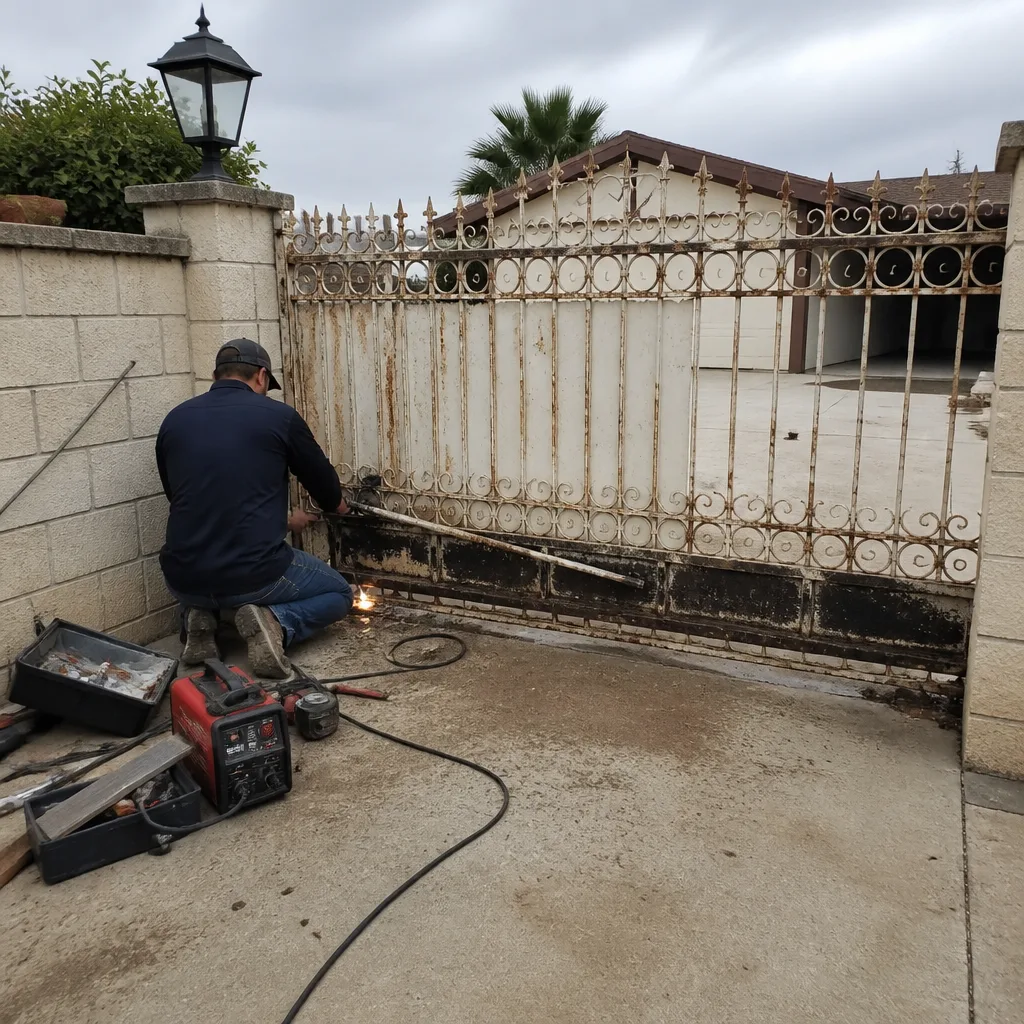 Before
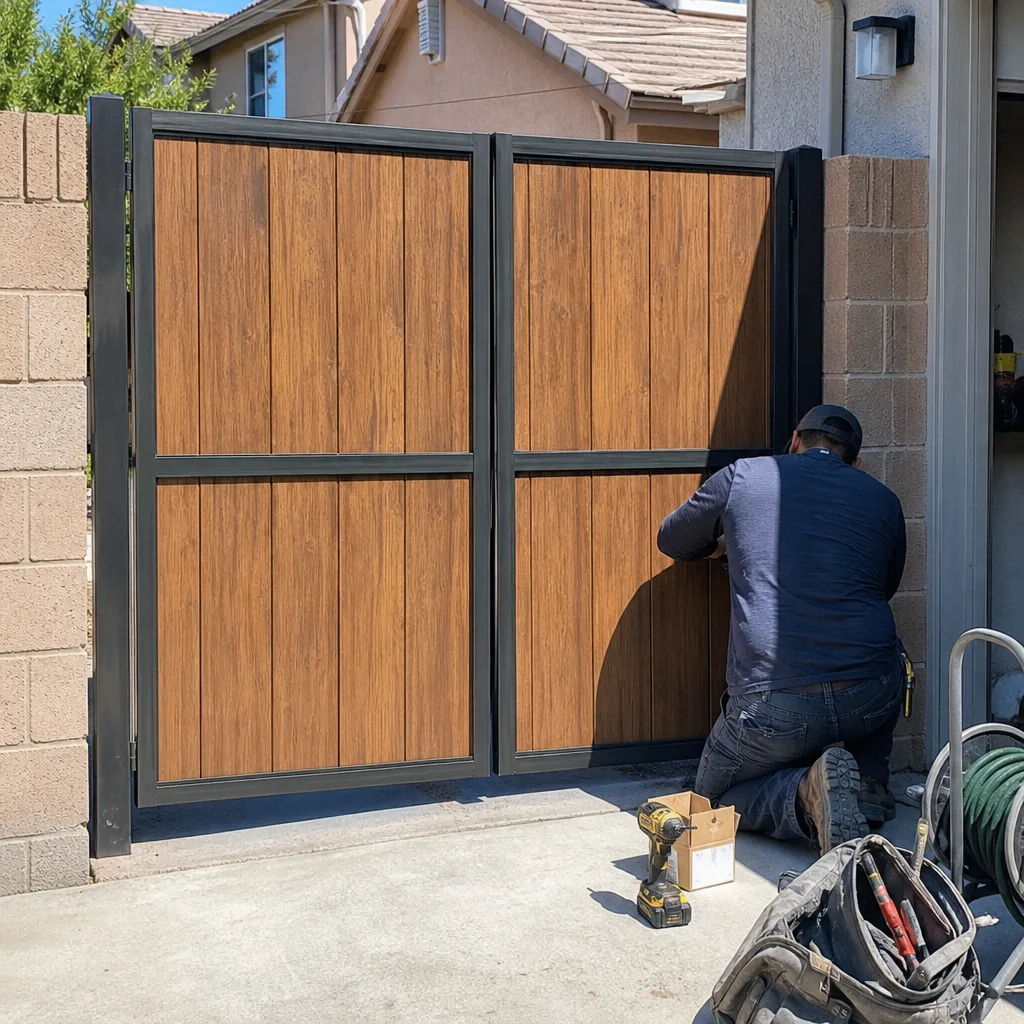 After
After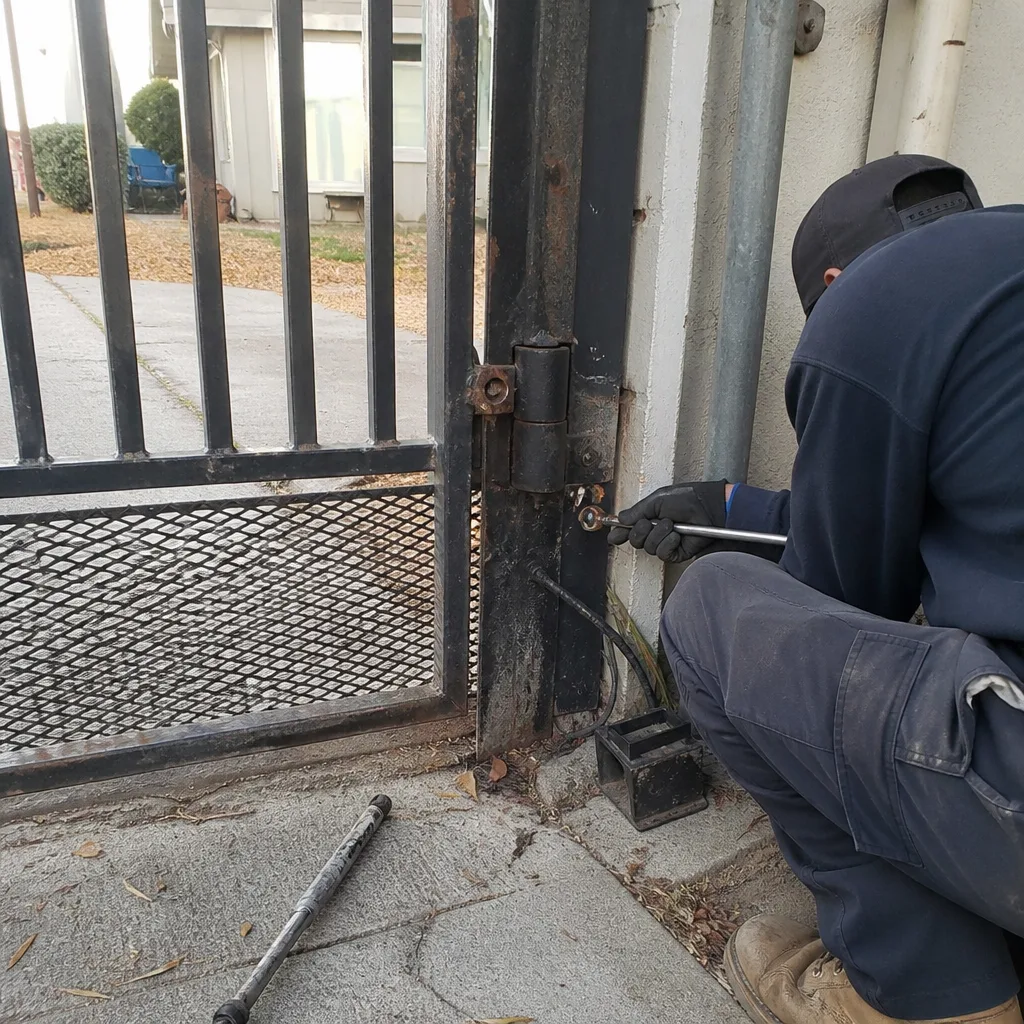 Before
 After
After Before
 After
After