
Last updated October 17, 2026
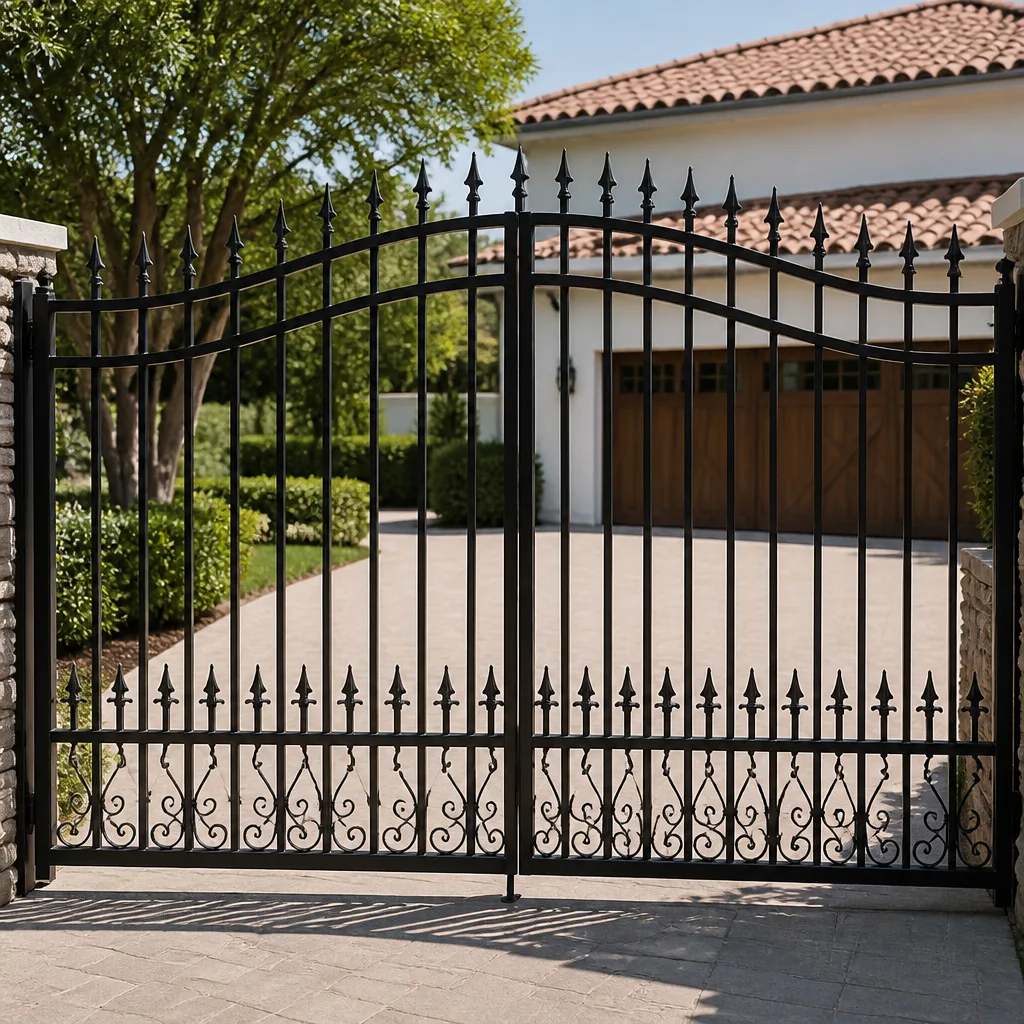 Wrought iron
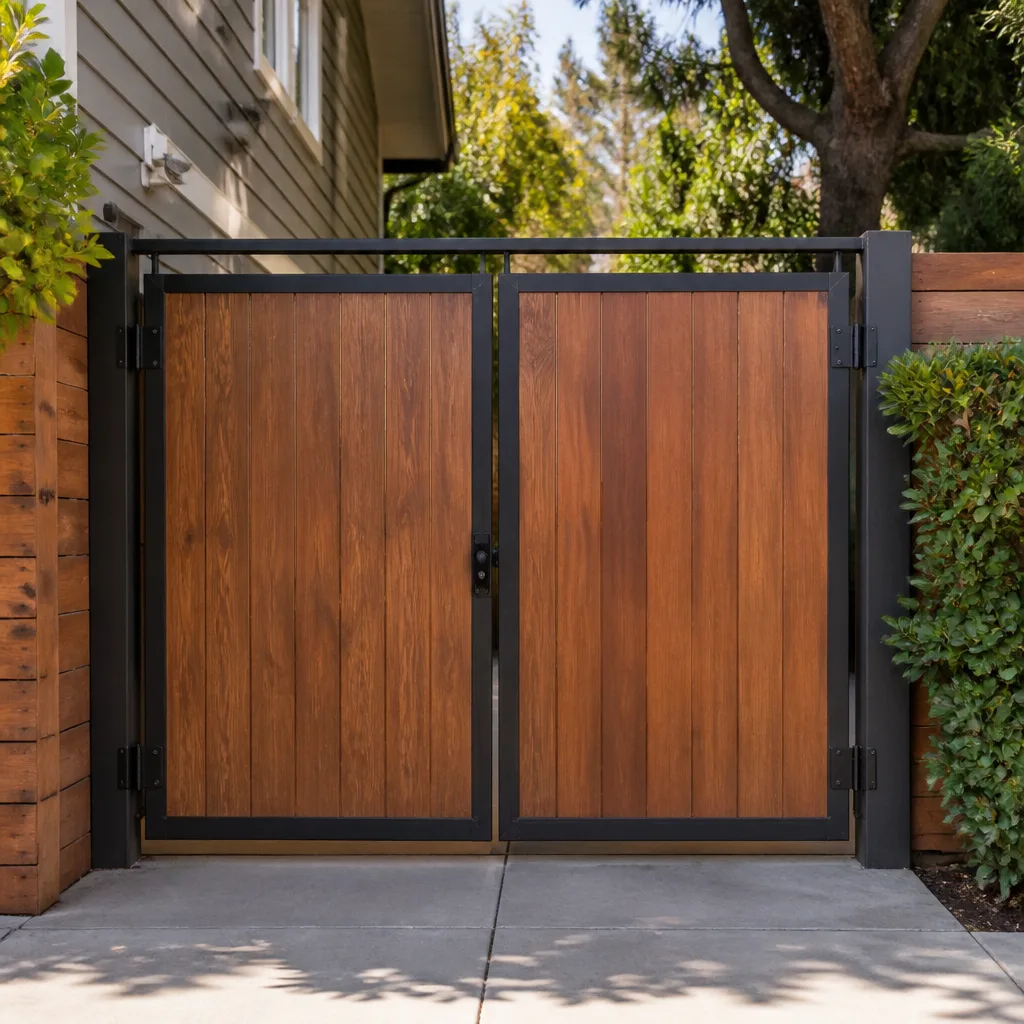 Wood & steel frame
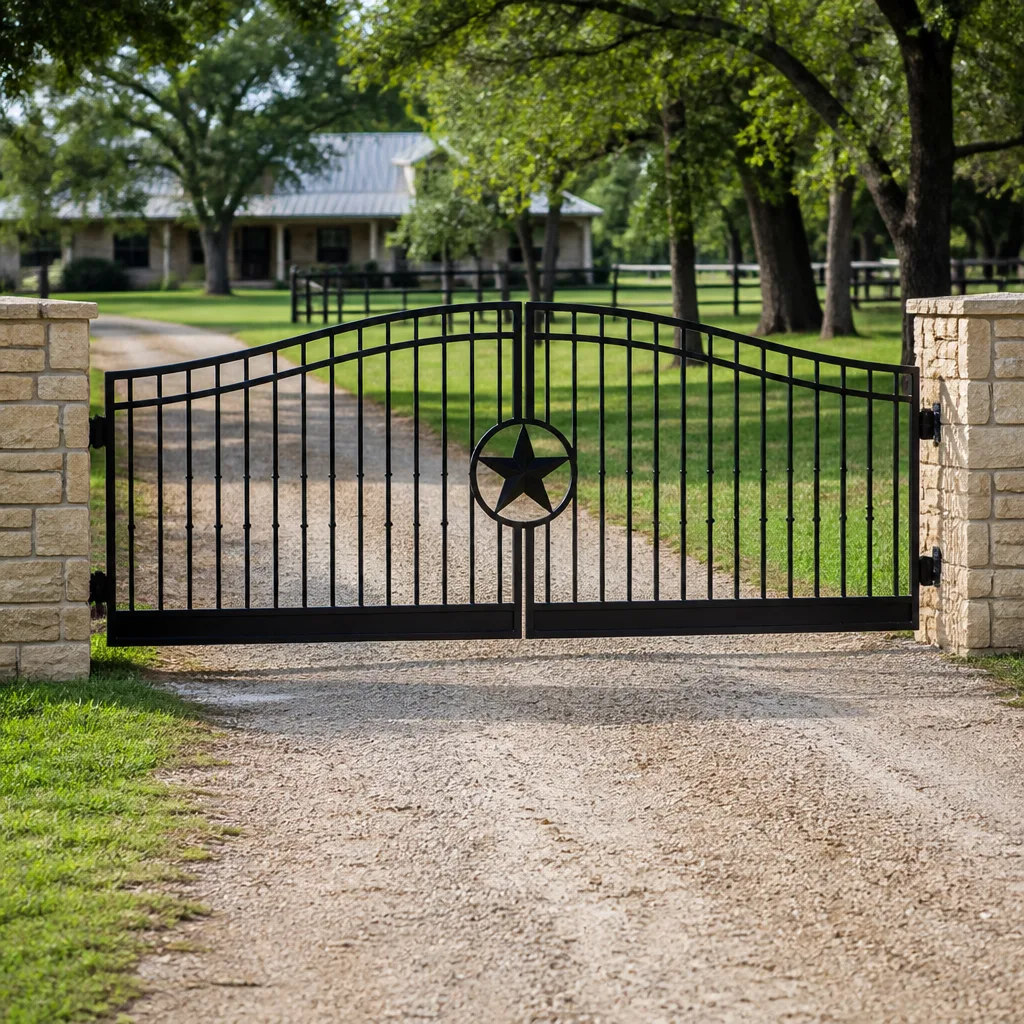 Farm & ranch
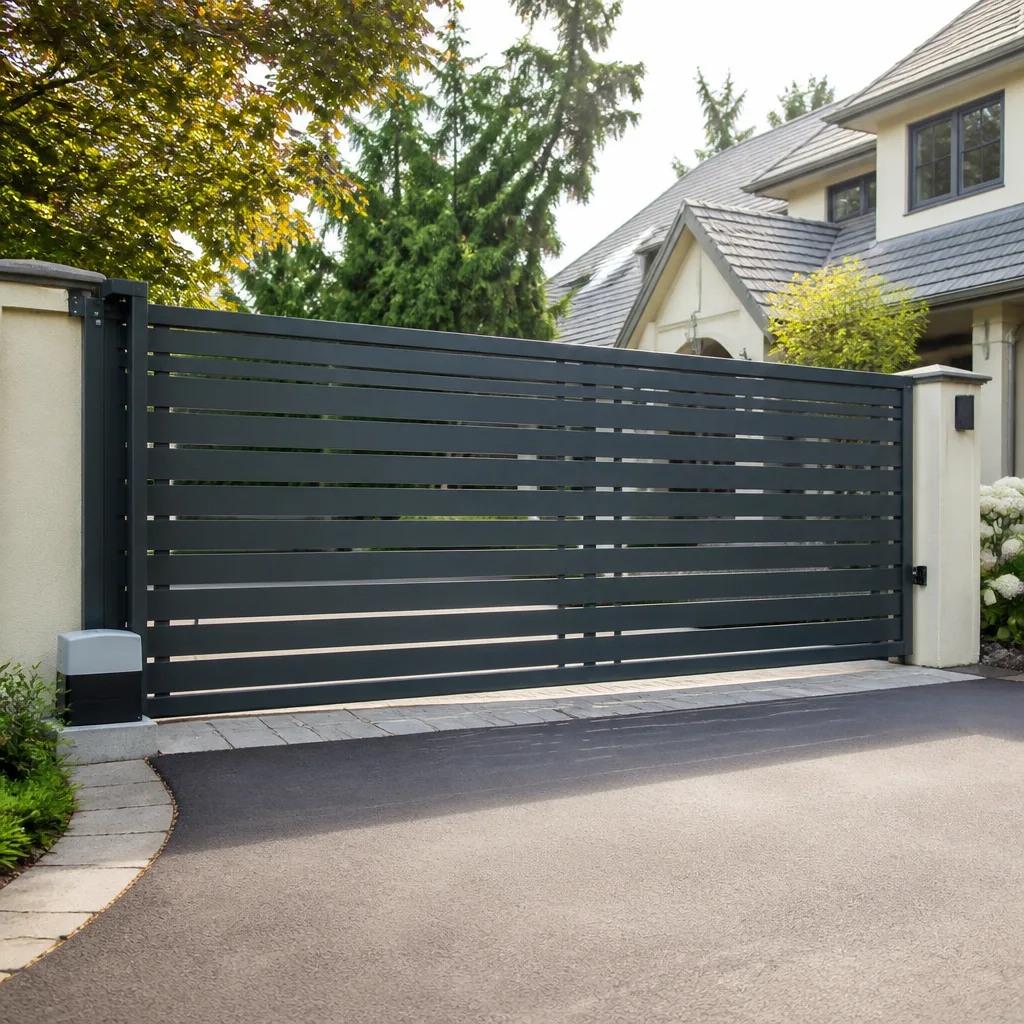 Sliding driveway gates
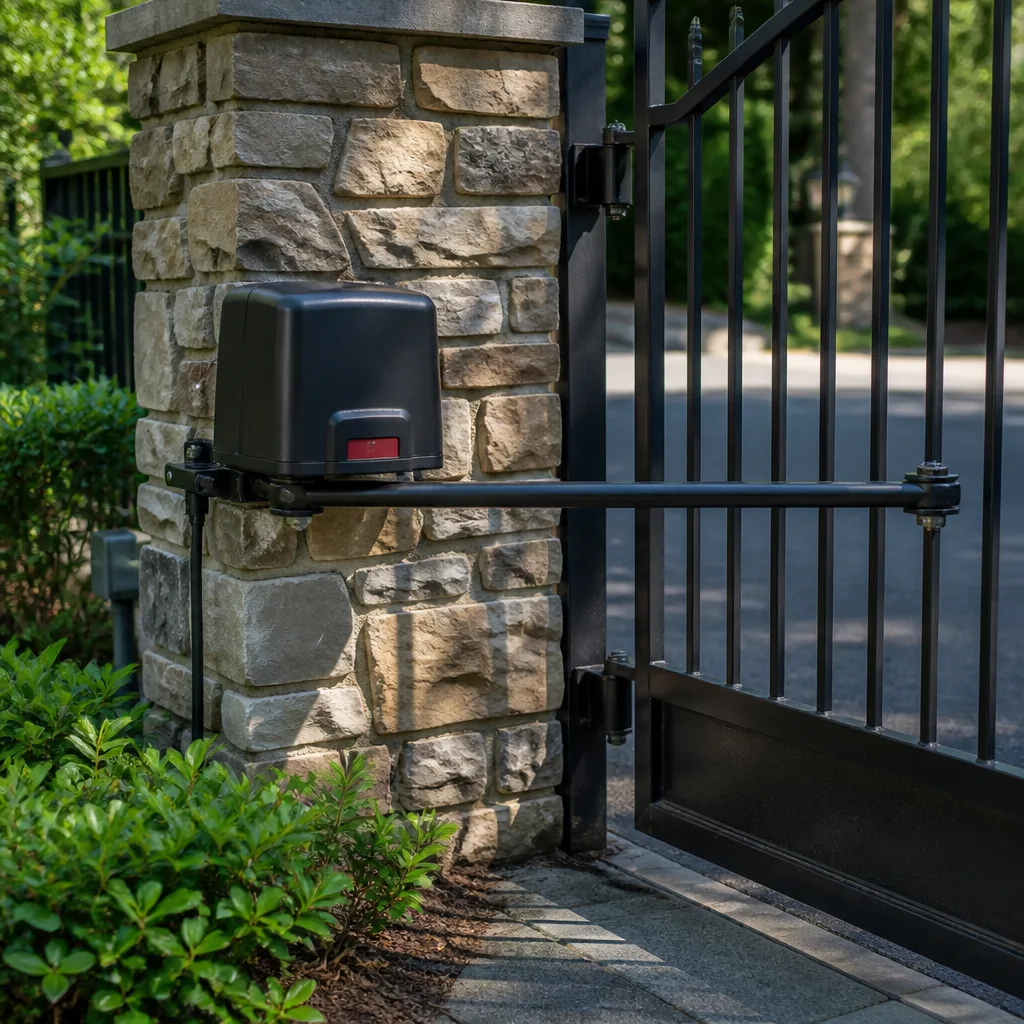 LiftMaster operators
Free on-site gate assessment - hinges, posts, and your LiftMaster or Nice gate operator checked before anything is quoted
The assessment is free and the quote is the invoice.
Get your free estimateThe Complete Guide to Gate Repair in Riverside
Here’s a number most Riverside homeowners never hear: the average gate latch fails within 18 months of a hinge problem the homeowner didn’t know existed. The latch didn’t wear out on its own. It was pulled out of alignment by a hinge that had been sagging for the better part of a year, a hinge that was never lubricated or adjusted because nobody thought to look at it. Fixing only what’s visible, the broken latch, is the single most expensive mistake in gate ownership in Riverside. This guide maps every component of a residential gate against Riverside’s specific soil, heat, and wind conditions so you know exactly what breaks, when it breaks, and why. By the end, you’ll be able to diagnose most gate problems before a technician arrives, and you’ll recognize a real gate specialist when you meet one.
Styles & brands we work with
Quick Answer
Gate repair in Riverside typically costs between $85 and $600 depending on the component: latch replacement runs $85 to $140, hinge repacking runs $120 to $200, and a full post re-plumb runs $300 to $600. Most repairs take one to two hours on site, and the most common failure point by far is the hinge, not the latch or the operator. A competent gate specialist offering Gate Repair services will inspect the entire system, write down a price before touching anything, and explain what they found in plain language.
Table of Contents
- The Latch: The Part Everyone Blames First
- The Post: What Riverside Soil Does to a Gate’s Foundation
- The Hinge: The Silent Killer of Riverside Gates
- The Operator: Electric Gates in 100-Degree Heat
- Santa Ana Winds and Gate Hardware: What Actually Holds
- What a Documented Care Routine Looks Like in Practice
- The Difference Between a Gate Specialist’s Diagnostic and a Handyman’s Guess
- Riverside Gate Repair Costs in 2026: Real Numbers
- Common Mistakes to Avoid
- When to Call a Professional
- Frequently Asked Questions
- The Bottom Line
The Latch: The Part Everyone Blames First
When a gate won’t stay closed, homeowners in Riverside almost always point at the latch. It’s the part they touch, the part they see, the part that makes the satisfying click when it works and the frustrating grind when it doesn’t. But the latch is almost never the root cause. It’s the victim.
A latch is a simple mechanism: a strike plate mounted on the post, a tongue or catch mounted on the gate leaf, and a spring inside that pushes the tongue into the strike. When everything is aligned, the tongue slides in and out with minimal friction and the spring lasts for years. When the gate sags even a quarter-inch, the tongue no longer lines up with the strike. The homeowner has to lift the gate, slam it, or jiggle the handle. Every one of those actions puts stress on the latch spring and the strike plate screws. Within a few months, the spring fatigues, the screws strip, and the latch fails. The homeowner calls a repair company and says the latch broke. In our experience, the real culprit was the hinge that started sagging eighteen months earlier.
Latch replacement in Riverside runs $85 to $140 for most residential hardware. That’s parts and labor on a standard gravity latch, a self-locking latch, or a keyed gate latch. If the latch failed because of alignment friction, a technician who only replaces the latch just sold you another eighteen-month countdown. A gate specialist will replace the latch and then check the hinge sag, the post plumb, and the ground clearance. That’s the difference between fixing a symptom and fixing a system. Our gate repair in Riverside service always includes a full-system check with every latch replacement, because we’ve seen too many homeowners pay for the same latch twice.
The Post: What Riverside Soil Does to a Gate’s Foundation
Every gate comes down to two parts: the latch that holds it and the post that carries it. That’s the job we focus on. And in Riverside, the post is fighting a silent battle against the ground itself.
Riverside sits on sandy loam soil over a clay sublayer. Sandy loam drains fast, which sounds good until you understand what it means for a set post: the top layer of soil shrinks and swells with moisture changes, but the deeper clay layer holds water and expands during the rainy months. The result is differential movement. The top of the post can shift a quarter-inch while the bottom stays put. Over time, that movement loosens the concrete footer, and a loose footer lets the whole post lean. A leaning post drags the hinge out of alignment, which drags the latch out of alignment, which leads to exactly the failure sequence described above.
Post problems show up as a gate that scrapes the ground on the latch side, a gate that swings open or closed on its own, or a visible lean when you sight down the fence line. The fix depends on how far the post has moved. A post that’s out of plumb by a half-inch but still firmly set can sometimes be corrected by re-shimming the hinges. A post that’s leaning because the footer cracked or settled needs to be excavated, re-set, and re-plumbed. That’s the $300 to $600 job, and it’s the one repair where doing it wrong means doing it again in two years. Riverside’s clay expansion means a new footer should be poured slightly deeper than the frost line would suggest, and the concrete should be allowed to cure for a full seven days before the gate is re-hung.
The Hinge: The Silent Killer of Riverside Gates
Of every component on a residential gate, the hinge is the one we replace most often. It’s also the one homeowners never think about until it fails completely.
Riverside hinges carry a load they were never designed for. A standard 6-foot steel tube gate with wood infill weighs between 120 and 180 pounds. A 10-foot driveway gate can weigh 300 pounds or more. All of that weight hangs on two or three hinge points. When the hinges are greased and the bearings are intact, the load distributes evenly and the gate swings with one hand. When a hinge bearing dries out, the metal starts wearing against itself. The gate gets heavy. It squeaks. It sags. And that sag transfers directly to the latch, which starts the failure sequence we’ve already described.
Riverside’s 100-degree summers accelerate hinge wear in two ways. First, heat thins out grease, so hinge bearings lose lubrication faster here than they do in coastal climates. Second, the dry air pulls moisture out of hinge bushings, and a dry bushing is a wearing bushing. We recommend a hinge inspection and repack every two to three years in Riverside, more often on driveway gates that cycle multiple times a day. A hinge repack runs $120 to $200 and includes cleaning the hinge pins, repacking the bearings with high-temperature grease, and re-torquing the hinge bolts. It’s the cheapest maintenance you can do that directly extends the life of every other component on the gate.
This is where gate installation in Riverside matters. The hinges that go on a new gate determine how long that gate stays square. The wrong hinge for the weight, the wrong bolt for the post material, the wrong spacing over a 10-foot span, all of it shortens the gate’s life. A good installer matches the hinge to the gate weight, the post material, and the prevailing wind direction, not to whatever is cheapest in the parts bin.
The Operator: Electric Gates in 100-Degree Heat
Electric gate operators fail differently in Riverside than they do almost anywhere else in California. The culprit is heat, and specifically the way heat interacts with the motor, the control board, and the battery backup.
An electric gate operator from LiftMaster, Mighty Mule, or Elite is rated for outdoor use in temperatures up to about 140 degrees Fahrenheit. The components can handle ambient Riverside heat. What they can’t always handle is heat plus load. When a gate is dragging due to hinge wear or post lean, the operator motor works harder on every cycle. A motor working harder draws more current. More current means more heat in the motor windings and the control board. On a 100-degree Riverside afternoon, that internal heat is enough to trip the thermal overload, which shuts the gate down until it cools. The homeowner assumes the operator failed. In fact, the operator was protecting itself from a gate that was too hard to move.
That’s why a reputable electric gate repair call always starts with a manual function check. We disconnect the operator and swing the gate by hand. If the gate is heavy, if it binds, if it scrapes, the problem isn’t the operator, it’s the mechanical components upstream. Fix those first, then the operator works without overheating. If the gate swings freely and the operator still won’t run, then we’re checking the control board, the limit switches, the photo eyes, and the power supply. Electric gate repair in Riverside is as much a diagnostic discipline as a mechanical one. The best operators in the world won’t save a gate that’s fighting its own hinges.
Santa Ana Winds and Gate Hardware: What Actually Holds
Riverside’s Santa Ana wind events put a specific, predictable stress on gate hardware, and the failure pattern is different depending on whether you have a swing gate or a slide gate.
Swing gates catch wind like a sail. A 40-mile-per-hour gust against a 6-foot-tall, 8-foot-wide gate generates hundreds of pounds of lateral force at the hinge line. That force wants to rip the hinge bolts out of the post. What holds or strips depends on the fastener grade and the post material. In wood posts, standard zinc-plated lag bolts will strip the wood fibers under repeated Santa Ana cycles. The fix is a through-bolt with a washer plate on the back side of the post, which distributes the load across a much larger area. In steel posts, a Grade 5 bolt is the minimum we’ll use on any hinge or latch mount. Grade 8 is better for wide driveway gates. A Grade 2 bolt from the big-box store will shear under wind load, and we’ve seen the results: a 200-pound gate lying in the driveway, hinge bolts snapped clean.
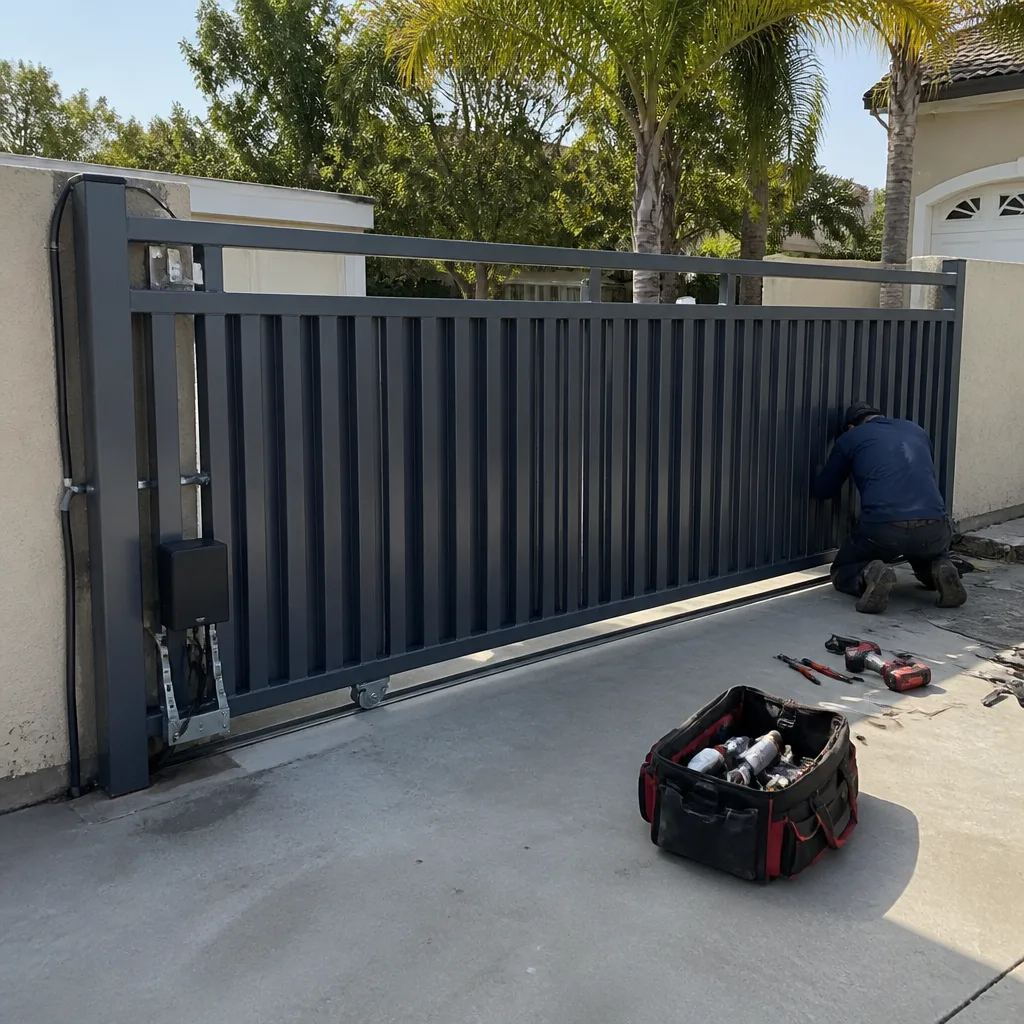
Slide gates handle wind differently. They don’t have a hinge line to stress, but they do have guide wheels and a track, and wind-driven debris is the enemy. Santa Ana winds fill the track with leaves, gravel, and sand from Riverside’s dry hillsides. That debris wears the guide wheels, bends the track, and overloads the operator. After a heavy Santa Ana event, it’s worth walking the track, clearing the debris, and checking the wheels for flat spots. Two minutes of maintenance saves a $400 operator repair.
What a Documented Care Routine Looks Like in Practice
Most gate companies operate on a verbal quote and a handshake. You call, someone shows up, they look at the gate, they say a number, and if you agree, they work. At the end, you pay whatever the number was, plus whatever else got added along the way. There’s no record of what was promised, no documentation of what was done, and no recourse if the work was sloppy.
A documented care routine looks different. It starts before the technician touches anything: a written price, delivered on paper or email, covering the diagnosis, the parts, and the labor. Not an estimate. The price. Agreed before the first tool comes out. For Latch and Post Gate Repair Riverside, that written price is the Cedarwell Care Promise, and it’s non-negotiable. The same way we lay drop cloths on the floor and put on shoe covers before we step inside, your floors stay clean. We explain the price before the work because the person paying the invoice deserves to know what’s on it.
The on-site routine is just as documented. A background-checked, uniformed technician wears shoe covers inside the home. Drop cloths go under any work area. If the job requires a cut, a drill, or a wire pull, a photo of the clean-up is taken before the technician leaves, so you can see what the floor looked like when we finished. We choose pet-safe lubricants where there’s a choice, and we schedule around nap time if quiet matters. That’s the Cedarwell C.A.R.E. values in action: clean up like it’s our own home, ask before we move or touch anything, respect the family’s time and quiet hours, and explain the price before the work. Verbal-only quotes cost homeowners more not because the work is more expensive, but because nothing is on record. Written documentation is the cheapest insurance a homeowner can buy.
And every repair and installation from Latch and Post is backed by the 365-Day Done Right Promise. If the repair or installation isn’t right, we make it right. No argument, no fine print. That’s the promise for years of gate ownership, not the first thirty days. You can read more about how we structure our repairs on our Latch and Post Gate Repair Riverside home page.
The Difference Between a Gate Specialist’s Diagnostic and a Handyman’s Guess
When a general handyman looks at a sagging gate, the diagnostic process is visual and quick. Gate is low on the latch side. Hinge looks worn. Replace the hinge. Maybe shim the latch. Done. The gate works for a few weeks, then sags again, because the handyman never checked why the hinge wore out in the first place.
A gate specialist’s diagnostic is systematic. Here’s the order a trained technician works through:
1. Visual inspection of the entire gate system. Latch, hinges, post, operator, wheels, track, ground clearance, and the condition of the fence line on both sides. The technician is looking for the root cause, not the most obvious symptom.
2. Manual function test. On a swing gate, the gate is swung through its full range of motion by hand. Heavy spots, binding, scraping, and resistance are noted. On a slide gate, the gate is pushed along its track, and the wheels are checked for flat spots and wobble.
3. Level and plumb check. A level goes across the top rail and a plumb bob down the posts. Gates that look straight from the street are often out by a half-inch or more.
4. Hardware torque check. Every hinge bolt, latch screw, and bracket fastener is checked for torque. Loose hardware is the earliest warning sign of a future failure.
5. Operator diagnostics (if present). The operator is disconnected and run through its limit cycle, the photo eyes are tested, and the control board is checked for fault codes.
6. Written findings and a written price. Before any work begins, the technician writes down what was found, what the repair will take, and what it costs. The homeowner signs off, and work begins.
The questions to ask to tell a specialist from a handyman: Can you show me the hinge wear? Can you explain why the latch failed? Will you write down the price before you start? Will you take a photo of the clean-up? A specialist answers yes to all four. A handyman answers with a shrug and a vague price.
Riverside Gate Repair Costs in 2026: Real Numbers
Every homeowner deserves to know what a gate repair should cost before they make the call. For a detailed breakdown, see our Gate Repair Cost Breakdown: The Riverside Homeowner’s Reference for 2026. These are the real ranges we see in Riverside in 2026, based on the work we’ve done across this city:
- Latch replacement: $85 to $140. This covers a standard gravity latch, self-latching latch, or keyed gate latch, including parts and labor. The price goes up slightly if the strike plate needs to be repositioned due to alignment issues.
- Hinge repack: $120 to $200. This includes removing the hinge pins, cleaning them, repacking the bearings with high-temperature grease, and re-torquing the hinge bolts. On heavier driveway gates, this can run higher.
- Post re-plumb: $300 to $600. This is the big one. The post is excavated, the footer is inspected, the post is reset and plumbed, and the concrete cures before the gate is re-hung. The price varies with the size of the post, the depth of the footer, and whether the old concrete needs to be broken out.
- Operator replacement: $450 to $900. This covers a residential swing or slide gate operator, including the control board, remote, and basic installation. Variables include the gate weight and the condition of the existing wiring.
- Full-system tune-up: $150 to $250. Latch adjustment, hinge repack, post plumb check, hardware torque, and operator diagnostics. This is the maintenance that prevents the expensive repairs.
These ranges are meant to help you sanity-check a quote. When a Riverside gate repair company quotes a number far outside these ranges, ask why. Sometimes there’s a good reason: the gate is unusually large, the post is embedded in a retaining wall, the operator was struck by lightning. But most of the time, a very low quote means the company is planning to cut corners, and a very high quote means the company is planning to take advantage. A written quote that matches these ranges, delivered before the work begins, is what a fair price looks like.
Common Mistakes to Avoid
- Replacing the latch without checking the hinge. The latch failed for a reason. If that reason was hinge sag, the new latch will fail on the same schedule. A full-system check adds twenty minutes and prevents an $140 repeat repair.
- Using standard zinc hardware on a Riverside gate. Santa Ana winds and 100-degree heat cycles destroy cheap fasteners. Use Grade 5 or Grade 8 bolts on hinges and latch mounts, and through-bolts on wood posts. The hardware costs a few dollars more and lasts a decade longer.
- Ignoring the gate when it starts scraping the ground. A gate that scrapes is a post leaning or a hinge failing. Either way, the problem compounds daily. Waiting until it won’t open at all means a more expensive repair.
- Lubricating a hinge without cleaning it first. Spraying fresh grease over old grease, dirt, and metal shavings makes a grinding paste that accelerates wear. The hinge has to be disassembled, cleaned, and repacked, not just sprayed.
- Skipping the operator manual-function test. If your electric gate is overheating or tripping its thermal overload, the first thing to check is whether the gate swings freely by hand. A repair that only addresses the operator will fail again if the gate is binding.
- Not checking after a Santa Ana event. High winds loosen bolts, fill tracks with debris, and stress hinge lines. A ten-minute post-wind check catches problems while they’re still cheap to fix.
- Accepting a verbal quote. A verbal quote has no record, no accountability, and no protection. A written price, agreed before work begins, is the single best way to avoid surprise invoices.
When to Call a Professional
Some gate work is genuinely dangerous and should never be attempted by a homeowner. A gate operator with a damaged control board or exposed wiring carries a shock risk. A sagging driveway gate that weighs 300 pounds can crush a person if it comes off its hinges. A post reset requires digging out concrete and setting a new footer, work that requires physical strength and a correct understanding of Riverside’s soil conditions. If the gate is electric and the problem isn’t a dead battery in the remote, call a professional. If the gate is heavy enough that you can’t lift it yourself, call a professional. If the post is leaning enough that you can see it from the street, call a professional. Latch and Post Gate Repair Riverside offers free estimates in Riverside, call (341) 895-4331. A written price means you can get a diagnosis without committing to the repair.
Frequently Asked Questions
Gate repair in Riverside typically costs between $85 and $600 depending on the component: $85 to $140 for a latch replacement, $120 to $200 for a hinge repack, and $300 to $600 for a full post re-plumb. Most standard repairs come in under $250. Call (341) 895-4331 for an exact quote. Estimates are free.
Most gate repairs take one to two hours on site. A latch replacement takes under an hour, a hinge repack takes about an hour, and a post re-plumb takes half a day because the concrete needs time to set before the gate is re-hung. We’ll give you a time estimate when we write up the price.
We repair and install all major residential gate brands, including LiftMaster, Mighty Mule, Elite, DoorKing, FAAC, BFT, Linear, Viking, and Ghost Controls. If you have a brand not on that list, call us and ask. Most residential gates use common parts regardless of brand, and we can usually help.
A gate that won’t close is usually a latch alignment problem caused by hinge sag or a post that has shifted out of plumb. The gate’s latch no longer lines up with the strike plate, so it can’t catch. The fix starts with figuring out why the alignment changed, then correcting that root cause before adjusting the latch. Call (341) 895-4331 and we’ll diagnose it over the phone.
Yes. Electric gate operators carry live voltage and the capacitor can hold a charge even after the power is disconnected. A shock from an operator capacitor can be serious. The gates themselves are also heavy enough to cause injury if they come off their hinges. This is work for a trained technician with the right tools.
Yes. We work throughout Riverside, including Canyon Crest, Wood Streets, Alessandro Heights, La Sierra, Mission Grove, Orangecrest, and the surrounding areas. The same written price, the same Care Promise, and the same 365-Day Done Right Promise apply everywhere in Riverside. Call (341) 895-4331 and a live person will answer, day or night.
The Bottom Line
A Riverside gate is not one thing. It’s five things: a latch, a post, a hinge, an operator, and the ground contact between them. Each has its own failure timeline, and each failure cascades into the next. The hinge wears out first. Then the latch fails. Then the post leans. Then the operator overheats trying to move a gate that’s fighting itself. The homeowner who understands this sequence knows what to check, what to maintain, and what to expect from a repair company. In Riverside, with our sandy loam soil, 100-degree summers, and Santa Ana winds, that understanding saves real money. And when the repair needs to happen, get a written price before any work begins. It’s the clearest signal that the person holding the wrench respects the person holding the keys.
Written by Cody Beckman, Owner at Latch and Post Gate Repair Riverside, serving Riverside since 2009. Explore more guides & resources on our blog.
See the difference
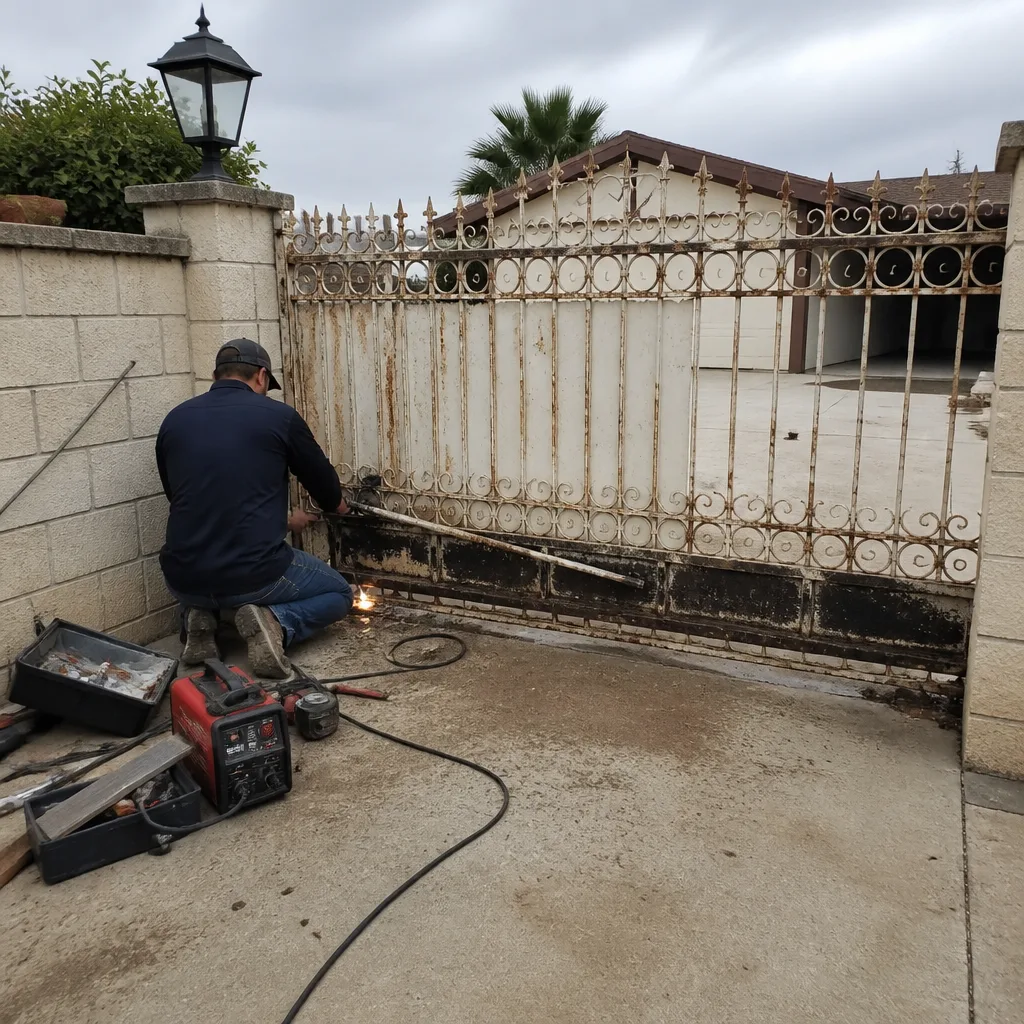 Before
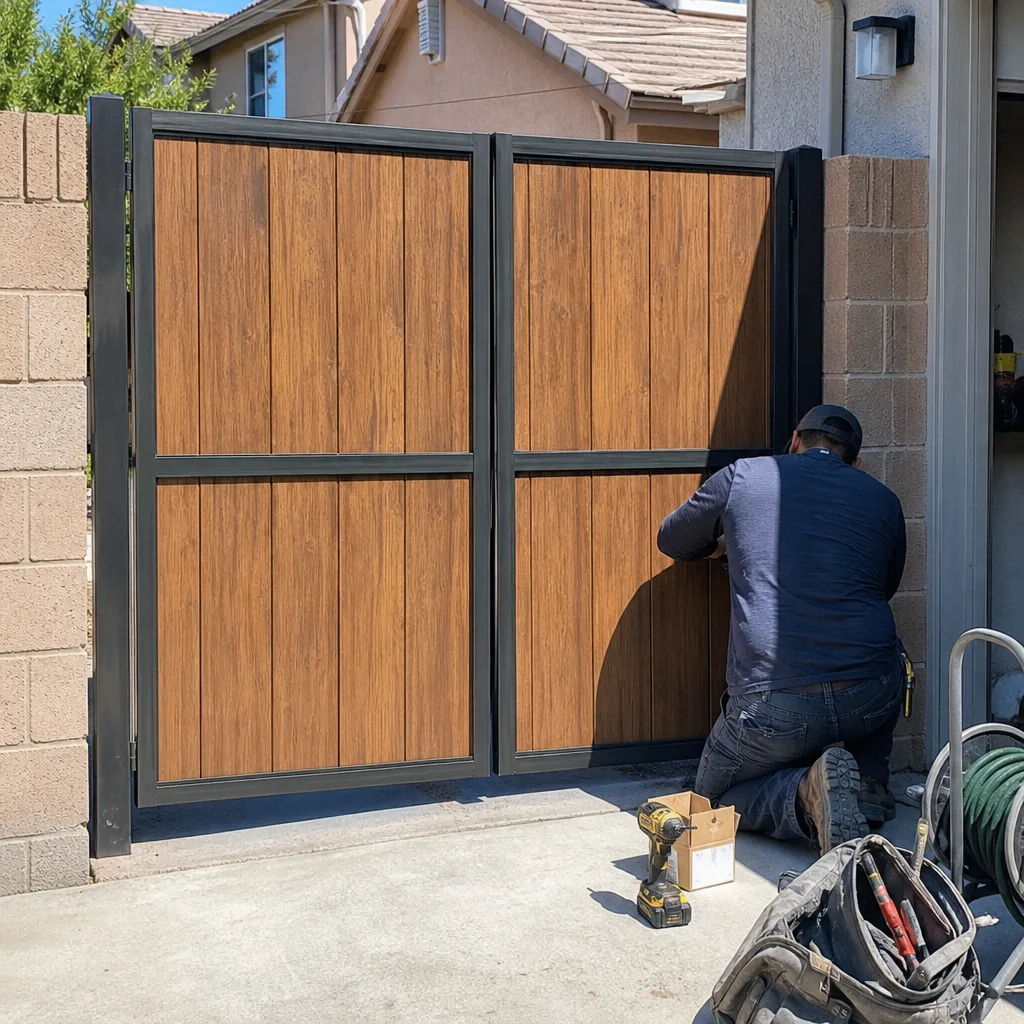 After
After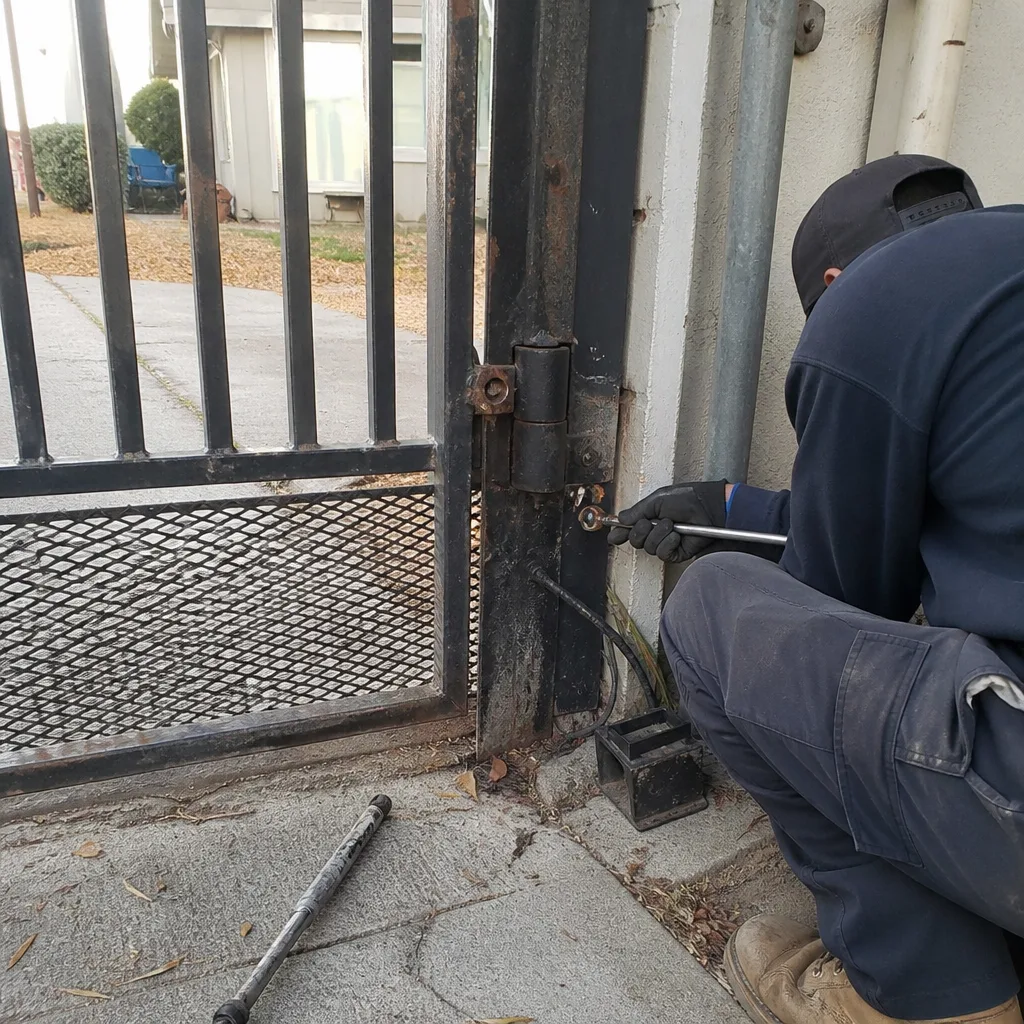 Before
 After
After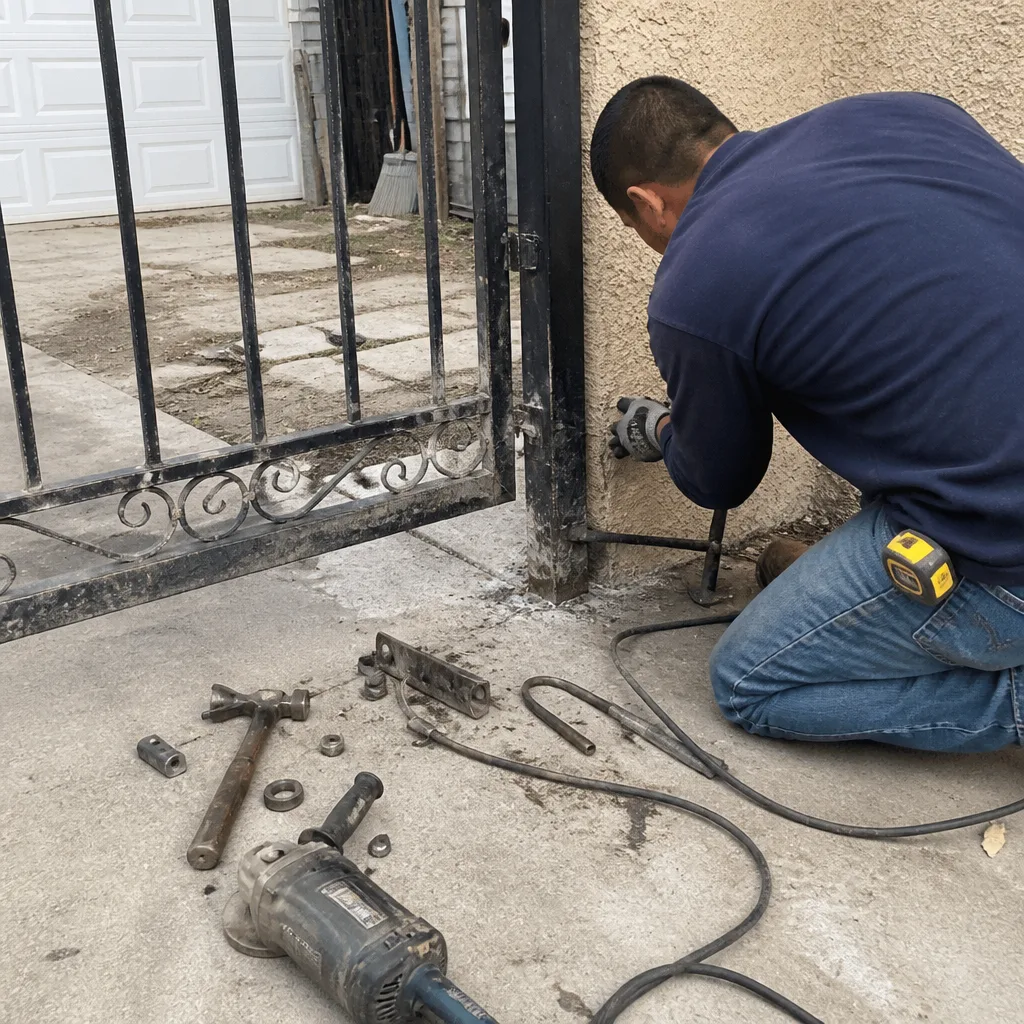 Before
 After
After